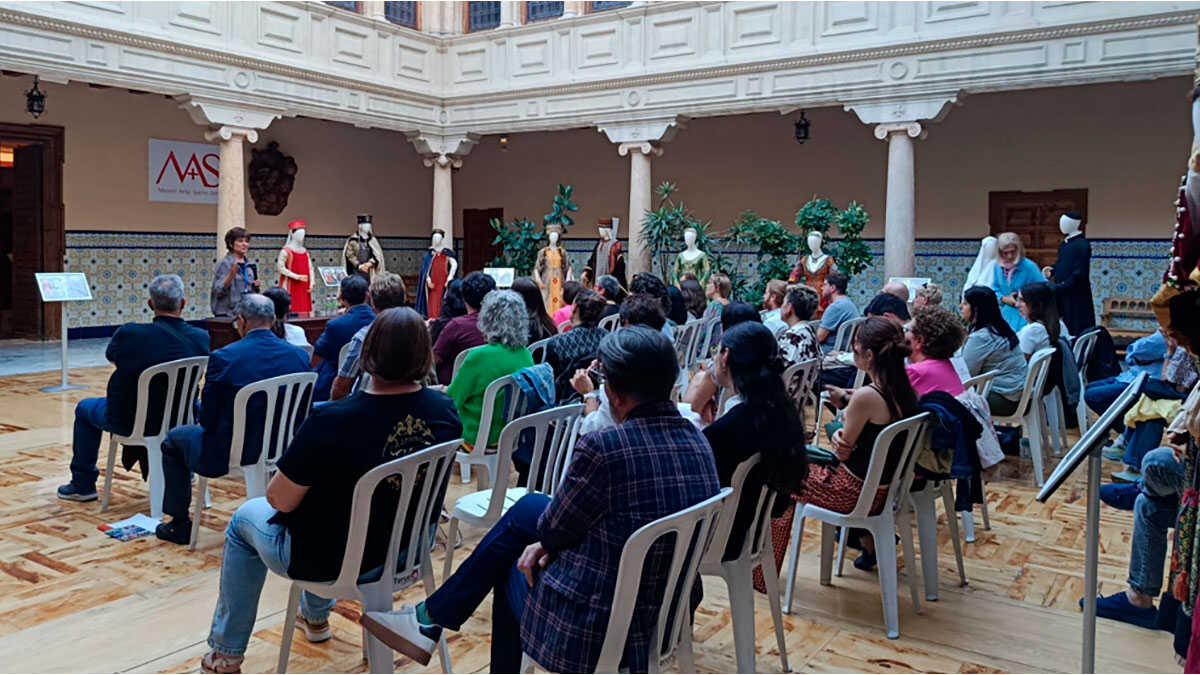
Under the title "Dressing Power: Clothing, Hierarchy and Visual Identity in History and Historical Reenactment," the 2026 edition will delve deeper into a line of research launched last year on historical clothing and stage costumes, now moving toward more specialized issues related to power, social differentiation, heraldry, collective identity and the visual construction of historical characters.
The event will also feature international participation, including Polish historian Joanna Mendyk, who holds a PhD in Medieval History from the University of Zaragoza under a joint supervision arrangement with Jagiellonian University in Krakow, her home institution, as well as Florinda Barbosa, from the University of Minho in Braga, Portugal. The program will bring together representatives from various Spanish and European universities and institutions.
A MULTIDISCIPLINARY EDITION
One of the defining features of this edition will be its diversity of perspectives. The congress will address clothing as a fundamental source for understanding historical societies. Through dress, people could communicate rank, authority, economic means, membership in a lineage or social group, military function, origin or prestige.
For this reason, the sessions will examine topics including medieval civilian and military clothing, the beginnings of heraldry and identification systems, luxury fabrics and their economic and symbolic value, social differentiation through dress, the clothing of medieval armies and camps, the representation of power, and the role of costumes in the performing arts and historical reenactments.
Particular importance will also be given to analyzing documentation and reconstruction processes, examining how historical sources are transformed into the material creation of a garment, a character or a staging, and where the boundaries lie between authenticity, adaptation and artistic creation.


