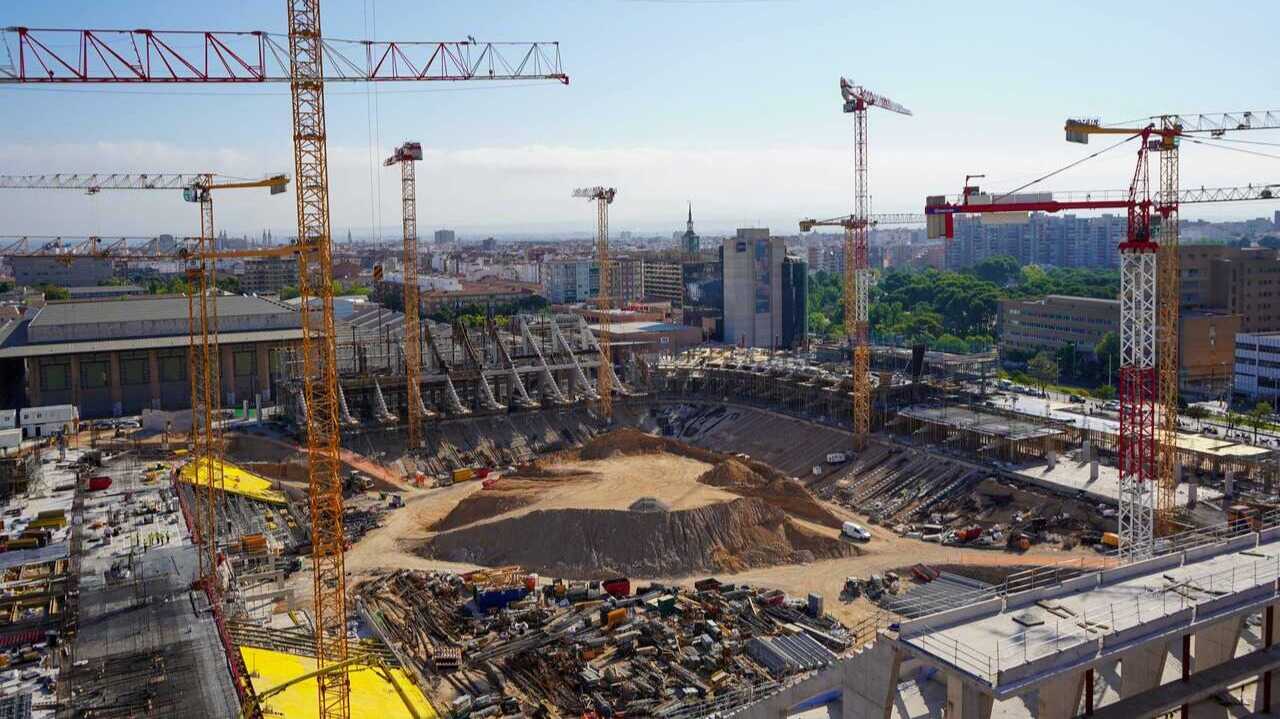
This was confirmed by Zaragoza's municipal planning chief, Víctor Serrano, in an interview on the Buenos días Aragón program on Aragón TV, where he highlighted that the work is "meeting the appropriate deadlines." Serrano said that the stadium has already started to "take shape" this week and that Zaragoza residents and Real Zaragoza supporters can begin to "imagine what the playing field will look like." The councillor also highlighted that the project will enable Zaragoza to be part of the next FIFA World Cup.
SERRANO DEFENDS THE 8 MILLION EUROS FOR SPONSORSHIP OF THE FUTURE STADIUM'S NAME
Serrano also addressed the eight million euros linked to sponsorship of the name of the New Romareda, an issue over which the PSOE is demanding explanations and the full contracts between Nueva Romareda and Real Zaragoza. The planning chief maintained that the City Council explained the deal "with absolute transparency" at a commission meeting held last week and stressed that it is not a payment made by the City Council or by Nueva Romareda to the club.
According to his explanation, the 10 million euros obtained through the sponsorship agreements were divided into 2 million euros for the "naming" of the modular stadium, corresponding to Nueva Romareda, and 8 million euros for sponsorship of the future stadium's name, the rights to which belong to Real Zaragoza. Serrano argued that this formula is not unusual and cited other stadiums, such as those of Deportivo de La Coruña, Celta de Vigo and Córdoba, as examples to support the argument that naming rights generally belong to the team that plays there.


