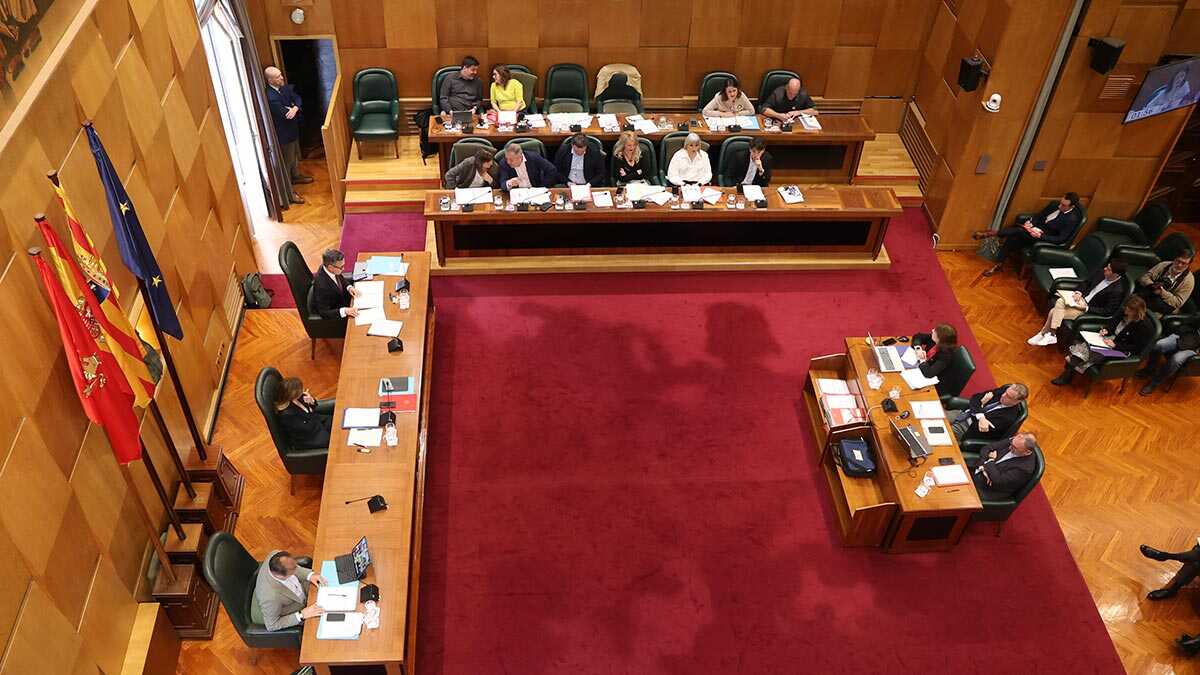
The explanation lies in the Organic Law on the General Electoral Regime, which sets the number of councillors according to each municipality's legally registered population. In cities with more than 100,000 inhabitants, one councillor is added for every 100,000 residents or fraction thereof. With its current population of 727,475, Zaragoza would have 32 councillors under this calculation, but because that is an even number, the legislation itself requires one more to be added to prevent possible ties in plenary votes.
Thus, Zaragoza City Council could increase from its current 31 representatives to 33 councillors for the term resulting from the 2027 election. That would mean two more councillors than at present, with the change coming precisely in an election that will be held in less than a year and that, according to the latest Municipal Barometer, would once again make Natalia Chueca's People's Party the city's leading political force.
THE 2027 MUNICIPAL REGISTER, THE KEY
The figure, however, has not yet been finalized. The possible expansion of the plenary depends on the official population data used to determine the number of councillors in the 2027 municipal elections. For that reason, the 727,475 residents currently listed in the municipal register point to 33 councillors, but it will be necessary to wait for the final figure to confirm whether Zaragoza crosses and maintains the threshold that changes the composition of its City Council.
The 2027 elections therefore bring an additional unknown to Zaragoza's political landscape: it will not only be necessary to see which party wins and how votes are distributed among the People's Party, PSOE, Vox and the various left-wing forces, but also how many councillors the City Council will ultimately have.


