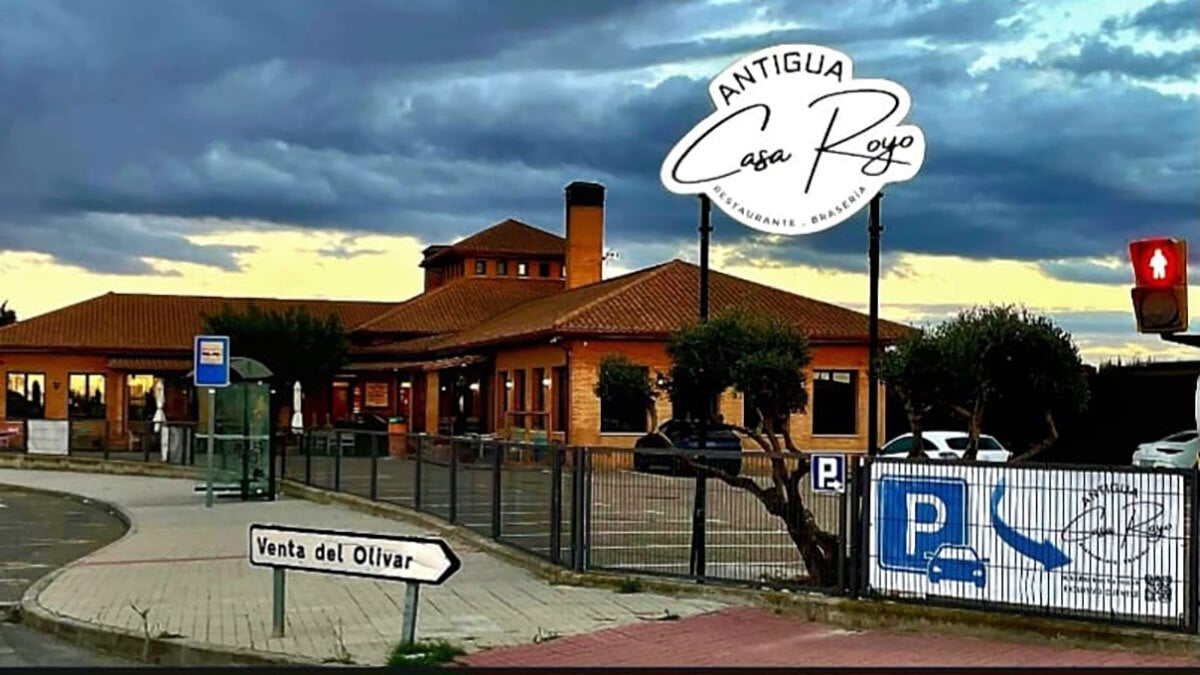
We are talking about traditional food, charcoal-grilled meat, local produce and zero-kilometre ingredients. We are talking about that iconic Ternasco de Aragón, and about charcoal-grilled longaniza, chorizo and morcilla—in short, food with plenty of spirit, once one of Aragon’s great hallmarks for both its appearance and its incomparable flavour. And if there is one restaurant that seeks to represent that feeling, it is Casa Royo, at Camino del Tomillar, 1 (next to the old Logroño road), in Zaragoza.
Although its former manager, Félix Royo, retired in March 2024, his legacy remains exactly as he left it, thanks to the new management of More Than Restauración S.L., led by siblings José Luis and Inmaculada Roda. And when we say that the legacy remains unchanged, José Luis makes it clear: they have kept the same restaurant, the same offerings, the same products and even the same suppliers. All this is intended to continue providing an alternative, high-quality service within Zaragoza’s current culinary scene.
It is about preserving an essence and safeguarding an important part of Zaragoza’s culinary heritage while continuing to look to the future. Through this mantra, we will tell the story of Casa Royo (officially now called “Antigua Casa Royo”), one of Zaragoza’s great bastions of charcoal-grilled cuisine.
A CHANGE IN MANAGEMENT
Félix Royo’s parents, Ángel and Sara, founded the restaurant in 1947. Photo: Antigua Casa Royo
The story of Casa Royo begins like that of any other restaurant, with the desire to make a living. Félix Royo’s parents, Ángel and Sara, founded the restaurant in 1947 and stepped on the accelerator to build a brand that quickly won the hearts and palates of Zaragoza residents, as well as those of tourists travelling along the Logroño road.
In 1984, Félix took over, continuing a brand and a working method committed to purely Aragonese products. Although those 40 years were filled with happiness, all good things eventually come to an end. In 2024, Royo announced that the time had come for him to retire, and it seemed the restaurant would close indefinitely. However, a twist of fate appeared to change the situation.
“At first, it was going to be a permanent closure, but through some mutual contacts, they introduced Félix to both my family and me. We run our company together (they also have a two-star hotel-restaurant with two Repsol Soletes called El Azafrán 176 on the Mudéjar Motorway). We started talking to him and there was a very natural connection, so Félix decided to lease us the premises. Although he is no longer the manager, he is still the owner of Casa Royo and comes to visit us or have lunch with his friends every week,” explains José Luis Roda.
PRESERVING THE ESSENCE
The offerings at this venue are highly appreciated by diners. Photo: Antigua Casa Royo
This new transition took place on July 15, 2024, with new management and under the name “Antigua Casa Royo”. However, as Roda explains fondly, “everyone still calls the place ‘Casa Royo’; the brand has not changed for anyone. Above all, what matters most to us, and what we promised Félix, is that the essence would remain the same. Besides, it makes no sense to change something you know works.”
And it certainly works. If there is one thing that sets Casa Royo apart, it is undoubtedly the value of its offerings. The venue has a four-metre charcoal grill, making it a “real” charcoal grill house and an authentic restaurant specialising in grilled meat. It also has its own butcher shop inside the restaurant, where whole milk-fed lambs are delivered—each weighing around eleven kilos—so the butcher can break them down.
Among its most classic products are still milk-fed lamb chops, chorizo, morcilla and the famous Patatas Royo, all made with the same products, suppliers and homemade cooking processes, as the new manager insists. Nevertheless, Roda also says they have added “small additions” to create a noticeable difference in their offering.
These include house salads, charcoal-grilled octopus, charcoal-grilled fish, tempura-fried piparras and artichokes, to name a few. These products can be found on its daily €14.50 menu, available from Monday to Friday, or on its extensive and ambitious à la carte menu. “We do not want to deceive anyone or serve fifth-range, sweetened or pre-cooked dishes, or food with an ‘old sheep’ flavour—as can happen with milk-fed lamb or grilled dishes—which is what is often served outside Aragon when people try to sell products supposedly from the region or belonging to traditional Aragonese cuisine. We simply want to preserve the former essence,” says the manager.
A BASTION OF TRADITIONAL CUISINE
Charcoal-grilled octopus is a hit. Photo: Antigua Casa Royo
When taking over the business, the Roda siblings were fully aware of Zaragoza’s culinary landscape, where, as José Luis describes it, “‘Gourmet’ food” is particularly dominant. “These traditional restaurants and grill houses have completely disappeared in Zaragoza because it is a city driven by trends. This is neither good nor bad; it is simply the reality, and both sides of the market can coexist.” “We were clear that we wanted to work with Félix’s method because it is based on local products from the area, which is this restaurant’s greatest strength,” he continues.
Now, just a few months away from completing a year at the helm of Casa Royo, Roda looks back on a journey marked by “sales, but also by some criticism for meeting expectations. The first month was difficult because people criticised us on social media without having visited the restaurant; they thought we would not be able to continue Félix’s legacy. But we carried on and ultimately received our reward.”
They not only managed to overcome the doubts of many diners who were deeply attached to the venue, but also attracted a new customer segment that had not previously been present: “We have attracted a group of people in their twenties who bring another perspective to the business and are genuinely looking for this kind of offering. Amid so much ‘Street Food’ and fusion cuisine, they want to discover a traditional offering from the region through grilling and explore different flavours,” says Roda.
In this way, Casa Royo is looking to the future while continuing to satisfy palates and hearts as it always has. This comes during a recent period in which things seem to be improving all the time, despite minor turbulence caused by events such as the major blackout on April 28. In Casa Royo’s case, customers were able to eat without problems, only having to wait for the power to return before closing the venue. Thanks to the involvement of the Roda siblings and the family’s indelible legacy, the restaurant has established itself as an essential bastion for those seeking a genuine experience, without artifice or pretension: Aragonese food to “eat properly”, as Roda concludes.


