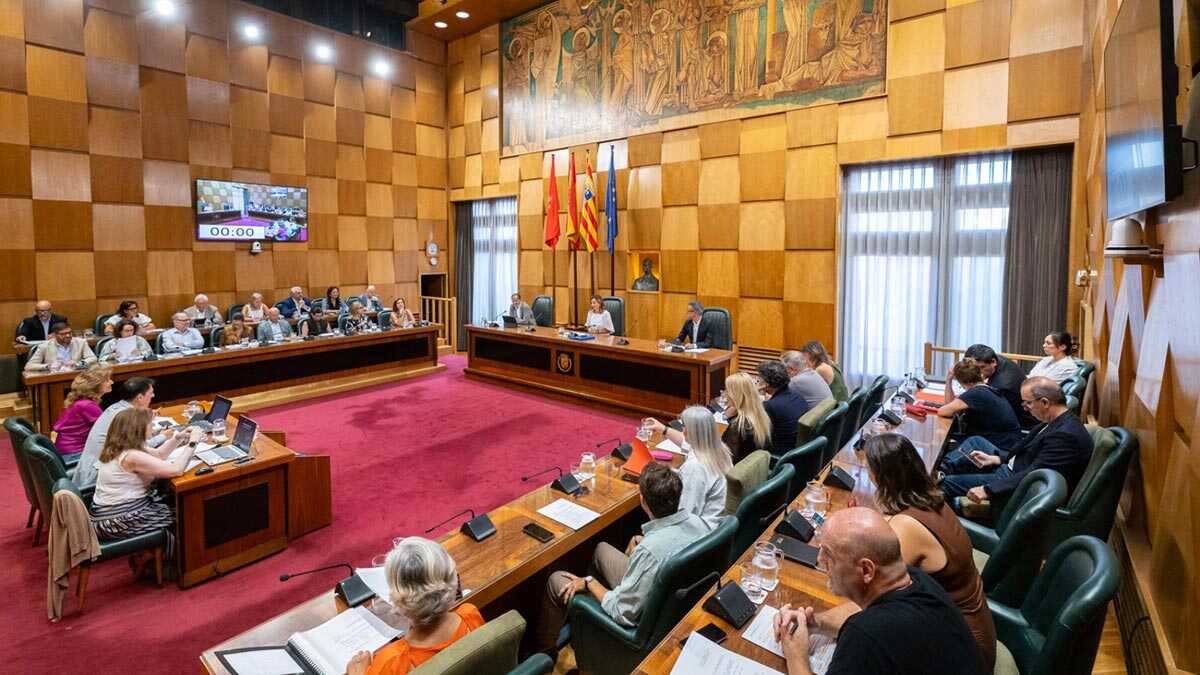
Vox spokesperson Eva Torres defended the view that "no one can conceal their face to prevent visual identification" and explicitly said the new regulation would prevent people from entering a municipal facility wearing "balaclavas, helmets, burqas, etc.". The party also described the ordinance as a "carefully developed and agreed" measure with the People's Party and highlighted the tougher response to illegal street vending.
PSOE AND ZEC DENOUNCE CURTAILMENT OF FREEDOMS
Socialist councillor Horacio Royo questioned this section and criticized the fact that a person arriving at a municipal building wearing a burqa "can be identified even if they are not suspected of having committed any offense". Royo accused the government of Natalia Chueca of engaging in "legal contortionism" and said the measure amounted to "circumventing" the Organic Law on Citizen Security.
Zaragoza en Común was also particularly critical of the ordinance as a whole. Its councillor, Suso Domínguez, said the text was not intended to improve coexistence but to "curb freedoms" and "criminalize both young people and vulnerable people". He also questioned the decision to penalize behavior such as going shirtless, arguing that it did not constitute an attack on coexistence.
In response to these criticisms, PP spokesperson Ángel Lorén defended the regulation as necessary for Zaragoza to remain a "civic" city and warned that the rights of the majority cannot be conditioned by a minority. Mayor Natalia Chueca said its approval represented a "decisive step forward" in improving coexistence and cited the problems recorded in recent months around Parque Bruil as an example.


