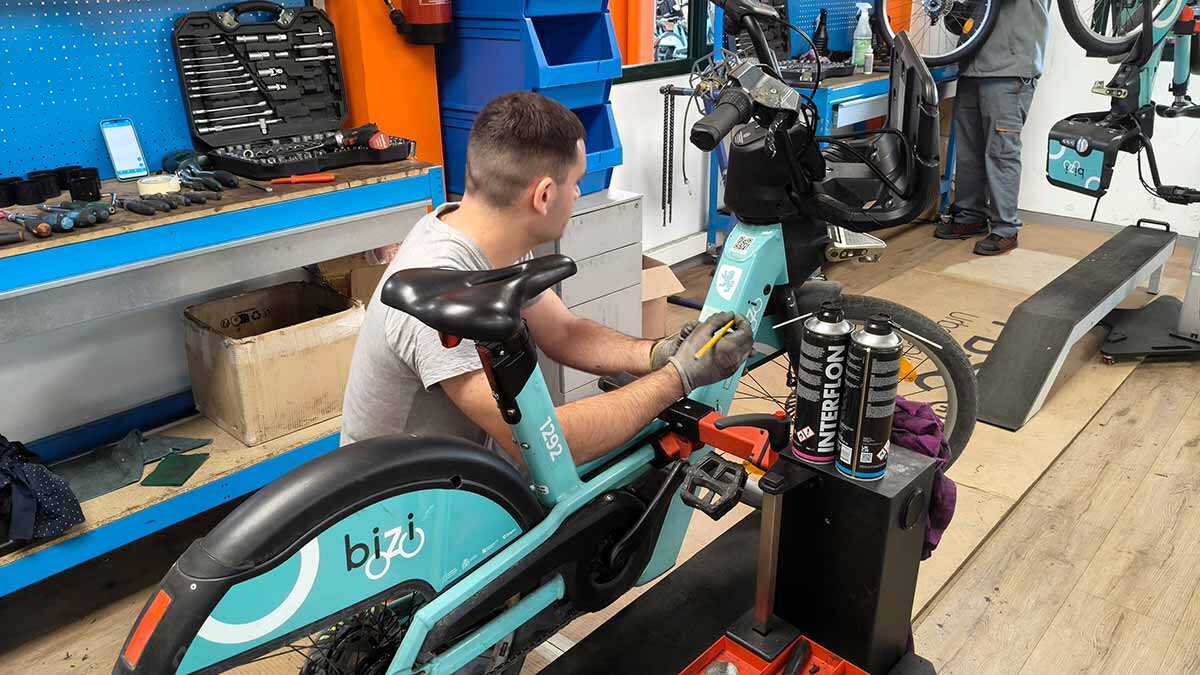
It is no minor effort considering the pace at which the fleet is used. As Zaragoza Councillor for the Environment and Mobility Tatiana Gaudes points out, each bicycle is used more than ten times a day, and the service exceeded 11.3 million journeys in 2025.
The workshops handle everything from mechanical breakdowns and cleaning to minor repairs related to vandalism or improper use of the bicycles. This has been compounded since mid-August by the introduction of a new tire with improvements to its tread, height and width, as well as a mark that makes it easier to identify when it needs to be replaced.
MORE MONITORING OF IMPROPER USE
Zaragoza City Council has also stepped up controls on fraudulent use. In cooperation with the Local Police, more than 400 incidents have been detected in just over a year and a half, most involving under-16s using the bicycles or young people aged between 16 and 18 doing so without the required parental authorization. Although vandalism accounts for a smaller share of these incidents, its effects are visible in the condition of the bicycles and, consequently, in the service received by other users.
Zaragoza Mayor Natalia Chueca recently displayed one of the bicycles that had been damaged, with its handlebar grips ripped off and one of its distinctive stickers removed. "Bizi belongs to everyone," she said at the time, appealing to users' sense of responsibility to preserve a service used by thousands of Zaragoza residents.
The system also includes measures to prevent some of these problems. A mechanism has been installed to make it harder to remove the handlebar grips, and when a station is full, users have an additional ten minutes to return the bicycle at another nearby station. Work is also under way on new artificial intelligence tools that will make it possible to anticipate when a space will become available at a station or when a bicycle will arrive, as the system prepares to add another 600 Bizi bicycles in 2027.


