It all began in 1963, when Basilio Aventín and Teresa decided to take the small pig farm they owned one step further and opened a butcher’s shop on the ground floor of their home. What started as a modest family business has grown into one of Graus’s companies with the greatest production capacity and a benchmark for sausage-making in Aragon.
However, long before the premises filled with longanizas and secallonas, they had a very different history. The Teatro Ideal Cinema operated in the same space, opening in 1913 and becoming one of the municipality’s major cultural centers. With room for 500 spectators, it hosted theatrical performances and screenings of silent films, which at the time needed musicians and narrators to bring the images to life. More than a century later, the building has traded the applause and bustle of performances for the quiet curing process of sausages.
THREE GENERATIONS IN THE SAUSAGE BUSINESS
The second generation was responsible for expanding the business. Ramón Balaguer and María Dolores Aventín decided to grow the company and build a factory next to the former family premises. There, they installed a butchering room, curing chambers and all the infrastructure needed to produce sausages on a larger artisanal scale.
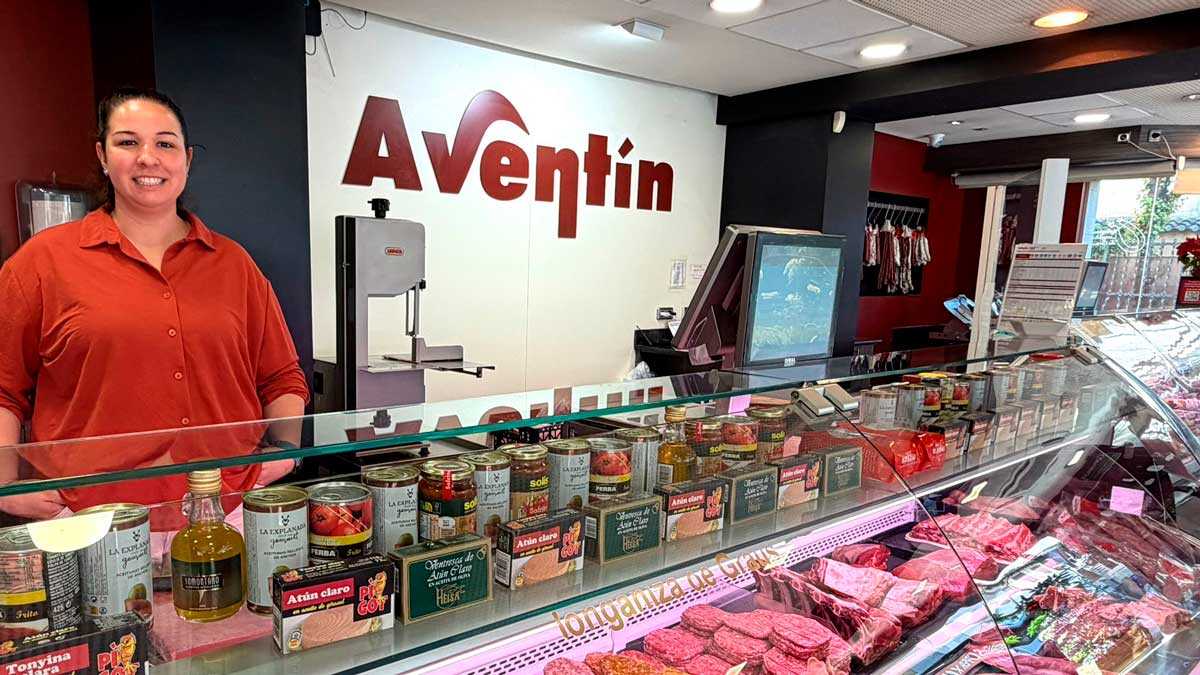
This business has 30 employees and two stores in Graus. Photo: Javier Miranda
“My parents were the ones who grew the business,” explains Judit Balaguer Aventín, the company’s current manager and the family’s third generation. Although her mother remains the owner, she currently runs the firm’s day-to-day operations.
Today, Embutidos Aventín has 30 employees and two stores in Graus: one next to the factory and another in the town center. Both are open every day of the week and have become regular stops for locals and tourists traveling through Ribagorza on their way to the Benasque Valley or Ordesa.
Their counters offer everything from traditional Graus longaniza to secallonas, salchichón, chorizo and more elaborate products such as burgers in different flavors, fresh longaniza, chistorra and sausages.
THE SECRET OF THE LONGANIZA
There are three companies in Graus that belong to the Graus Longaniza Association, and each maintains its own recipe. In Aventín’s case, part of the process is still based on the recipe created by grandfather Basilio more than 60 years ago.
“Nobody knows the exact recipe,” Judit explains. “We work with one part and the suppliers have another.” The preparation has been passed down from generation to generation since the family business began, she says.
Different varieties of sausage rest in the curing chambers at Embutidos Aventín during the curing process. Photo: Javier Miranda
The raw materials are also part of the local identity surrounding Graus longaniza. All the suppliers and slaughterhouses they work with are located within Huesca province, thereby maintaining production linked to local sourcing.
Embutidos Aventín is currently the company with the highest production in Graus and has annual revenue of around four million euros.
FROM GRAUS TO ALL OF SPAIN
Although customers from Graus remain an important part of the business, online sales are emerging as one of Embutidos Aventín’s avenues for the future. The company already sells throughout Spain, and Judit Balaguer believes the internet can help take the product beyond Ribagorza.
The company has also adapted part of its range to new formats and products. Highlights include burgers made with unusual flavors, such as longaniza with caramelized onions.
The company also gained visibility in 2022 after appearing in Georgina Rodríguez’s Netflix documentary. The influencer was a customer of the store and used to buy secallonas when she passed through the area.
Despite its growth and modernization, the essence of the business remains the same as it was more than 60 years ago: maintaining production rooted in the local area and a family recipe passed down from generation to generation.


