
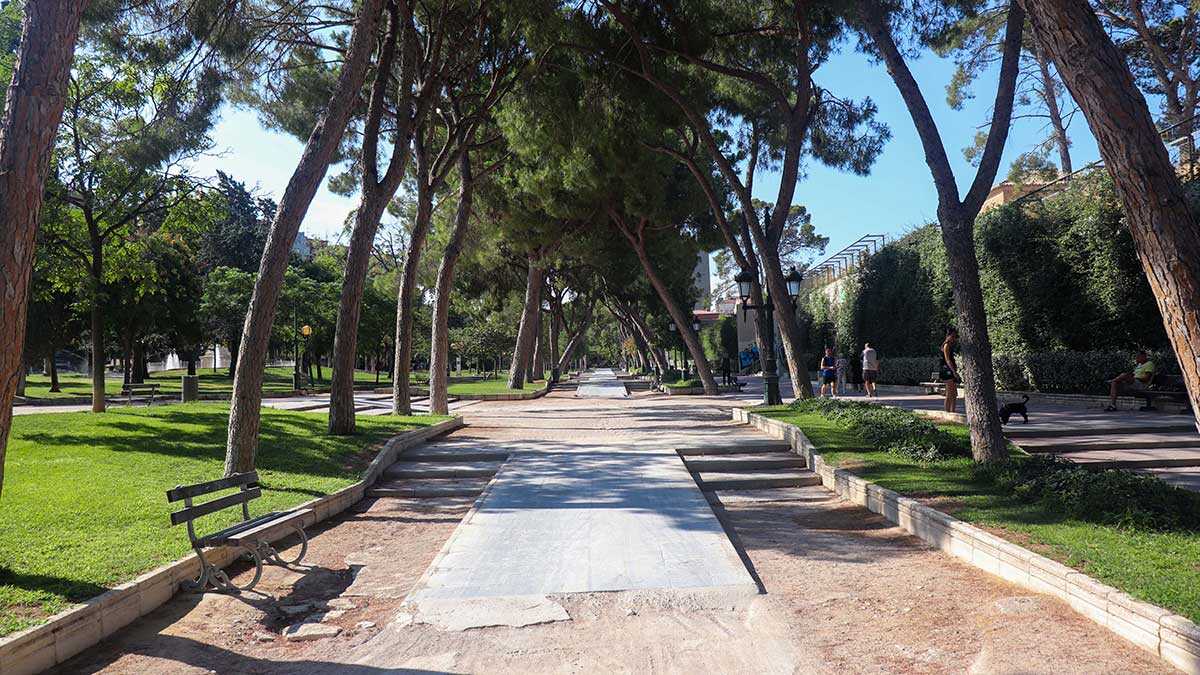
The first lot will allow faster action on civil works and street furniture in green areas, from damaged paving and surfaces to stairs, ramps, benches, bins, pergolas and fences. As explained by Councillor for the Environment and Mobility Tatiana Gaudes, these interventions previously often required the use of minor contracts or different administrative procedures, delaying their completion. The service has been awarded to Firmeza Solutions for 2.09 million euros.
The second lot, awarded to Valoriza for 2.57 million euros, will focus on maintaining play areas, facilities for older adults and sports equipment. The contract includes replacing components, as well as their maintenance and the repair of loose screws, breakages and other damage, in addition to regular inspections. The city has a total of 526 facilities of this type, and the aim is to reduce response times when a playground or sports facility is damaged or closed.
GREATER CONTROL OVER ZARAGOZA’S TREES
The third lot, awarded to Tecnigral for 1.22 million euros, will strengthen quality control over maintenance contracts and the safety of urban trees. The company will carry out technical inspections and audits and provide new digital tools and methodologies to detect potential inefficiencies and assess the condition of the trees. Gaudes highlighted that Zaragoza has more than 170,000 trees in public streets documented and mapped, and that this service will provide more technical information for making decisions in response to potential risks.
The contract completes the management of municipal green infrastructure covering 8.5 million square metres, 100 parks, 3,350 hectares of woodland and river areas, 526 play, senior and sports facilities, around 20,000 benches and 700 drinking-water fountains. The three lots will have an initial duration of four years, with the option of extending them for one more year, and will complement the new green-area maintenance contract currently out to tender, which the City Council expects to launch in 2027.
Gaudes also explained that municipal technical services have already drawn up a list of pending works, particularly those involving civil works. Once the contracts have been formalised, an implementation plan will be established and interventions will be prioritised according to technical criteria and the areas with the greatest demand from residents.



