
Zaragoza won First Prize in the "Significant Safety Initiative" category, which also included Nottingham Trams, RKH Qitarat, Keolis Hyderabad, Tram Operations Ltd, West Midlands Metro, IHF, Railway Assurance, and Skoda as nominees. In addition, the same project received a "Highly Commended" special mention in the "Team of the Year" category.
A EUROPEAN PROJECT PUT INTO PRACTICE IN ZARAGOZA
The Arise Project involved Zaragoza, along with two other selected cities, Lisbon and Antwerp, in the development of a European pilot funded by the European Institute of Technology (EIT), an institution under the European Commission. Its aim was to develop advanced driver assistance systems (ADAS) to support drivers and improve safety during journeys.
The project also involved two academic institutions—the Polytechnic University of Catalonia (UPC) and University College of London (UCL)—which were responsible for scientifically validating the results obtained, as well as the Carnet research institute, affiliated with the UPC; Belgian technology company OTIV; and railway manufacturer CAF.
In Zaragoza, systems were installed on two tram units. They consisted of a Lidar set, used to measure distances and movements, and cameras that analyzed the front of the vehicles, along with a panel that alerted the driver if an obstacle was detected. The alerts also took the approach speed into account to determine when an audible warning was necessary to prompt the driver to pay closer attention.
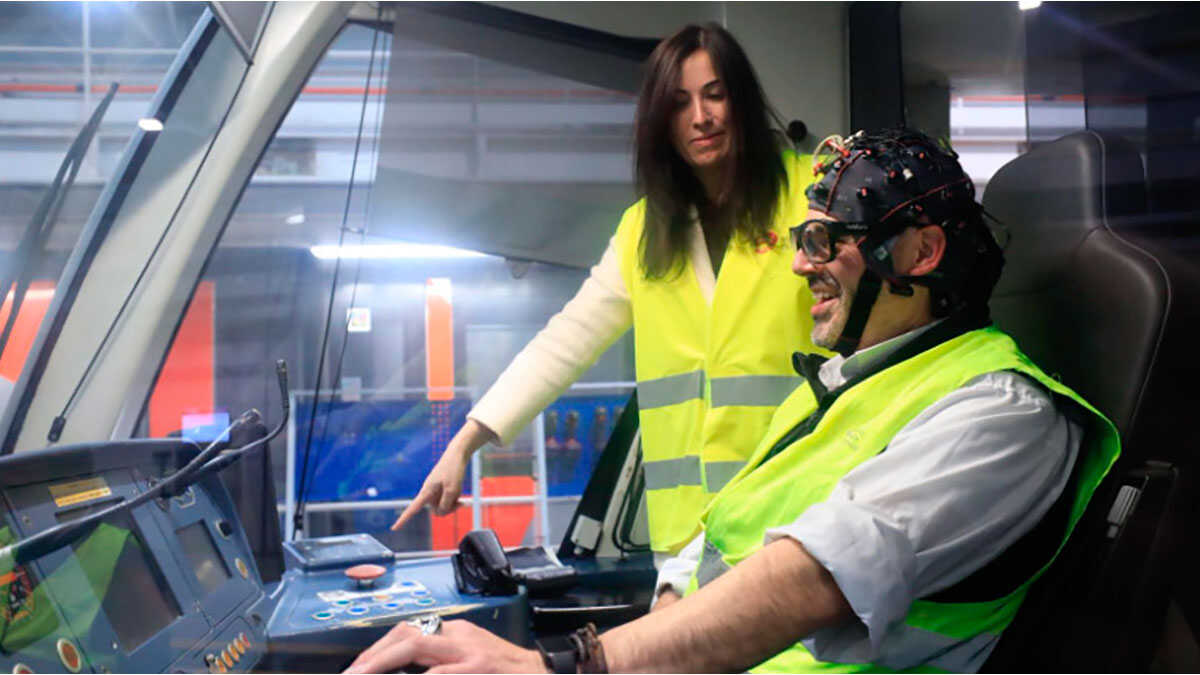
To analyze the results, researchers from University College of London worked with the drivers from January 14 to 16, assessing their response times with the system using a helmet that measured their brain activity while driving.



