
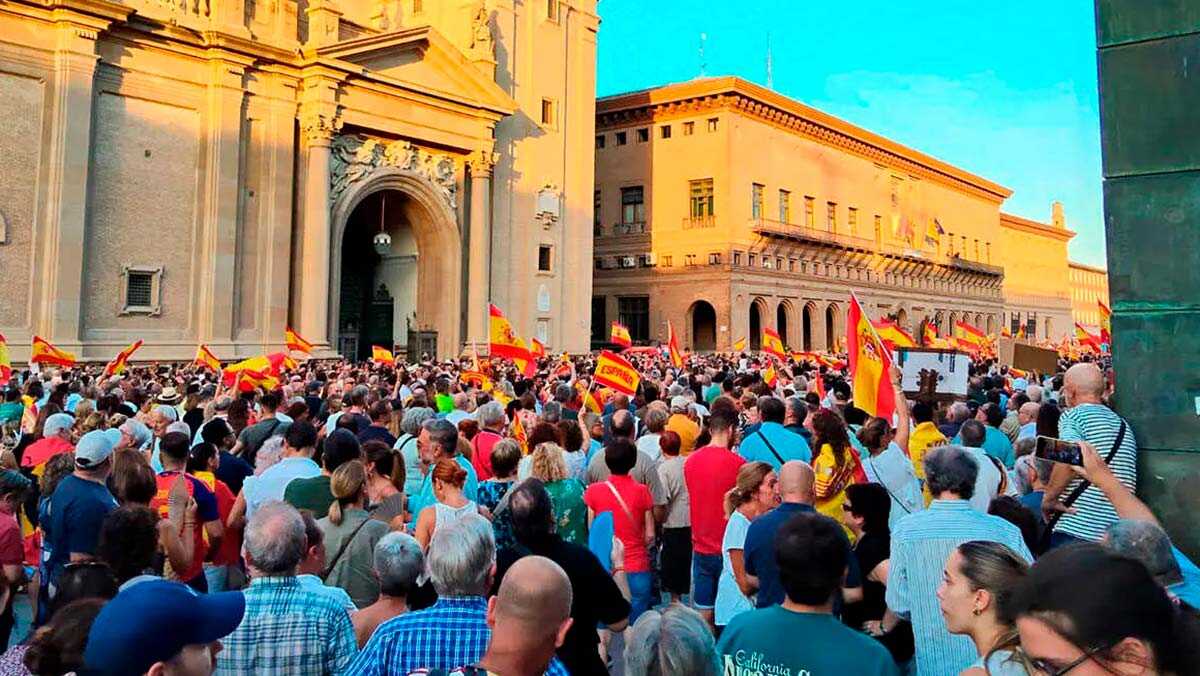
The debate heightened political tensions in the council chamber. Vox councillor Armando Martínez described what happened as an "invasion" and accused Pedro Sánchez's government of acting in complicity with Morocco, while PP councillor Alfonso Mendoza said that nearly 80,000 people had crossed the border irregularly and criticised the fact that, 62 days later, the situation remains unresolved.
The approved motions call, among other measures, for the State resources needed to restore normality to be maintained, border surveillance to be strengthened, action by the Security Forces and Corps to be guaranteed, and the return of those who entered Ceuta irregularly to be addressed through the procedures established by law. Vox also includes requests such as suspending cooperation agreements with Morocco, strengthening military and diplomatic measures, and seeking political and legal accountability from the Spanish government for its actions during the crisis.
OPPOSITION CRITICISES "PARTISAN INTERESTS" IN DEBATE OVER CEUTA
In response, ZeC spokesperson Elena Tomás argued that "Ceuta and Melilla are Spanish" and stressed that there is no doubt about Spanish sovereignty, but called for the focus to be broadened to include human rights: "Human beings have been used here to attack a country," she said.
PSOE councillor Alfonso Gómez, for his part, accused the PP and Vox of using the situation in Ceuta for "partisan interests" and criticised the fact that they could not vote separately on the points concerning sovereignty or support for the security forces before casting doubt on those same positions. "You are using this for partisan interests in order to reach government," he said during the debate.
CHUECA SPEAKS OUT IN SUPPORT OF CEUTA
Mayor Natalia Chueca brought the debate to a close with one of the strongest speeches against the central government. "We are experiencing one of the biggest attacks on our territory and on the unity of Spain," she said, before conveying Zaragoza's support to Ceuta's president, Juan Jesús Vivas: "Zaragoza stands with Ceuta and Ceuta is Spain." Chueca also questioned whether Pedro Sánchez was "more concerned about what Morocco tells him than about the people of Ceuta" and accused the government of having "abandoned Ceuta and, therefore, the Spanish people."
The political debate also produced one of the morning's most striking scenes. Unaffiliated councillor Marisa Gaspar attended the plenary session carrying a stick and a stone, which she displayed to denounce, as she explained, the weapons used during the attacks against Spanish military personnel. Gaspar linked the gesture to last week's incident in Congress, when a lawmaker was expelled after displaying an empty pepper spray canister. "I have brought a stick and a stone, which are the weapons the invaders used against the Spanish Army," she said.
The intervention prompted an immediate response from the mayor. "Please, Ms Gaspar, let's avoid putting on a show," Chueca told her from the chair of the plenary session. Gaspar had previously claimed that Spanish soldiers "had to flee" and questioned what would happen "the day they come in with weapons." She also expressed her "solidarity" with the people of Ceuta, whom she described as an "example of unity and patriotism" for the rest of Spain.



