
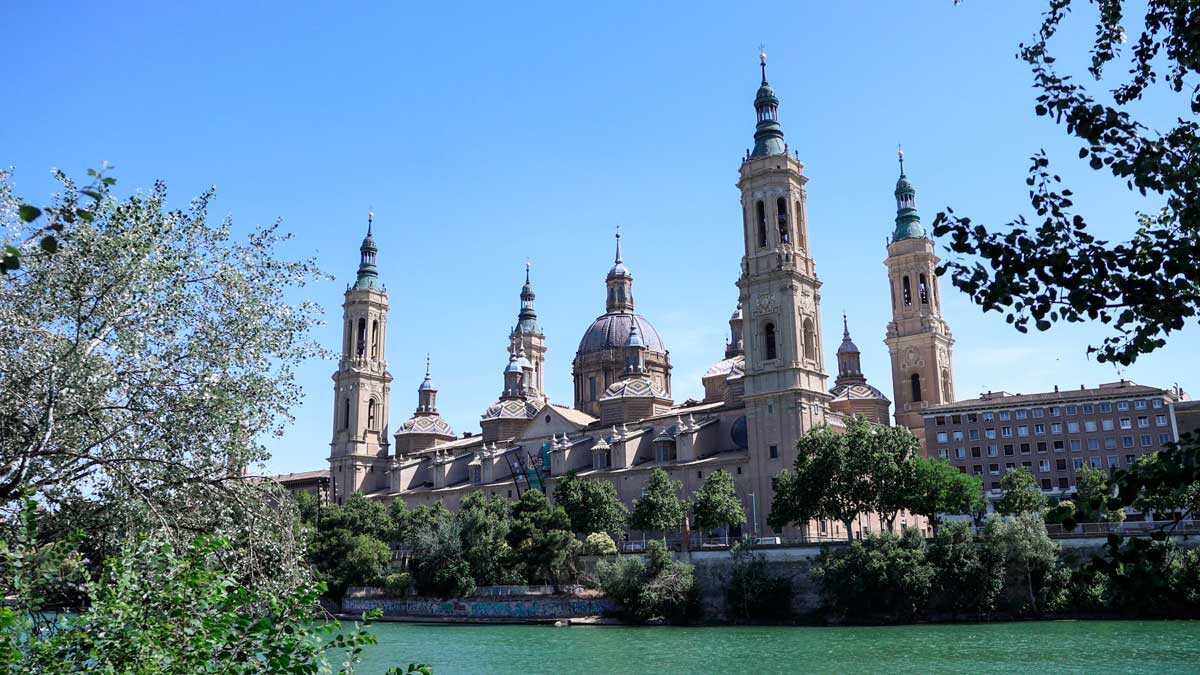
The city on the Ebro had already applied for the award in 2010, 2012 and 2014, but had never managed to reach the final. The European assessment examines seven indicators: air, water, nature and biodiversity, waste and the circular economy, noise, climate mitigation and adaptation to climate change.
Among the figures presented by the city is an average exposure to PM2.5 particles of 9.79 micrograms per cubic metre, with all pollutants falling below EU limits in 2025. In terms of water, household consumption stands at 100.4 litres per person per day, while total consumption has fallen from 105 cubic hectometres a year in the 1980s to 61 today.
WHAT ARE THE STRENGTHS OF THE BID?
Renaturalisation is another pillar of the bid. Some 27% of the municipality is protected, and the 12 Natura 2000 Network sites cover 35,978 hectares. In addition, 76.5% of Zaragoza residents live within 300 metres of a public green space covering more than 5,000 square metres. The Bosque de los Zaragozanos will reach 700,000 trees when the project is completed, while the 2026-2027 tree-planting campaign includes 3,370 new plantings. Waste generation fell by 15.93% between 2018 and 2025, while CO2 emissions dropped by 25% between 2005 and 2019.
The proposal also includes elements linked to health, inclusion and quality of life. Zaragoza highlights the 10,600 homes renovated since 2019, the €103.8 million allocated to the most vulnerable neighbourhoods and the more than 60 climate shelters established in senior centres, civic centres and libraries. The city is also the 2026 European Capital of Accessibility, a UNICEF Child Friendly City and a WHO Age-Friendly City. The bid therefore proposes a green transition that, according to the city council, must reach the entire population and prevent the environmental transformation from leaving groups behind.
The final presentation will take place on October 7 and 8 in Guimarães, where the five finalist cities will present their projects to an international jury. Zaragoza has already submitted documentation on environmental governance and its communication strategy, and is presenting its bid through collaboration between the city council, businesses, the university and civil society, alongside mechanisms such as citizens’ forums, citizen science and the Children’s and Accessibility Councils. Councillor for the Environment and Mobility Tatiana Gaudes said the bid brings together “the progress we have achieved together” and that this commitment will be defended before the jury in October. The city that will be European Green Capital in 2028 will finally be announced on October 8.



