
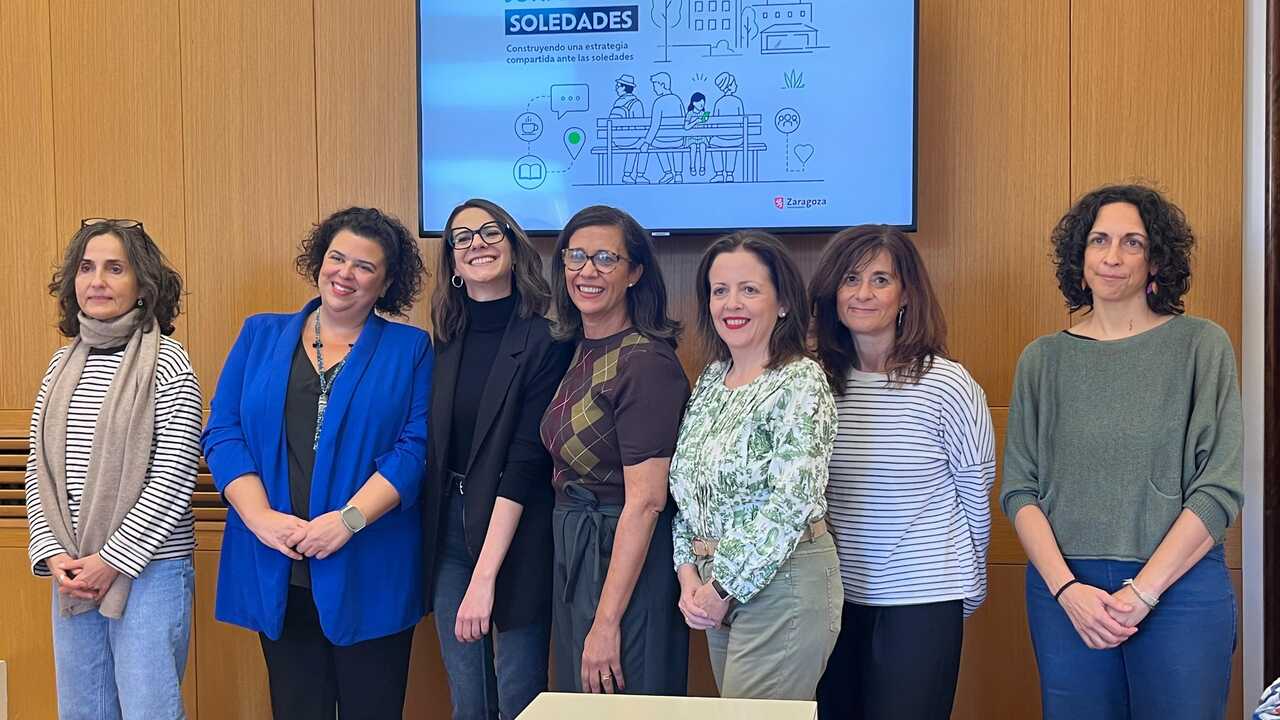
Social Policies Councillor Marián Orós presented the event "Lonelinesses. Building a shared strategy to address loneliness" on Thursday, through which Zaragoza aims to lay the foundations for a municipal plan. "It is not just about being alone; it is about feeling alone, believing that you have no support network, and feeling that your surroundings are hostile," Orós explained, warning of the consequences of this phenomenon for emotional well-being.
One aspect highlighted by the councillor is that unwanted loneliness also particularly affects young people. According to Orós, recent studies place this group among those most likely to report feeling lonely. In her view, this reality makes it necessary to expand public policies beyond older people and develop prevention measures adapted to all stages of life.
ZARAGOZA AIMS TO HAVE A PLAN AGAINST UNWANTED LONELINESS BY 2027
Zaragoza City Council is working to have a strategy against unwanted loneliness in place by early 2027. Six municipal services within the Social Policies department are currently collaborating on the design of this roadmap, which aims to coordinate existing programs and introduce new measures. "Our ultimate goal is for this not to remain within the City Council, but to become a commitment for the city, a commitment shared by everyone," Orós said.
The municipal official also warned of the close relationship between unwanted loneliness and mental health problems. During her speech, she recalled that the scientific community already refers to it as a "silent epidemic" because of its impact on psychological well-being. She therefore stressed the importance of developing prevention, awareness-raising and support programs that are maintained over time.
SESSIONS ON UNWANTED LONELINESS IN ZARAGOZA: DATES, PROGRAM AND REGISTRATION
The sessions will take place on Tuesday, October 27, and Wednesday, October 28, at La Azucarera in Zaragoza. The first session will focus on understanding the different forms of loneliness, with presentations by specialists and experiences from other public administrations. Topics will include identifying situations of isolation, evaluating programs and public strategies that are already working in other areas.
The second day will focus on initiatives already being developed in Zaragoza, with the participation of organizations such as ASAPME Aragón, the Delicias Neighborhood Association &171;Manuel Viola&187; and the Adunare Foundation. Experiences from Pamplona, Madrid and the Spanish Red Cross will also be presented. The event will conclude with a collaborative workshop to gather proposals that can serve as the basis for the future strategy against unwanted loneliness.
Registration for the sessions is open until October 23, or until the in-person capacity is reached, through the Zaragoza City Council website. The event can also be followed live on the municipal YouTube channel, and recordings will be available afterward, facilitating participation by anyone interested in learning how to prevent and combat unwanted loneliness.



