
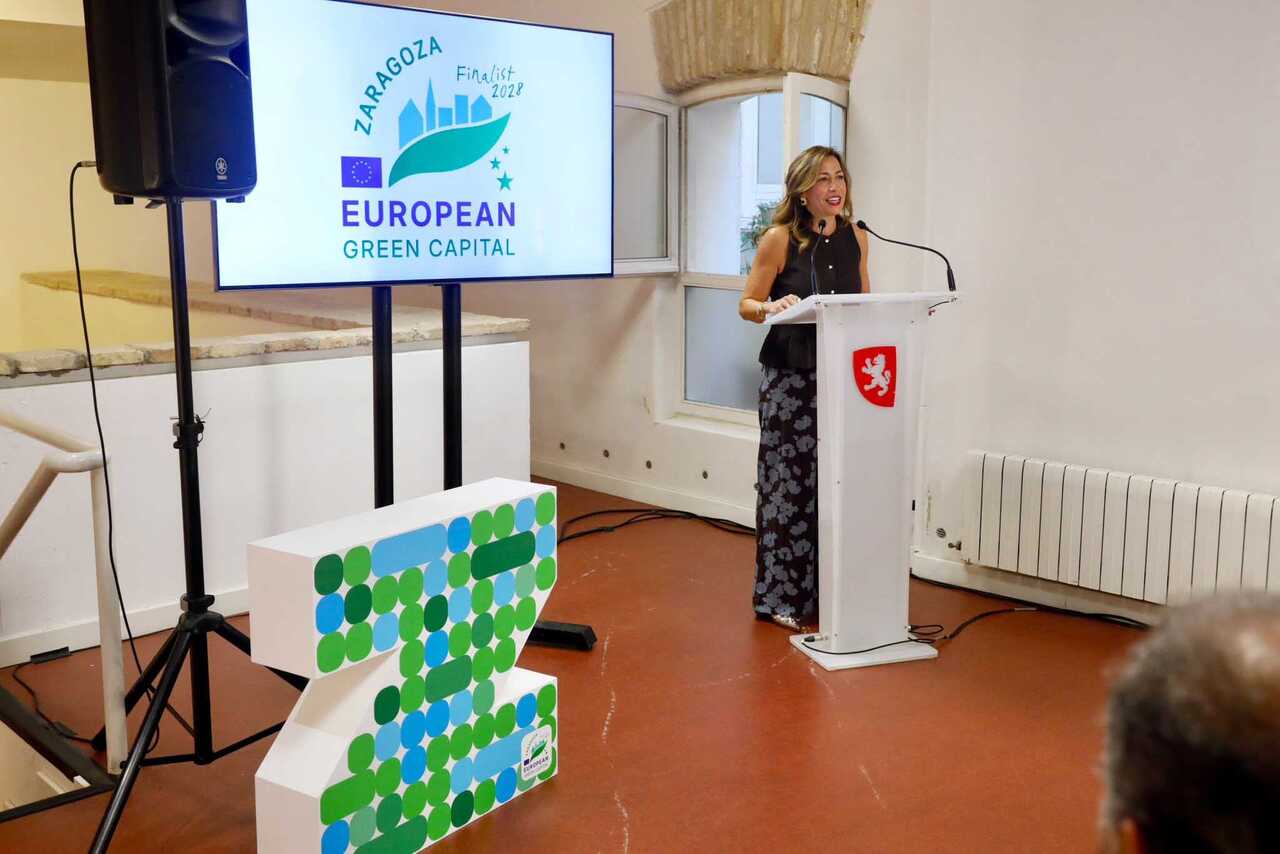
The city will defend before the international jury a project highlighting the evolution of its environmental policies in recent years. The European evaluation takes into account seven major areas: air quality, water, nature and biodiversity, waste and the circular economy, noise, emissions reduction and adaptation to climate change. This Wednesday, the five finalists will present their projects in Guimarães and, the following day, the verdict will be announced.
DATA SUPPORTING ZARAGOZA'S CANDIDACY
Among the data supporting the candidacy is the reduction in water consumption, which has fallen from 105 cubic hectometres a year in the 1980s to 61 today. Zaragoza also highlights that average exposure to PM2.5 particles stands at 9.79 micrograms per cubic metre and that 27% of its municipal area has some degree of protection. In addition, the Bosque de los Zaragozanos project aims to reach 700,000 trees, while the 2026-2027 campaign plans to plant a further 3,370.
The candidacy also focuses on waste and emissions. Between 2018 and 2025, total waste generation fell by 15.93% to 287,063 tonnes, while between 2005 and 2019, CO2 emissions dropped by 25% in absolute terms and by 31% per capita. These figures are complemented by the renovation of 10,600 homes since 2019 and more than 60 climate shelters across the city.
Mayor Natalia Chueca presented the candidacy's main priorities on Monday to representatives of the institutions, businesses and groups supporting it. Zaragoza has more than 150 letters of support and is presenting the candidacy as a project that goes beyond environmental policies, linking it to accessibility, inclusion and quality of life. "We want to be the World Capital of Wellbeing, the city where it is worth living," Chueca said. Now, on Thursday afternoon, Europe will have the final say.



