
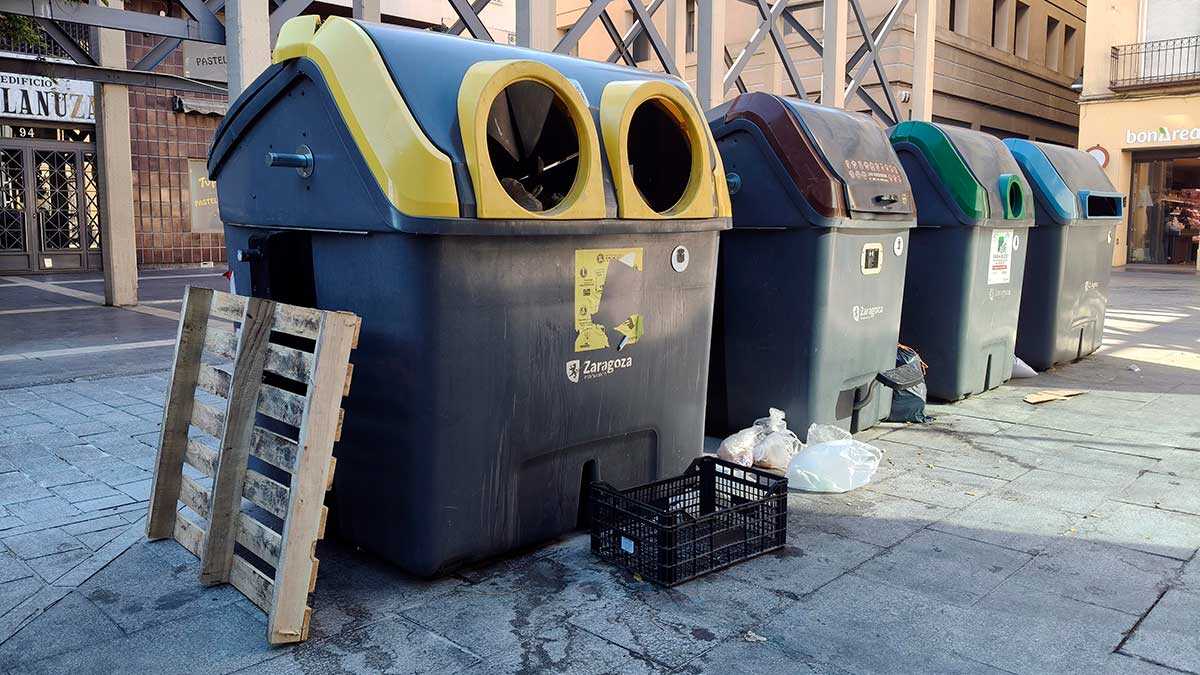
Zaragoza City Council has justified these percentages on the grounds that the service is essential and that a prolonged interruption would affect public health. According to municipal reports, organic waste begins to decompose after 48 hours, or even sooner in high temperatures, potentially causing foul odors and liquids posing a microbiological risk, as well as encouraging the appearance of mosquitoes, rats, cockroaches and flies. This is compounded by the increase in population and waste generation that the Aragonese capital experiences during the Pilar festivities.
The decree therefore establishes two levels of minimum services depending on when the strike takes place. The first will apply from 9 p.m. this Tuesday until 7 a.m. on October 10, and from 9 p.m. on October 19 until the stoppages end, while the second will be in effect during the festivities’ special operation. The figures refer to the workforce as a whole and not to each individual service.
ADDITIONAL STAFFING FOR THE OPENING CEREMONY AND FLOWER OFFERING
Zaragoza City Council is also planning additional staff for some of the most important days of the festivities. On October 10, coinciding with the opening ceremony, there will be a motorized cleaning crew and a mechanical sidewalk-sweeping service, both working the night shift. On October 12, the day of the Flower Offering, workers will be assigned to remove cellophane and clean the route, along with a cleaning crew on each morning, afternoon and night shift.
It also specifies that the contractors’ general services are included in the established minimums, but not the extraordinary services specifically scheduled for the festivities. FCC carries out specific recruitment each year to reinforce these special operations, so these workers are not included in the percentage set by the municipal decree.



