
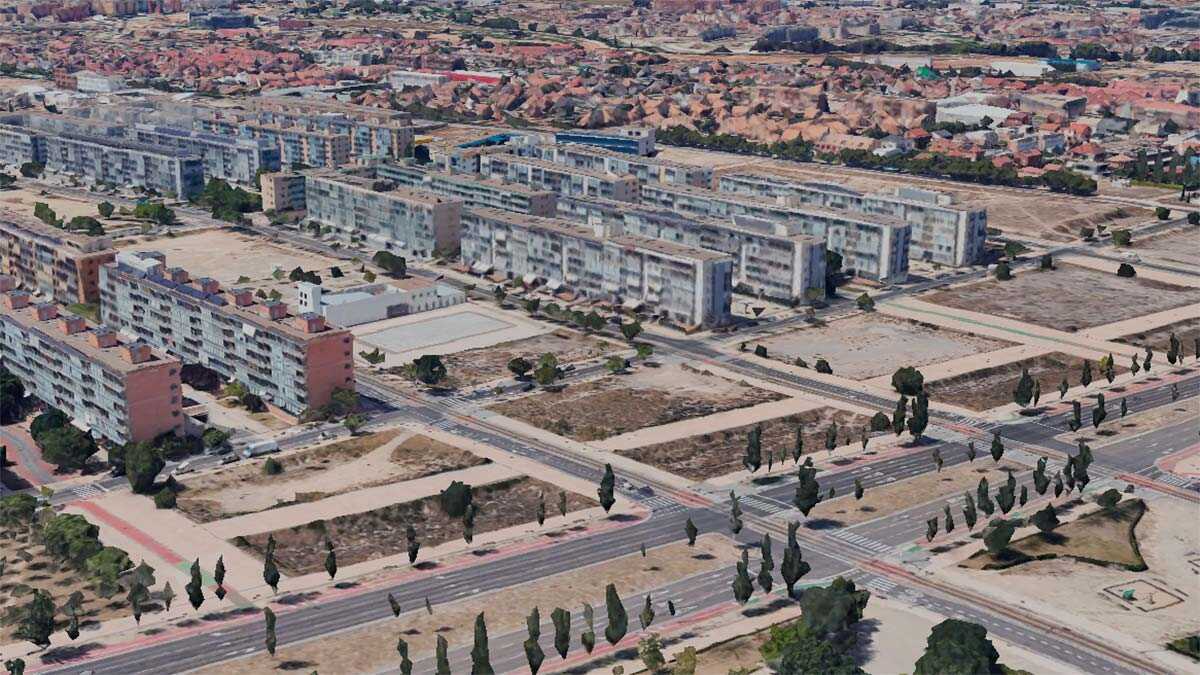
The controversy is particularly concentrated in Valdespartera, where the two stations are planned on Viridiana Street, next to La Sabina roundabout, and on Manhattan Street, near a residential area as well as educational facilities and play areas. Residents have spent weeks denouncing the proximity of the facilities to homes, schools and parks, and have also warned about vehicle and tanker-truck traffic on narrow streets. The motion, presented by Zaragoza en Común, also outlines the potential impacts associated with this type of activity, including noise, fumes, odors, hydrocarbon waste and the storage of flammable products.
"We come with an outstretched hand for dialogue, but the future of our neighborhood is not negotiable," said Lorena Gregorio of the Los Montes de Valdespartera Residents' Association. In Picarral, Ana Lasierra questioned the decision to locate a service station in an industrial area with homes and criticized the fact that, according to the association, affected residents were not informed. Olga Acero, of the Left Bank Residents' Platform, asked during the debate whether the consequences of placing a gas station next to a school, care home or park had really been assessed. Indeed, residents' mobilization had already led the council to provisionally suspend the two Valdespartera licenses and open a process to reassess them several days ago.
SERRANO ACKNOWLEDGES THAT THE VALDESPARTERA LICENSES "WERE A MISTAKE"
The most significant moment of the debate came with the intervention of Urban Planning Councillor Víctor Serrano, who admitted that "granting the two Valdespartera licenses was a mistake." Serrano said Natalia Chueca's government was willing to rectify the situation and announced that it would submit an amendment to the PGOU to change the conditions for establishing these activities. "When we make a mistake, we apologize and rectify it," he said before city council groups and residents' representatives.
ZeC, for its part, accused the municipal government of siding "with the construction companies" and turning its back on residents. Its spokesperson, Elena Tomás, called on the council to act to protect the public, while the PSOE described this type of license as a "serious problem for the city" and called for guarantees that residents would not ultimately have to bear the consequences of the installations. Vox said it had abstained when the licenses were granted and that, when the matter was debated in the plenary session, they had already been issued.
The municipal agreement now opens several fronts. On the one hand, the council will have to legally assess new urban planning regulations to keep future gas stations away from certain buildings and sensitive spaces. On the other, it proposes an ex officio review of the licenses for the three stations and the provisional suspension of their validity while those proceedings and any ongoing legal challenges are processed.
In Picarral, it will also be checked whether the affected residents were properly notified of the proceedings. The motion also includes a request for unattended or "low-cost" gas stations to be required to have qualified staff on site during opening hours and to meet new safety and customer service requirements.



