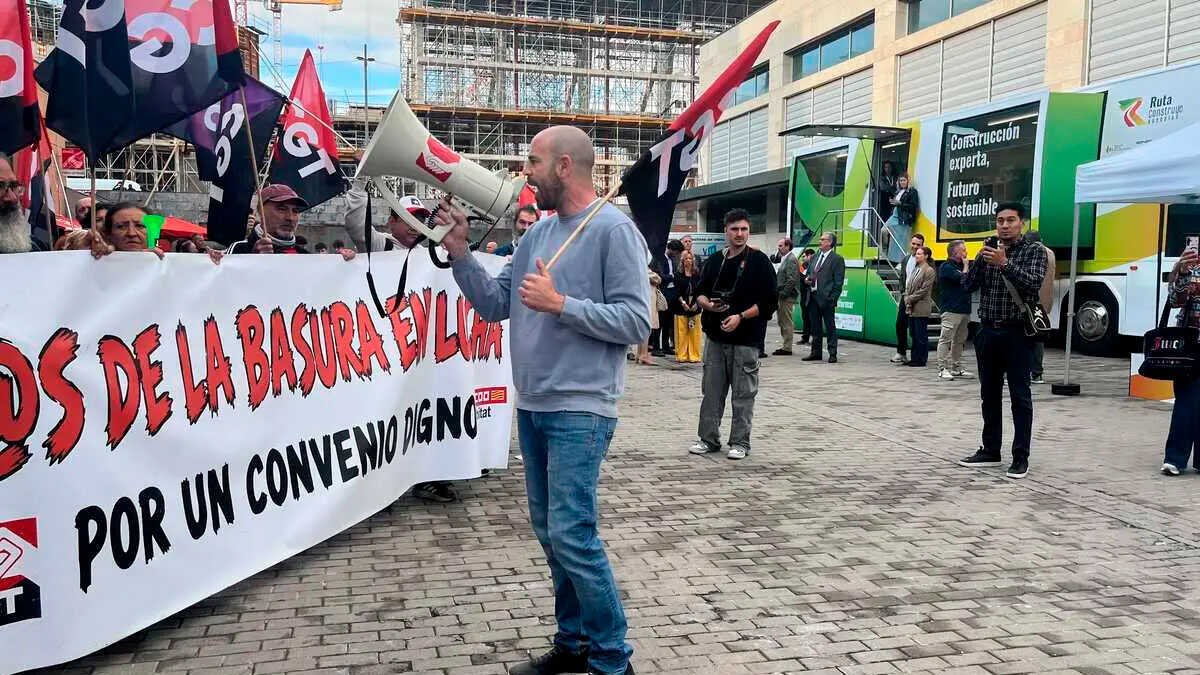
The union organization believes there has already been sufficient progress to reach an agreement and begin implementing labor improvements. These include salary increases, new work-life balance measures and extending the working hours of around 50 employees. UGT insists that workers have been waiting too long for their conditions to be updated, particularly in a service that operates every day of the week.
"Having wages frozen indefinitely has become a unanimous complaint among the workforce. The workforce is tired of an unfair deadlock," said Angélica Mazo, deputy general secretary of UGT Public Services Aragón, who reiterated the union's willingness to reach an agreement that would normalize the labor situation.
THE SALARY AND LABOR IMPROVEMENTS ON THE TABLE
According to UGT, the negotiations include salary increases that preserve the seniority system, as well as increases to certain allowances, such as side-loading and night-shift bonuses. The proposals also include raising compensation for death or incapacity to 40,000 euros, along with improvements in internal promotion and equality.
Regarding work-life balance, the proposals include the possibility of bringing forward or delaying the start or end of the working day by one hour to take children to school, extending certain types of leave and allowing maternity and paternity leave to be combined with vacation time. These measures would be accompanied by around 50 employees moving to full-time hours.
However, the union claims that part of the negotiating committee is preventing the agreement from being finalized. "Hours and hours are spent every day without making progress, without proposing anything and without wanting to reach an agreement. That is not negotiating," Mazo criticized. UGT maintains that the priority should be to ensure the agreed improvements can be implemented as soon as possible, rather than keeping the talks open indefinitely.
THE THREAT OF A STRIKE IN NOVEMBER REMAINS
This latest position comes amid divisions between the unions representing FCC's workforce in Zaragoza. UGT, USO, CSIF and Independiente support moving toward finalizing the agreement, while CGT and CCOO are maintaining their demands and consider the results of the negotiations insufficient. Neither bloc has enough of a majority on its own to sign the agreement.
FCC Medio Ambiente, for its part, has defended a proposal for an 11% salary increase over three years, linked to a working week of up to 34 hours. The company also expressed its willingness to maintain dialogue and questioned the protests held outside the negotiating committee.
Meanwhile, CGT and CCOO have not ruled out calling a new strike in November if no agreement is reached. Both unions called off the stoppages planned during the Fiestas del Pilar, but announced their intention to continue holding Thursday rallies in Plaza de España. Their main demands include recovering purchasing power, improving work-life balance and reducing the precariousness of weekend workers