
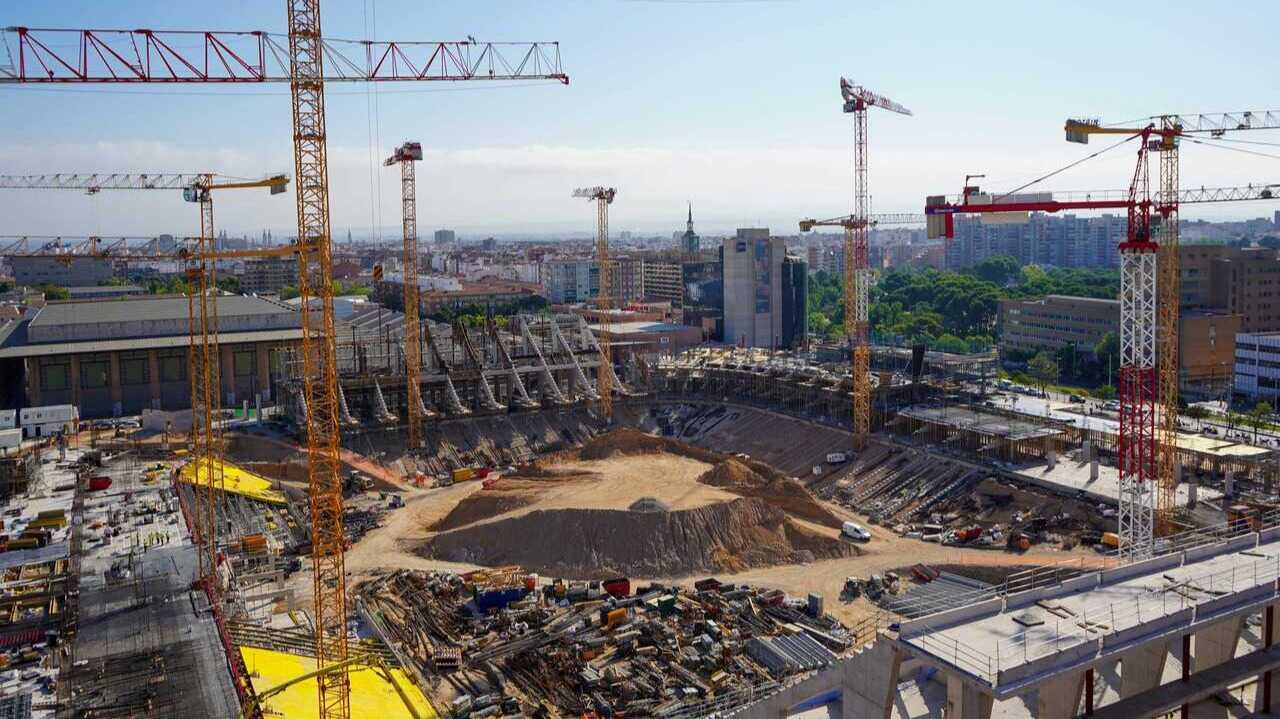
Chueca explained that high temperatures have affected the pace of construction and that interference with utilities not initially taken into account has also emerged. In response, the schedule will be reviewed to adjust deadlines and assess how to recover some of the lost time. For now, the mayor says no cost overruns have been calculated and maintains that the investment remains competitive considering the facilities the new stadium will offer.
HOW THE WORK IS PROGRESSING
Despite the delay, construction continues to advance, and some of the most important sections are already taking clear shape. The South Stand, with its structure and seating completed, is at a more advanced stage, while the underground levels have also been completed and are ready for the installation of services and masonry work. In the North Stand, the seating installation has already begun, and the structure of the stands is rising to the point that the scale of the future stadium is becoming clearly visible from outside.
The main question now is how long the wait will ultimately last and whether it will be possible to recover some of the accumulated delay. The initial aim was for Real Zaragoza to return to its stadium during the 2027-2028 season, but that schedule can no longer be met from the start of the campaign.
In addition, the construction tender documents provide for possible penalties for the joint venture formed by OHLA and Altuna y Uria if contractual deadlines are missed. Meanwhile, the city council maintains that the price has not increased, although the opening date is moving further away from the initial forecasts.



