
Hidden several meters below street level, the room retains a large low brick vault, a structure typical of the old cellars and basements of Aragon’s noble houses. Its design helped maintain a stable temperature throughout the year, something essential for preserving food and wine centuries ago.
For decades, the building remained in an advanced state of deterioration. Photos: Pilar Álvarez
Historical references place the building’s origins in an old late medieval or Renaissance palace house. Some local sources link the building to Pedro Arbués, an inquisitor of the Kingdom of Aragon who was murdered in 1485 at La Seo, although this connection has never been conclusively proven and is mainly part of the urban legends surrounding Zaragoza’s old town.
ONE OF THE OLDEST AREAS OF THE BUILDING
What does appear to be confirmed is that the cellar is one of the oldest surviving parts of the property. During the building’s renovation, reports indicated that it underwent a major transformation around 1680, when much of its current structure was built, although some earlier historic elements were preserved.
For decades, the building remained in an advanced state of deterioration until it was acquired by its current owners in 2007. The restoration preserved protected elements such as the façade, historic staircase, dome and, especially, the large underground vault, considered one of the most distinctive features of the complex.
The room has hosted cultural and musical activities. Photos: Pilar Álvarez
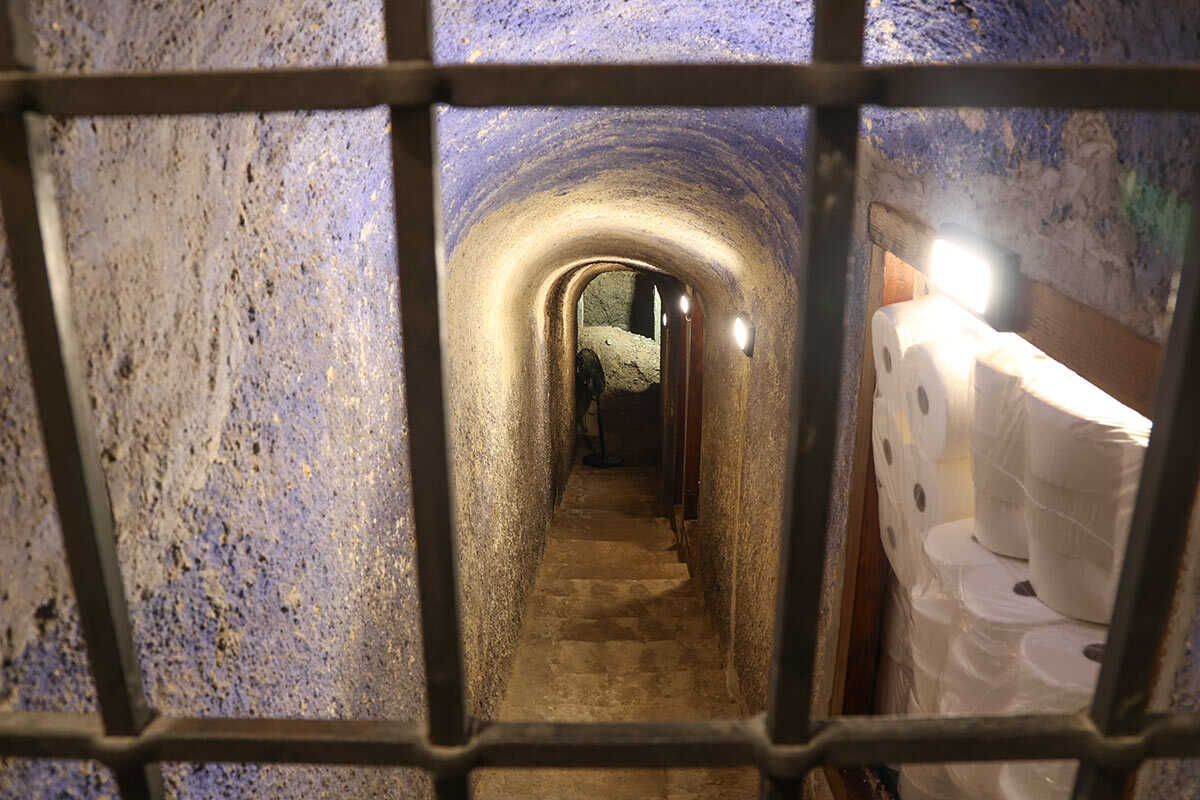
The hostel finally opened its doors in 2008, coinciding with the Zaragoza Expo. Beneath the current building, a network of underground corridors and galleries still preserves the appearance of the city’s old historic cellars. The brick and stone walls, together with the narrow access stairways, offer an idea of what these spaces used to look like when they were intended for storing and preserving goods centuries ago.
The main room stands out for its large brick vault, one of the most striking and best-preserved elements of the complex. After the renovation, the space was adapted for cultural events and began hosting concerts, meetings and activities under the name “La Bóveda del Albergue”. The dim lighting, arches and quiet atmosphere of the basement reinforce the feeling of being in one of the most distinctive and little-known corners of Zaragoza’s historic center.
A HIDDEN CORNER BENEATH ZARAGOZA’S STREETS
To reach the old cellar, visitors must descend a stone and brick staircase leading to this quiet underground space, away from the bustle of the historic center.
The room has hosted cultural and musical activities under the name “La Bóveda del Albergue”, becoming one of the most curious and little-known corners of Zaragoza’s underground.
Its preservation makes it possible to imagine what the large cellars of Zaragoza’s old noble houses were like and serves as a reminder that, beneath many streets in the historic center, structures connected to centuries of history still remain hidden.



