
The events were presented by Antonio Gaspar, then Zaragoza City Council’s deputy mayor for Urban Planning, and Councillor for Facilities Agustín Martín. Ricardo Cavero, then district council president, and Úrsula Heredia, the architect in charge of the restoration project, also took part.
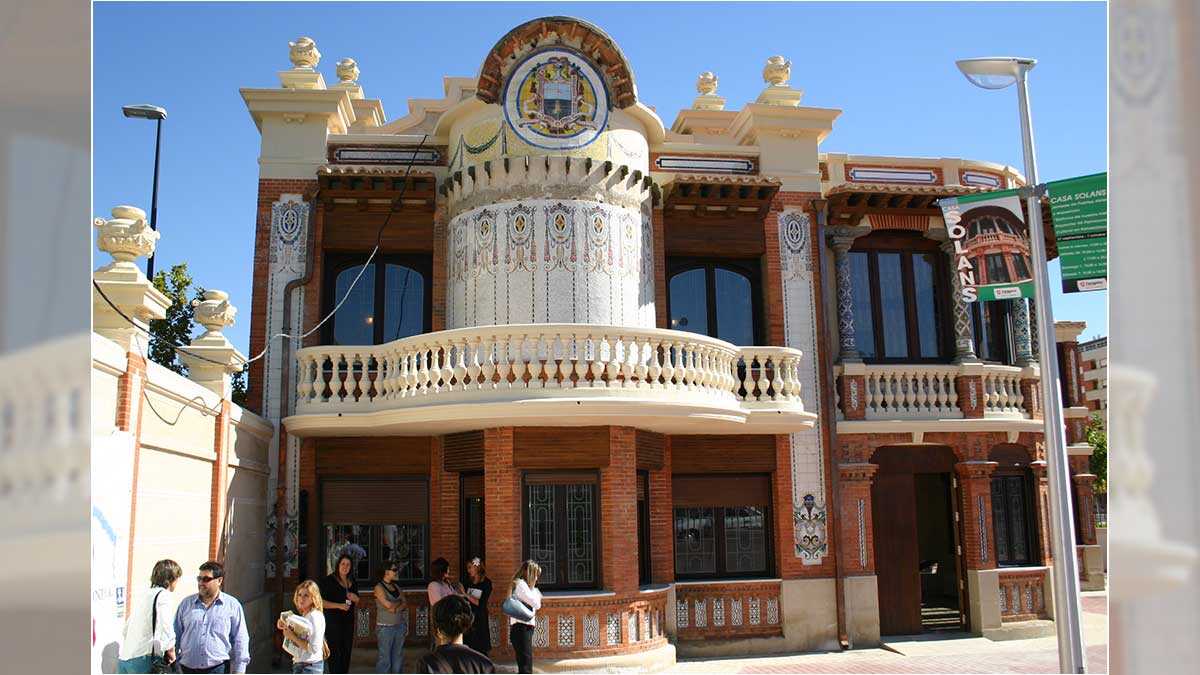
Until October 7, Zaragoza residents could visit the building free of charge through guided tours held in the afternoons and at weekends. One of the tour’s particular features was the collection of photographs displayed in different areas of the house, showing its previous condition and allowing visitors to see the work that had been carried out.
The restoration also paved the way for a new use for the property: Casa Solans was set to become the headquarters of the United Nations Secretariat for Water. Antonio Gaspar highlighted the intervention’s dual value at the time, both for restoring a historic Zaragoza building and for its subsequent public use.
The villa’s previous condition had made the restoration particularly challenging. Úrsula Heredia explained that the work had been highly labor-intensive and summed up the precision the intervention had required with an expressive description: it had been a “task of brush and scalpel.”
The open days thus allowed visitors to see firsthand the results of Casa Solans’s restoration before its new public use. This is how we reported it in Aragón Digital 20 years ago, when the modernist villa showed Zaragoza residents the outcome of its restoration.



