
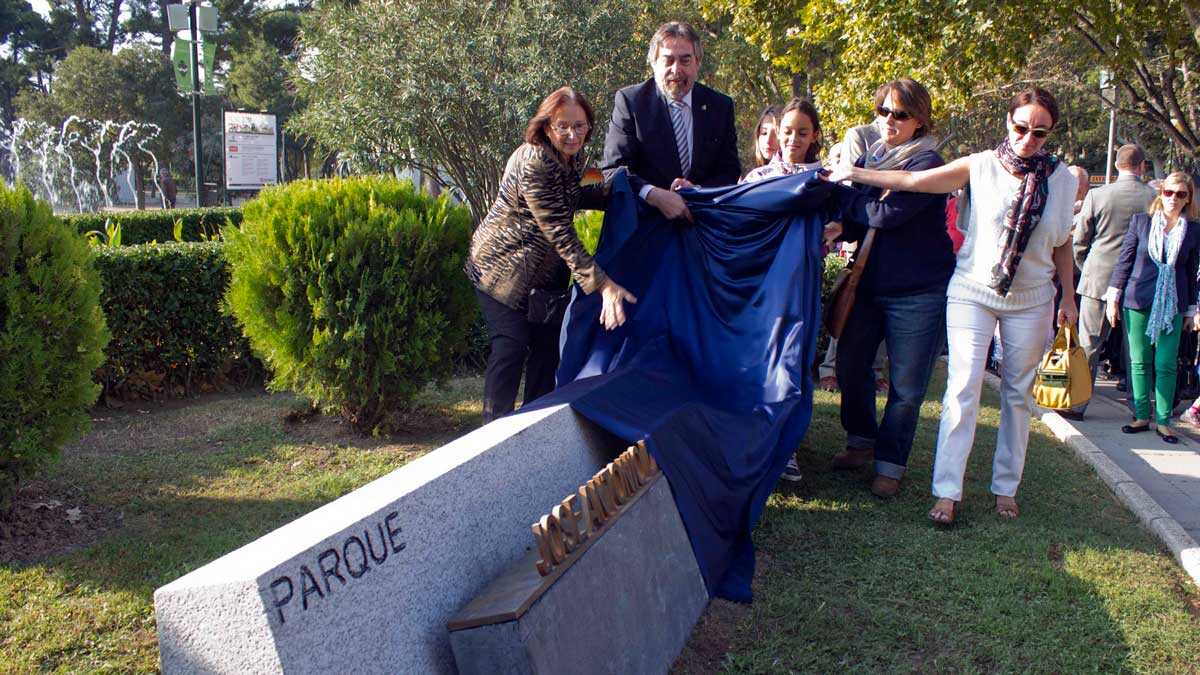
Labordeta's widow, Juana De Grandes, expressed her gratitude for the recognition and said that with the monument, "the circle that opened when José Antonio Labordeta died has been closed." For his family, that day was "a happy day within the sadness," because of the affection shown by the people of Zaragoza.
De Grandes also recalled her husband's character and his rejection of grand ceremonies, although she believed he would have appreciated the tribute because it had emerged from a popular initiative. During her speech, she also had words for the writer Félix Romeo, who had died shortly before, describing him as "a friend and almost a great son" to Labordeta.
The memorial consisted of two stone slabs made from weathered materials, symbolizing the simplicity of the Aragonese artist and politician. The then-mayor of Zaragoza, Juan Alberto Belloch, highlighted Labordeta's deep bond with the city and said he would always remain in the memory of the people of Zaragoza.
Belloch also used the inauguration to announce a commitment to the Fiestas del Pilar: as long as he remained mayor, Labordeta's songs would open and close the celebrations. El Canto a la Libertad would be played during the opening proclamation, while Somos would bring the festivities to a close before the fireworks.
The family's emotion, the memory of the singer-songwriter and the commitment to keeping his music alive defined that tribute at Parque Grande. This is how Aragón Digital reported it 15 years ago, in the original article about the inauguration of the memorial dedicated to José Antonio Labordeta in Zaragoza.



