INVESTMENT FUNDS AND FOREIGN INVESTORS COMPETE FOR LAND
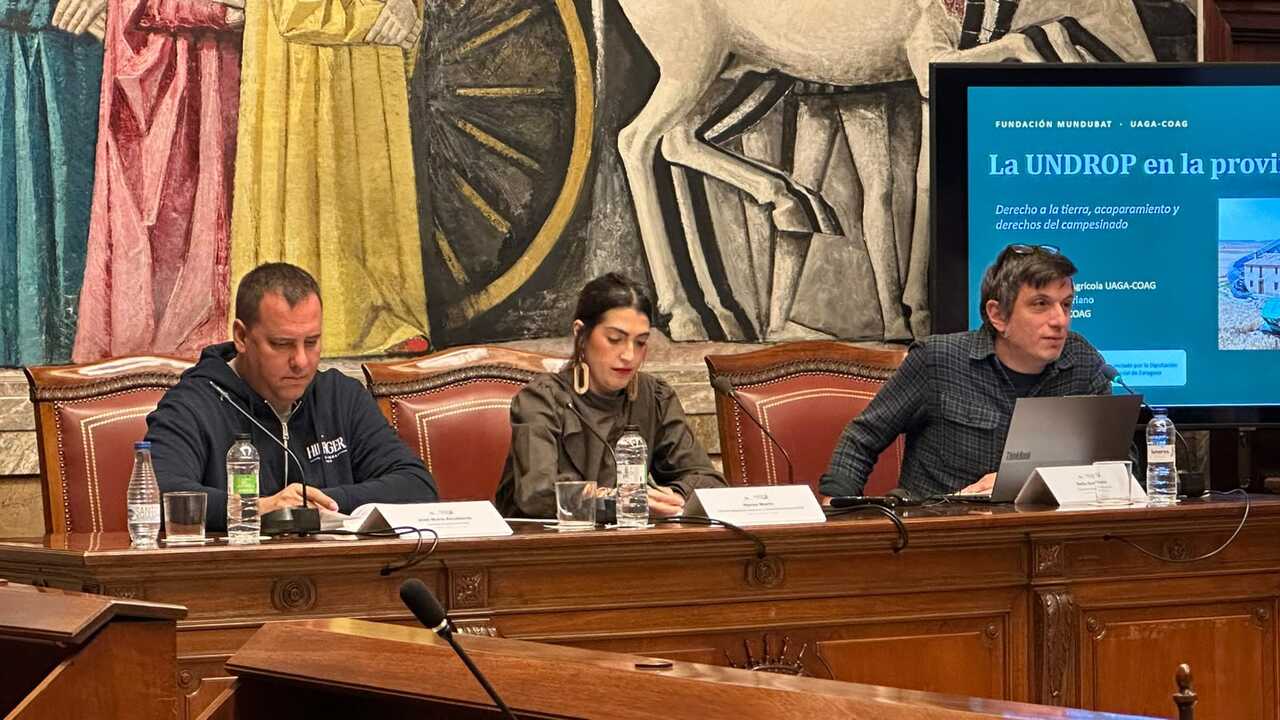
UAGA technician Carlos Polo explained that the growing interest of large companies and funds in agricultural land is reducing the area available to those seeking to enter the sector. Data centers and renewable energy facilities are adding to this competition, with financial offers that family farms cannot match. According to Polo, some technology projects offer “five, even ten times the price of the land,” while leases for other uses also exceed what can be paid through agricultural activity.
Polo acknowledged that it is difficult to quantify the extent of the phenomenon because of the lack of accessible information on purchases and the dispersion of data. Through the CAP declarations, UAGA has identified companies with up to 1,500 hectares of almond trees, although these figures do not make it possible to determine the full area acquired by funds. The organization maintains that the pressure is concentrated on large, productive plots, both dry-farmed and irrigated, and cited as an example the project to install solar panels in Zaragoza’s Movera agricultural district.
THE RISK OF FARMING WITHOUT FARMERS
The organization has described this transformation as the “Uberization of the countryside,” in which land passes from social and family farms to large corporate structures. Its concern extends to the rural environment as a whole: when a professional loses the plots they work, cooperative activity and the local economy may also suffer. “What is at stake, first and foremost, is something as serious as the social fabric of rural areas,” Polo warned.
UAGA has also warned of the risk that funds will abandon farms when crops stop delivering the expected returns. The organization said that this influx of capital is affecting irrigated areas such as Cinco Villas and questioned whether land transformed over decades through collective effort should end up concentrated in large companies. “If measures are not taken, we could ultimately see farming without farmers,” it warned during the presentation, linking the continuity of agricultural professionals to food production and the preservation of farming culture.
TAX INCENTIVES AND SOCIAL IMPACT PROTECTION
Among its proposals, UAGA is calling for tax advantages to encourage the sale or lease of land to professional farmers. The organization recalled that the parties it met with during the Aragonese election campaign pledged to promote measures in this area. It is also calling for social and agricultural impact assessments to be incorporated into projects that occupy agricultural land, in order to evaluate their effects on those who work the plots, cooperatives and the municipalities concerned.
The organization believes that these assessments should make it possible to halt projects when the loss of professionals and rural activity outweighs the expected benefits. “There are no limits; we have to set limits,” it demanded regarding the purchase of land by funds. Alongside this, it has advocated support for new entrants and recognition of the services provided by agriculture beyond the sale of its products. “Agriculture is done by farmers,” Polo concluded, calling on public administrations to commit to the continuity of those who work and remain in the territory.