Her return, prompted by the need to be close to her family, has meant reconnecting with Spanish classrooms and comparing the Aragonese education system with some of those she experienced during more than a decade abroad. Although she identifies strengths through this comparison, she also points to aspects that concern her, such as the “lack of autonomy” among Spanish students.
In her view, both families and teachers sometimes tend to solve children’s problems too quickly. This ranges from writing down their homework for them to constantly reminding them what they have to do. “We are very used to doing things for our children and our students,” she explains. For Utrilla, making mistakes is also part of learning: “You forgot your homework, so tomorrow you’re going to have a problem. I’m not going to solve it for you.”
That autonomy is one of the differences she has noticed most compared with countries such as the UK, Ireland and Australia. She also points to classroom behavior. As she explains, in Ireland, Australia and the UK she found students who were much more disciplined in class and who “paid attention” and “listened” to the teacher and their classmates. This contrasts with scenes she has observed since returning to Spain, where she considers it more common for side conversations to take place during a presentation or for the teacher to have to repeatedly demand attention.
Not everything, however, works in favor of foreign systems. The English teacher highlights that in Spain there is a much closer relationship between students and teachers, as well as greater spontaneity in interactions. Children, she says, are “much more affectionate”, something she also values after so many years working abroad.
THE ASSESSMENT SYSTEM
Another aspect she questions is the way students are assessed. “No matter how much the law says that competencies are evaluated, what you are really evaluating is memory,” she says. In her opinion, this reality is present from school through university and even in the civil service exams themselves.
Autonomy is one of the differences she has noticed most compared with other education systems. Photo provided to Aragón Press
During her years in the UK, she experienced a different way of measuring learning, with greater emphasis on daily work, projects, presentations and research. Memorization, she points out, may be necessary, but she considers skills such as finding information, solving problems and knowing how to work independently far more important in the long term.
THE DIFFERENCES IN THE PISA REPORT
According to Utrilla, this difference in school habits also emerges when international assessments such as PISA are examined. Having worked in several countries with strong educational results, she believes one of the keys lies in the way students approach these tests.
In Spain, she explains, students are very used to linking effort to a grade. “Since the PISA exam does not count toward their grade, children do not make an effort. In Spain, effort is too closely tied to grades,” she argues. She believes this reaction would be different if the result had academic consequences, while in other education systems she has found a culture in which the test is approached with a different kind of motivation.
Since the PISA exam does not count toward their grade, children do not make an effort. In Spain, effort is too closely tied to grades
In the UK, for example, she recalls that students take assessments and tests that do not always directly affect their grades. There, evaluation also places greater importance on classwork, projects, presentations and attitude. “Effort comes first,” she concludes.
She noticed the same commitment in Australia, where a sense of belonging to the school and the community carries significant weight. Utrilla links this culture to a greater willingness to make an effort when students feel they are not representing only themselves, but also their school or even their country.
ENGLISH FOR SPEAKING, NOT JUST PASSING
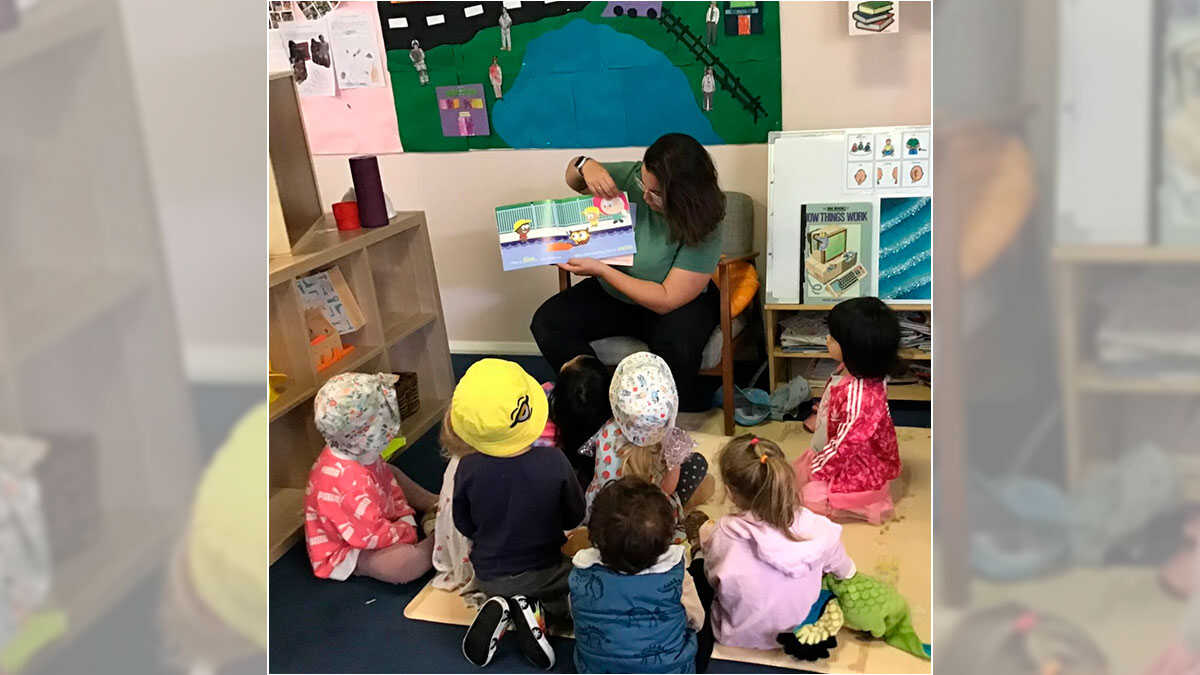
Her return to Spanish classrooms has also prompted her to reflect on how English is taught. Utrilla believes there is still an excessive reliance on textbooks and exercises that are repeated practically every school year. “We use the same books, review the same things and it’s incredibly boring,” she laments.
The young teacher from Zaragoza has traveled to almost 100 countries. Photo provided to Aragón Press
Instead of that model, she advocates learning the language by using it. “Children learn through exposure to the language, by listening to it, using it and playing in that language,” she explains. At the schools where she worked abroad, English was above all a communication tool, not merely a subject to pass.
Her own experience also shapes this view. Utrilla is dyslexic and had difficulties with languages during primary and secondary school. She now holds a C2 level in English, as well as knowing four other languages, and says that having gone through those difficulties allows her to better understand students who struggle the most. “For me, knowing English does not mean knowing the third column of irregular verbs,” she insists.
For the teacher, learning a language should primarily serve to communicate and broaden horizons. “English is a language that breaks down borders,” she concludes after more than a decade living and teaching abroad.