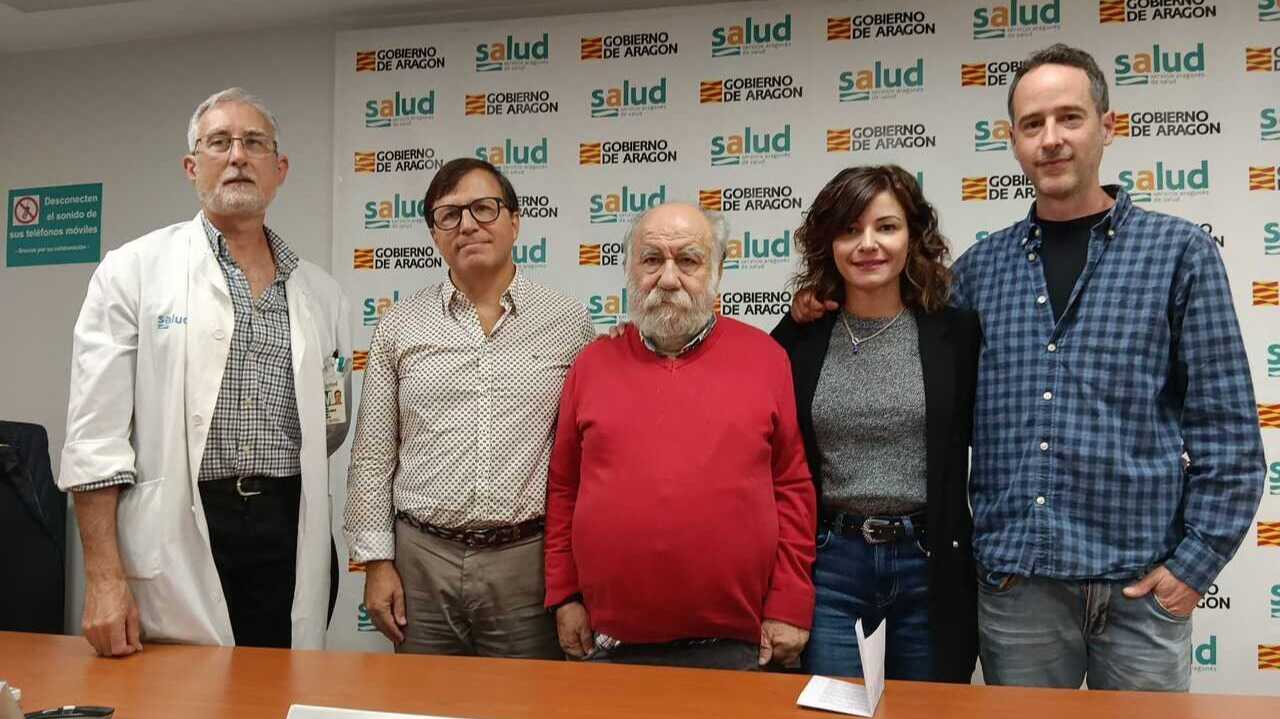
On World Stroke Day, held on October 29, the Stroke Association of Aragon (AIDA) has sought to focus precisely on the “invisible after-effects” that shape the daily lives of survivors and their families.
According to the National Health System’s Stroke Strategy, nearly one-third of stroke survivors experience after-effects that can lead to functional dependence. Physical limitations may be accompanied by cognitive changes, concentration problems, emotional changes or communication difficulties.
REGAINING LIFE AFTER A STROKE
Specialists stress that recovery does not end with hospital care. Neurologist Carlos Tejero has explained that these consequences can affect autonomy, personal relationships, family life and the return to work, forcing many people to rethink their life plans.
For this reason, AIDA is calling for multidisciplinary care combining medical assistance, rehabilitation, nursing and social support. The aim is not only to recover abilities, but also to help those affected take part in their community again and maintain the greatest possible autonomy.
Prevention and speed remain essential. Sudden weakness in an arm or leg, facial drooping, difficulty speaking or sudden loss of vision are some of the warning signs that require an immediate call to 061. “Time is brain,” specialists remind us: the sooner action is taken, the greater the chances of reducing damage and long-term effects.
SOCIAL WORK: SUPPORTING THE REBUILDING OF LIVES
One of the areas AIDA has emphasized most this year is the need to address the social consequences of stroke. After hospital discharge, many families face changes in their daily lives, loss of autonomy, new caregiving responsibilities, employment uncertainty or difficulties accessing available resources.
Ruth Ambrós, a social worker at AIDA, has explained that social work plays a fundamental role from the initial intake, through listening, needs assessment, advice and support. “After a stroke, many people and families have to reorganize their lives. Our work is not limited to providing information about benefits or handling paperwork, but also involves supporting them through this process and facilitating the assistance that allows them to regain the greatest possible autonomy,” Ruth Ambrós explained.
AIDA’s social work department provides guidance on dependency, disability, benefits and assistance, adapting to new employment situations and support resources. It also supports families and caregivers, who often have to cope with major changes and emotional strain.
Ambrós also highlighted the importance of coordination with the neurorehabilitation team, incorporating each person’s social and family circumstances into their recovery goals. “It is not only about recovering abilities, but about enabling people to participate in society again, maintain their relationships and rebuild their life plans. Rehabilitation and social support must go hand in hand,” she said.