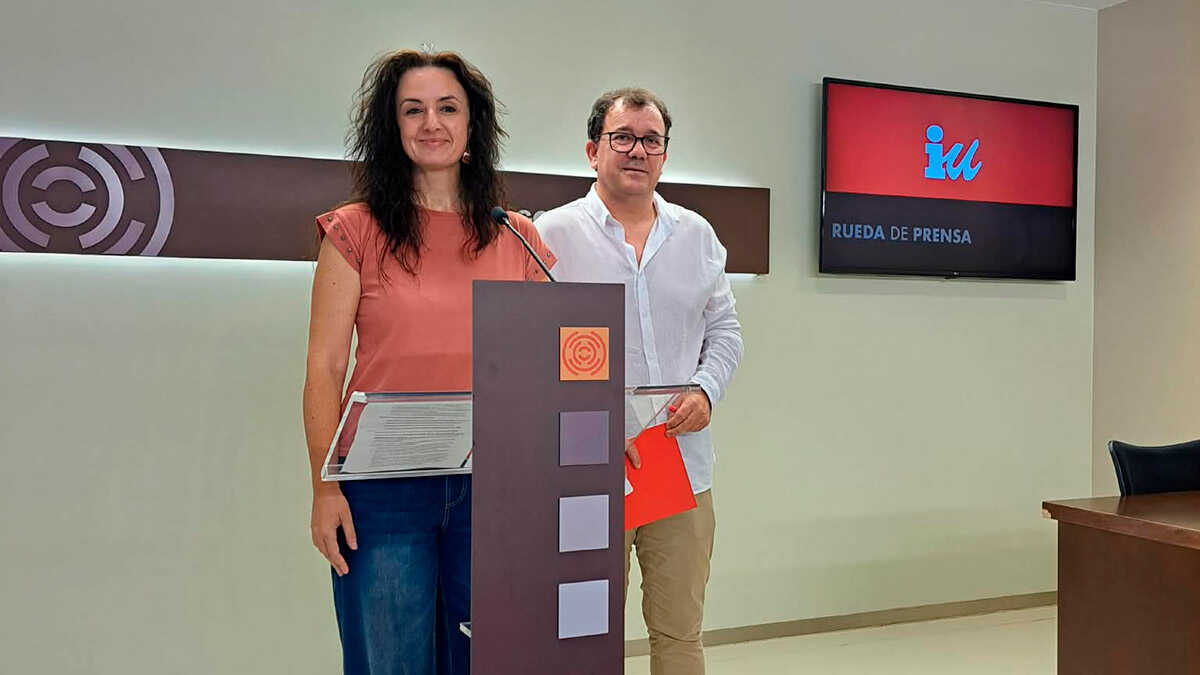
IU spokesperson in the Aragon Parliament, Marta Abengochea, has argued that access to housing is a right that “has never really been guaranteed, either by the PSOE, social democracy or the right”. The lawmaker warned that the housing crisis has become one of the main drivers of inequality and social insecurity.
HOUSING, “A SOCIAL EARTHQUAKE
Abengochea said housing is causing “a genuine social earthquake” that explains the growing mobilization of citizens and trade unions, which is leading to a general strike. She also warned of the risk that housing may never become a truly guaranteed right if public authorities continue to leave the issue in the hands of the market.
The parliamentary spokesperson criticized the bill presented by Jorge Azcón’s government, saying it fails to address the need to guarantee the right to housing. She also believes it contradicts the conclusions of the Aragon Ombudsman, who had already warned that the market alone does not guarantee access to decent housing. She further noted that the text moves away from the spirit of the State Housing Act and the future State Housing Plan.
PERMANENTLY PROTECTED HOUSING AND MORE RENOVATION
Jesús García Usón, IU Aragon’s head of Productive Development and the Environment, explained the content of the 183 amendments, whose aim is to “turn around a law with a clear commercialist orientation” and transform it into legislation designed to guarantee a constitutional right.
García Usón said the changes begin in the statement of reasons itself, where they propose expressly recognizing the social function of housing and access to it as a universal right. The amendments also rework the first article to place the effective guarantee of the right to housing among the law’s fundamental objectives.
IU Aragon’s head of Productive Development also defended making protected housing status permanent, instead of the 10- or 15-year periods currently provided for. In his view, homes built with public resources should retain their social function indefinitely and remain part of the protected housing stock. In this regard, he recalled that the new State Housing Plan makes a large part of public funding conditional on this criterion.
Other key proposals include prioritizing housing renovation, limiting the use of land reserved for public facilities to prevent it from becoming part of private real estate ventures, recognizing collaborative and cooperative housing, and including all temporary workers, regardless of the economic sector to which they belong.
RENTAL MEDIATION AND REGULATION OF EMPTY HOMES
IU proposes adding entirely new chapters to regulate public rental mediation programs, with guarantees for property owners, and to encourage empty homes to be brought into use. The party also proposes regulating tourist-use housing in municipalities and areas facing difficulties accessing housing, as well as declaring stressed residential market areas.
The amendments also include regulating empty homes owned by large property holders and expanding first-refusal and redemption rights to prevent the loss of protected housing. Finally, IU proposes strengthening access to public housing for people with disabilities by reserving adapted homes. It also supports creating a public stock of previously occupied housing through the acquisition of already-built properties, as a complement to the construction of new homes.