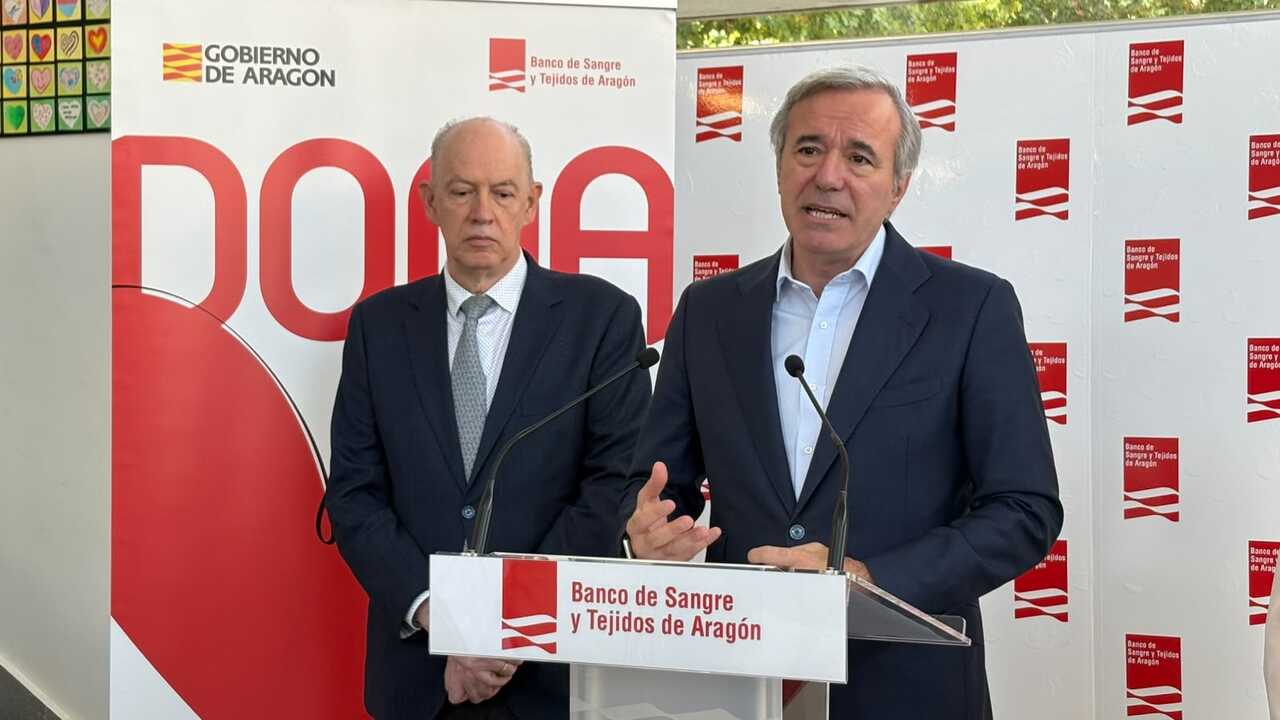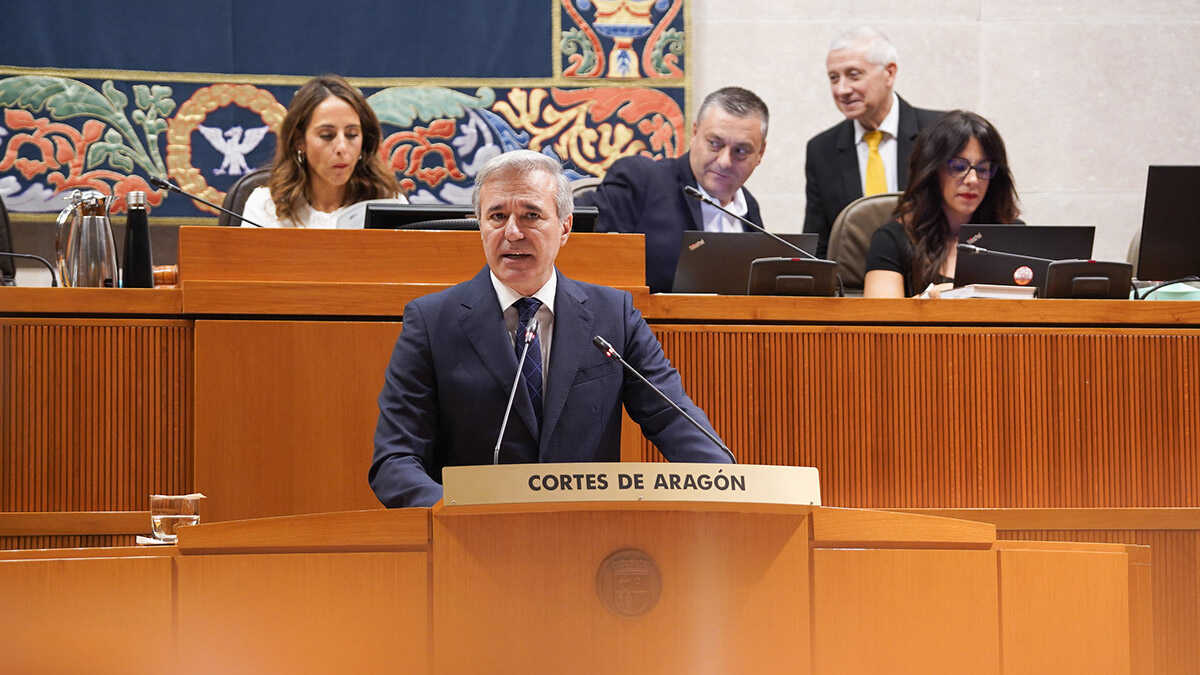
Jorge Azcón has defended the view that the autonomous community has joined the digital revolution thanks to its conditions: it generates twice as much energy as it consumes, with 82% coming from renewable sources. Becoming the “most important technology hub in southern Europe” would bring 143,000 jobs during construction and 9,000 once the facilities are operational.
INVESTMENT AT SERIOUS RISK
“This prosperity is seriously at risk because of the incompetence and sectarianism of the Spanish government,” Azcón said. He recalled that he has been calling for an improvement to the electricity grid from the Ministry for the Ecological Transition and the Demographic Challenge for years, but that the ministry has benefited “those who politically support the Spanish government,” namely by “giving more connection capacity to the Basque Country and Catalonia.”
Regarding the data center decree, the Aragonese PP leader criticized its publication in August, “without prior negotiations or consensus,” saying the rules “completely change everything retroactively, with the game already under way.” He also pointed to the environmental requirements: “All experts say that this materially prevents the development of these facilities.”
“All you have to do is look at the avalanche of objections from every sector and institution in society. Regional governments, business associations, data companies, clusters, professional associations... there are 600 objections despite the deliberately chosen publication date,” Azcón asserted.
REGULATION IN RESPONSE TO THE WAVE OF DATA CENTERS
Pilar Alegría defended the position that the Socialist Party is not opposed to data centers, but demands that they translate into “wealth, employment and opportunities for the region” through sustainability criteria. She also argued that these investments were made possible by the abolition of the so-called sun tax introduced by the PP, European funds and energy market regulations that allow for cheaper energy thanks to the Iberian exception.
Santiago Morón (Vox) said that “all of Sánchez’s efforts are aimed at perpetuating himself in power,” as in the case of the data center royal decree, which harms Aragon. He warned that the law “opens the door to endless compensation claims that would be charged to the people of Aragon.”
CHA President Jorge Pueyo compared Aragon’s situation with Virginia: “You are bringing us the Wild West.” He said that, faced with the major influx of projects and residents’ frustration, authorities there had begun to regulate by demanding compensation from companies for their electricity consumption. He therefore called for measures to prevent this situation.
Teruel Existe leader Tomás Guitarte said there was a constant in the regional government: a model for streamlining procedures that benefits technology investors. “You are trying to tell us that you have signed the best football player, but you do not tell us how much it cost,” he said, before calling for the benefits to be shared among the people of Aragon.
For her part, IU spokesperson Marta Abengochea said that “this royal decree is welcome,” although she believes it falls short in terms of environmental criteria. She also said that the regional government does not want to plan or organize matters. “Selling off Aragon and then complaining about everything—you do that brilliantly,” she reproached Azcón.