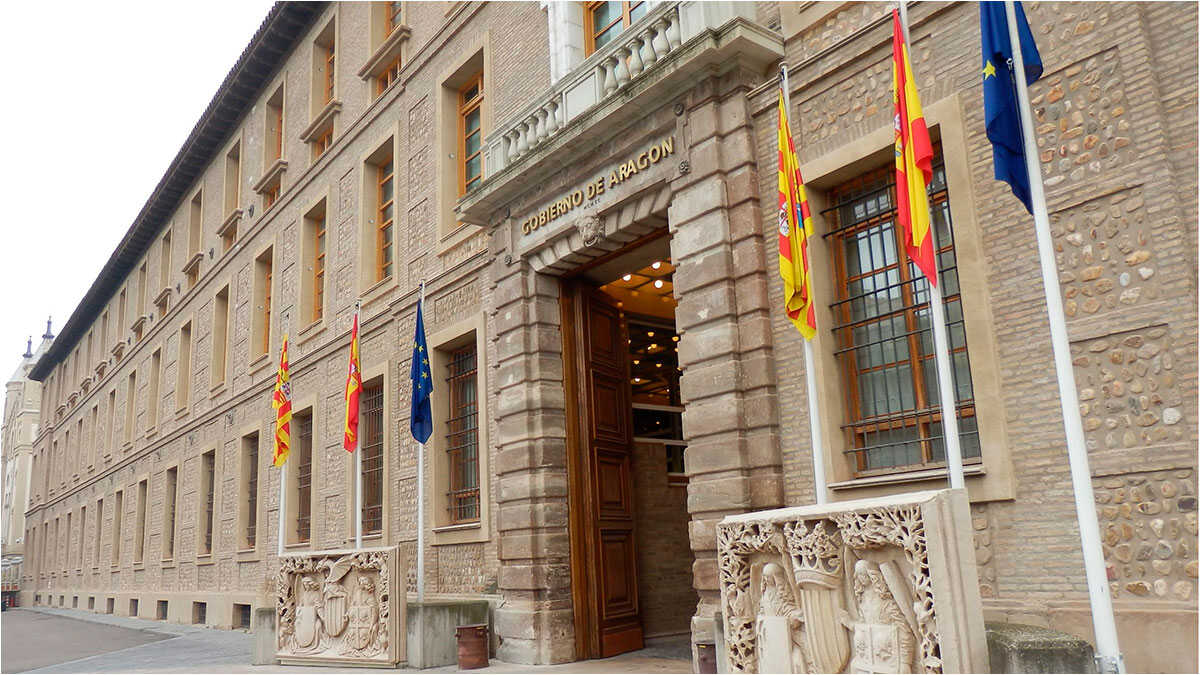
The response comes after the Government Delegation announced on Monday that it would take the agreement approved by the Aragón Government last July to the High Court of Justice of Aragón (TSJA). The delegation questions the regional executive’s decision to rule out even considering applications that municipalities may submit to be declared stressed residential market areas.
ARAGÓN DEFENDS THAT THE DECISION FALLS WITHIN ITS POWERS
The regional government maintains that it has the authority to decide on these declarations and refers both to the Statute of Autonomy of Aragón and the national Right to Housing Act. It also cites Constitutional Court ruling 79/2024 to support its position and argues that its rejection is based on an assessment of the consequences this mechanism would have for the rental market.
To justify its position, the regional executive cites a study prepared for the UNESCO Chair at Universitat Rovira i Virgili on Catalonia’s experience. According to the Aragón Government’s interpretation of its conclusions, the regulation would have led to a reduction in the rental supply and the transfer of homes to arrangements such as temporary rentals, room rentals, tourist accommodation or sales.
In contrast to this model, Aragón says its policy is focused on increasing the available supply. The regional executive puts the number of public homes developed over the past three years at more than 3,600 and maintains that expanding the housing stock is more effective than imposing market-control measures.
IT ASKS THE STATE FOR LAND FOR MORE THAN 2,000 HOMES
The Aragón Government also uses its response to ask Government Delegate Fernando Beltrán to convey to the central government a request to release unused public land controlled by various ministries and Sareb. According to calculations by the Aragón Government, those plots would allow more than 2,000 public homes to be built in the region.
It also points to the plot on Calle Margarita Xirgu in Zaragoza, which was previously transferred for the construction of homes for military personnel that were ultimately never built. Aragón is asking for the land to be returned to regional ownership and says it could accommodate more than 170 homes.
The regional executive thus maintains that addressing the housing access problem requires putting more land and housing on the market and calls on the State to cooperate in that direction. The Government Delegation, for its part, maintains that its challenge does not seek to force the declaration of any stressed area, but rather questions Aragón’s decision to prevent municipalities that wish to use this legal mechanism from even processing and considering their applications.