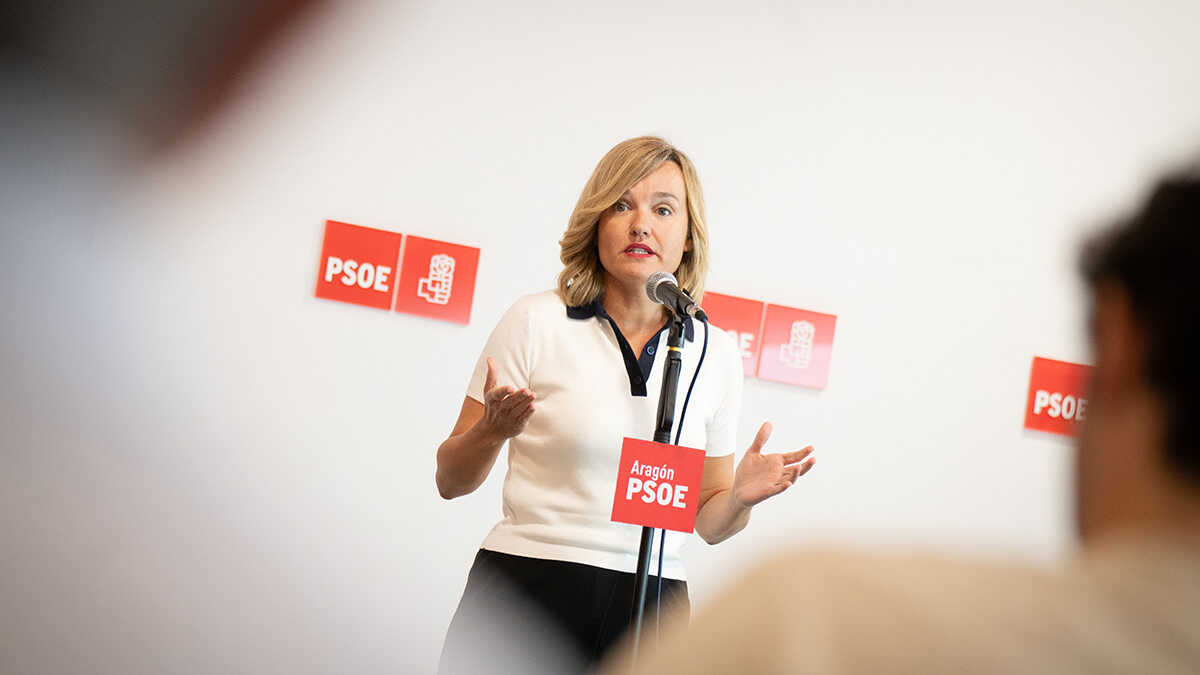
The Socialist leader cited as an example the rejection by the PP and Vox of a proposal to create a study commission in the Cortes of Aragón on forest fires. Alegría argued that, following the serious fires recorded this summer, it is necessary to analyze what happened, update regional legislation and work together to improve prevention and the response to future incidents. "Fire does not understand political ideologies," she said, before accusing Azcón of responding with "contempt" to the hand extended by the PSOE.
Alegría extended that criticism to the PP and Vox's rejection of opening a debate in the Cortes on the development of data centers. The PSOE secretary-general stressed that her party "is not opposed" to this infrastructure, but believes it is necessary to decide what model Aragón wants given its consumption of land, water and energy. She also warned that the energy demand of projects that already have a connection to the grid could even exceed the capacity that the entire renewable energy output of Aragón would provide, and called for "proactive" planning to avoid future problems with supply or energy costs.
INCOMPATIBILITIES FOR SENIOR OFFICIALS
Against this backdrop, Alegría announced that PSOE Aragón would introduce a bill in the Cortes to amend the incompatibility rules for senior officials. The initiative comes after it emerged that Blackstone had hired Marta Ríos, who until two months ago was responsible for attracting major investments for the Government of Aragón and who, according to the PSOE, worked on bringing one of the company's data centers to Aragón.
In this regard, she clarified that she does not question whether current regulations had been complied with, but argued that legislation could be amended to strengthen safeguards in cases of this kind. "It smells somewhat fishy," she said, while announcing that the PSOE would explain the specific content of its proposal when it is formally registered in the Cortes of Aragón.
Alegría ultimately highlighted the PSOE's role as a "useful opposition," responsible and able to put forward alternatives and reach agreements, but also to scrutinize the regional government's actions "clearly and forcefully." For all these reasons, she insisted that the Socialists would continue extending a hand to Azcón's government on matters they consider important for Aragón, while maintaining their criticism of the lack of understanding that, they argue, is defining the current legislative term.