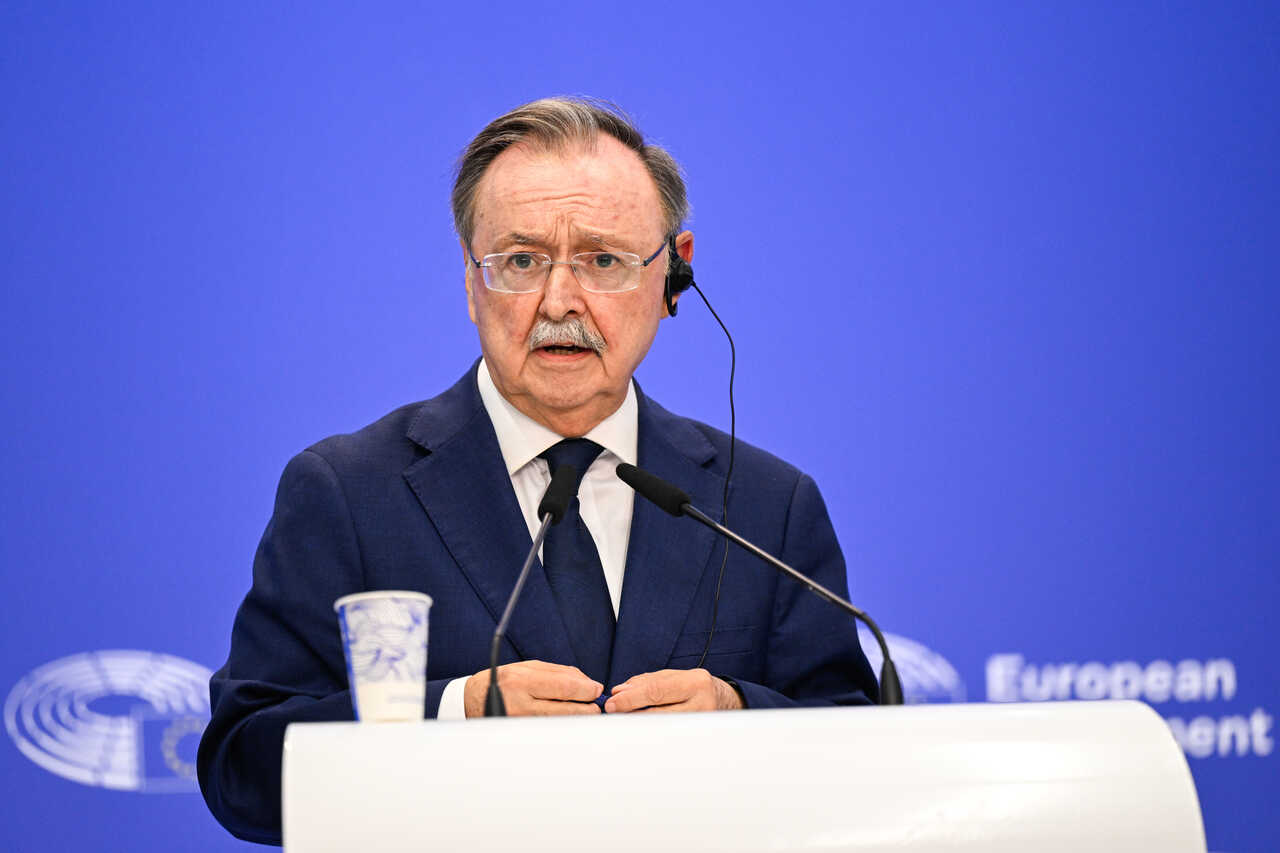
Vivas responded this way to a statement issued by Morocco’s Foreign Ministry, which denied that there was any data, evidence or report demonstrating the involvement of its authorities and criticized the country’s use as an “electoral ploy” or “scapegoat for political score-settling.”
The president of Ceuta rejected that version and insisted that what happened was the “instrumentalization of migratory pressure by Morocco to destabilize Ceuta and place its territorial integrity in jeopardy.” As an argument, he said it was impossible for Rabat not to have known about the movement of more than 80,000 people toward the border.
VIVAS RECALLS THE 2021 PRECEDENT
Vivas also noted that this would not be the first time a situation of this kind had occurred and recalled the precedent of May 2021, when thousands of people entered Ceuta from Morocco.
The president of the autonomous city also accused Morocco of pursuing a “policy of harassment aimed at bringing down” Ceuta and Melilla and argued that the sense of insecurity in the city was backed by “facts, data and figures.” His comments came amid a political debate over the management of the crisis and after the declassification of CNI documents concerning prior warnings about the mass entry.
Vivas said the situation benefits Morocco because it has turned Ceuta into a “pressure cooker that could explode at any moment” and warned that the city was facing a critical situation that, in his view, could not continue.
The president of Ceuta also said there was “a great deal of uncertainty” among the population and noted that citizens felt “outraged,” “powerless” and “abandoned by those who could and should have protected us.” Among the main questions, he raised whether a mass entry of this kind could happen again.
Vivas had already taken this complaint to European institutions on September 8 during a trip to Brussels. There, he called on the European Union to issue “a forceful response” to Morocco over its alleged “involvement” or “consent” in the mass entry and also requested resources to facilitate the return of migrants remaining in Ceuta. In addition, he called for a greater Frontex presence and financial support to address the situation facing the city.


