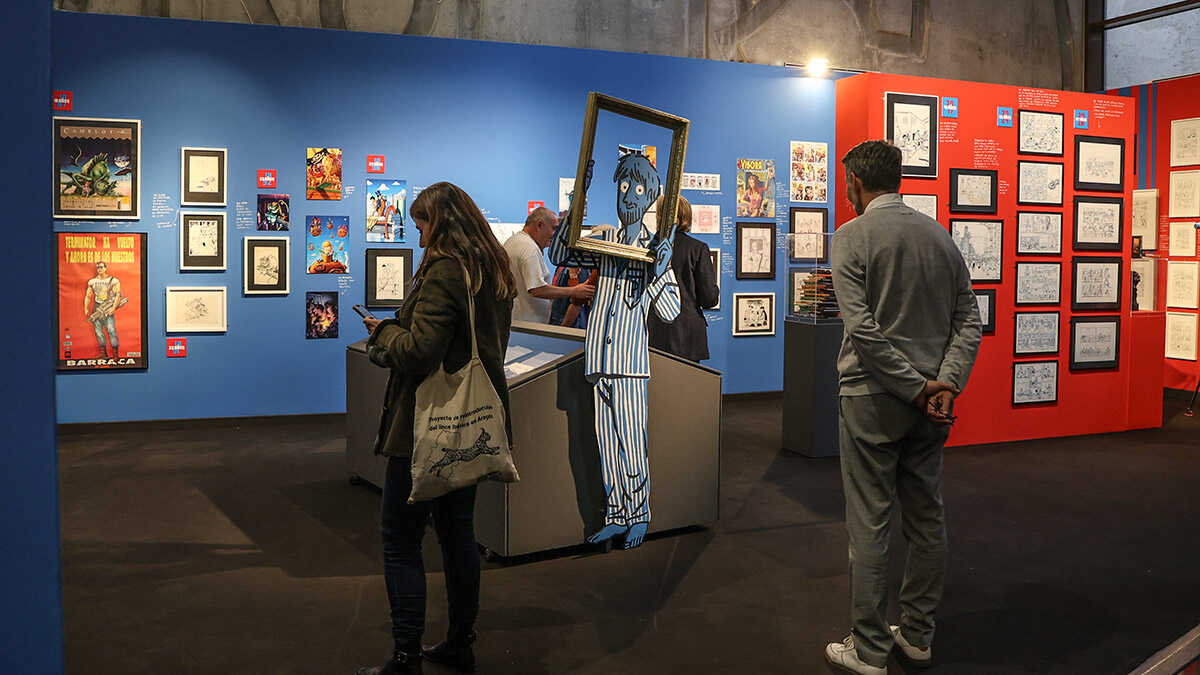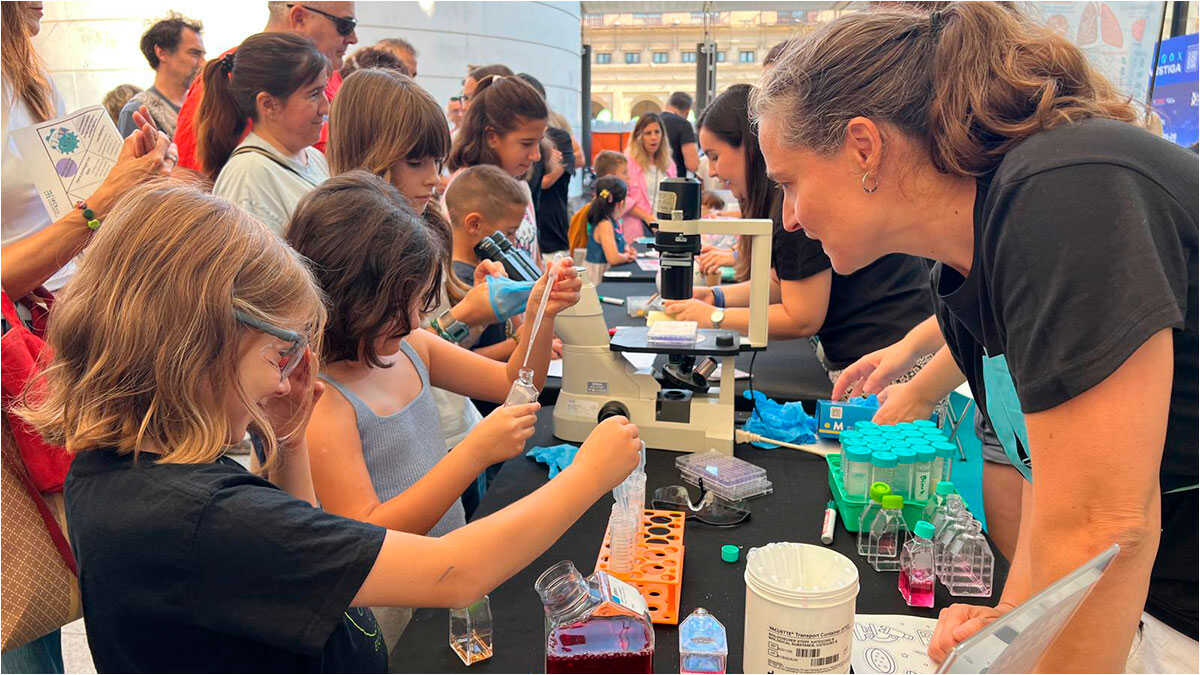
The fair’s five zones allowed visitors to move from one experiment to another and discover, through hands-on activities, research that is usually carried out in laboratories and specialized centers. The program brought together proposals from fields including energy and space, health, the humanities and technology, with demonstrations, games and activities designed for all audiences.
A DAY OF SCIENCE
The youngest members of the family—and not-so-young visitors—were able to discover scientific topics they did not know about or were unfamiliar with. "I think there are lots of interesting things that I didn't know about, and now I'm discovering them," said a boy who attended the activity tent with his mother and sister. His mother highlighted the appeal of the initiative: "There are some really great things, and they explain them very well; honestly, they've done a great job."
Technology also sparked the participants' interest. "I've learned many things, such as that technology is changing the world, but if we go too far, it can make things worse instead of better," the boy said. His sister, meanwhile, said what excited her most was learning what humans were like in the past and about human evolution.
Robotics was another highlight of the day. Leticia Vitallé, a staff member at the Aragon Institute of Technology (ITAINNOVA), explained that this year they had directed part of their activities toward younger children. The program brought remote-controlled cars, a robot competition and a video game developed with the University of Zaragoza through Roblox to Plaza del Pilar. Participation in the activities, Vitallé said, had been high: "We already have around 200 robots in the robot competition, and we still haven't finished."
Visitors were able to meet the institute's robots, including a robot dog and Piper, who spent the morning dancing for the audience to the delight of the children. "These kinds of initiatives are about sparking children's interest in science and technology," Vitallé said, adding that days like this help awaken scientific curiosity among younger people.
Research also left the laboratories behind to venture into history and language. The humanities zone featured facsimile reproductions of medieval manuscripts. "The children are delighted, and they are trying to read the manuscript itself—and they are doing it really well," said Elena Alvesa, a professor in the Department of Linguistics and Hispanic Literatures.
European Researchers' Night, held under the slogan «Science in Aragon: Imagine Tomorrow», thus brought more than 500 researchers and over 30 Aragonese centers and institutions to Plaza del Pilar for a day of games and challenges for the whole family.