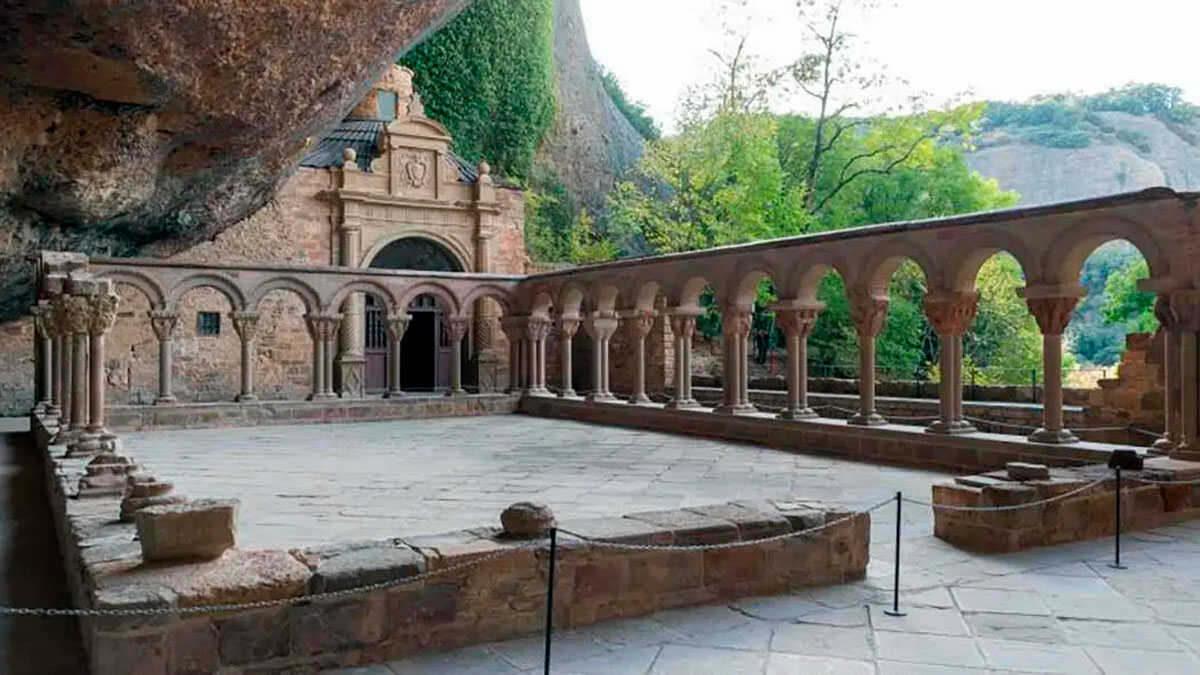
The complex will once again welcome visitors as normal at both the Old Monastery, through guided tours, and the New Monastery and its Interpretation Centre. The inn's restaurant and café services will also resume, although the accommodation will remain closed during the winter season.
VISITS FROM THIS SATURDAY
During the holiday weekend, the complex will be open from 10:00 a.m. to 7:00 p.m. on Saturday, from 10:00 a.m. to 5:00 p.m. on Sunday and from 10:00 a.m. to 2:00 p.m. on Monday. Once the holiday weekend is over and until next March, opening hours will be from 10:00 a.m. to 2:00 p.m. on weekdays and Sundays, while on Saturdays it will remain open until 5:00 p.m.
The reopening coincides with the start of the winter closure of the accommodation area. As a result, overnight stays in the inn's 20 rooms will not be available between November and March. The restaurant and café services will continue operating during these months, as will visits to the two monasteries and the Interpretation Centre.
The resumption of activity marks the return to normality for a complex that was directly affected for weeks by one of the summer's most significant forest fires and that preserves some of the key features needed to understand the origins of the Kingdom of Aragon.
A KEY SITE IN THE ORIGINS OF ARAGON
The Old Monastery of San Juan de la Peña is regarded as one of Aragon's great historical symbols. It was a centre of political and religious power during the 11th and 12th centuries and houses the Royal Pantheon, where the first Aragonese kings are buried, including Ramiro I, Sancho Ramírez and Pedro I. It also contains Pre-Romanesque, Romanesque and Gothic spaces, as well as one of its most recognisable features: the cloister built beneath the rock itself.
That heritage value led authorities to take extra precautions during the forest fire declared in Peñas de Riglos on August 10. The flames came close to the complex, and the Government of Aragon decided to move the remains of the first Aragonese kings and other members of the royal lineage, along with various cultural assets, to the Huesca Museum as a preventive measure.
The remains finally returned to the Old Monastery last Monday, after having been kept away since August 13. Their return means that the Royal Pantheon can also recover its usual layout as the site reopens to the public.