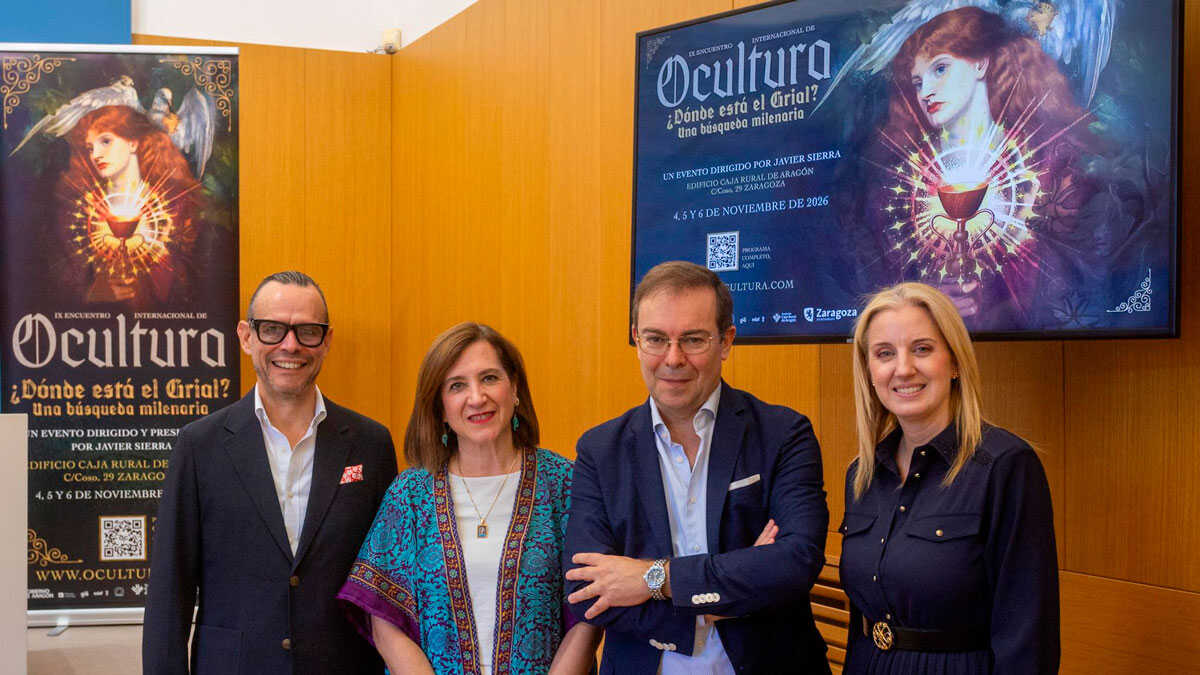
Thus, from November 4 to 6, Sierra himself and other recognized figures such as José Luis Corral, Victoria Cirlot and Antonio Piñero will debate this subject at the Caja Rural de Aragón Auditorium in Zaragoza, with free talks and lectures as part of the 9th International Ocultura Meeting.
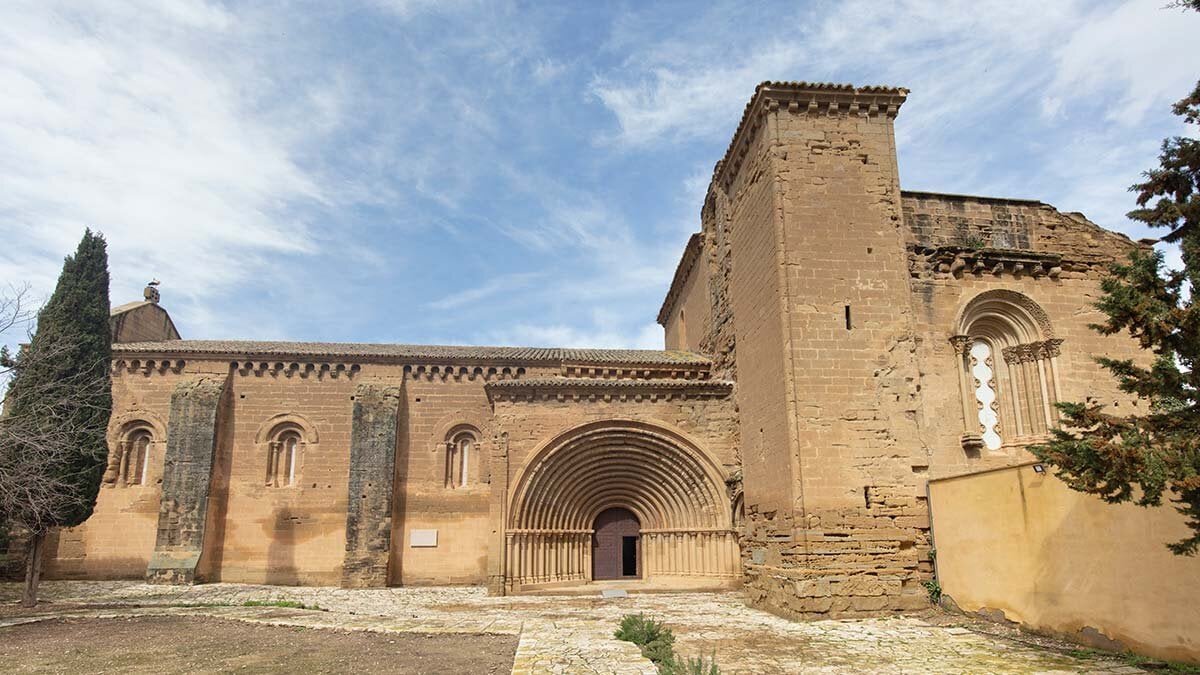
"San Juan de la Peña and the myth of the Grail are not just two ordinary things; they are the soul of Aragón. In some way, the soul, the sacred, what embodies transcendence in the Aragonese character, was born in the Pyrenees. And it was born in the Pyrenees during a medieval period when everything beyond that area, viewed from Rome or Central Europe, was the other world. What better place could there be to hide something as valuable as the Holy Grail than a place that was practically unreachable to the European mindset of that time?" writer Javier Sierra explained on Thursday at the presentation of the event.
FREE PROGRAM AND LECTURES
One of the world's leading experts in Grail literature, Victoria Cirlot, will open the International Ocultura Meeting on November 4 with her lecture "The Search for the Holy Grail in Medieval Literature" at 7:15 p.m. One hour later, one of the most renowned voices in Aragonese literature, José Luis Corral, will deliver the lecture "The Aragonese Case: The Grail of San Juan de la Peña."
On Thursday, November 5, the event will address the "Way of the Holy Grail," a proposal led by Belén Luque, director of the Diocesan Museum of Jaca, which seeks to establish a pilgrimage route inspired by the chalice from San Juan de la Peña, currently preserved in Valencia Cathedral, and connect the Aragonese provinces with the Levant by following the places linked to the relic's journey. She will speak with blogger and pilgrim Cristina Monzó.
This will be followed by a talk from Antonio Piñero, professor of New Testament Philology and a translator of biblical texts. His presentation will offer a historical approach to the episode of the Last Supper and examine the possibility that an object present at that table could have survived to the 21st century.
The closing day of the meeting, Friday, November 6, will focus on the debate that began in 2014 following the identification of another thousand-year-old stone chalice, preserved in the Basilica of San Isidoro in León, as the Grail. Medieval History professor Margarita Torres, author of the study, will present her thesis.
Afterward, Torres will take part in a roundtable with Professor José Luis Corral on the different interpretations of two chalices linked to the Holy Grail tradition and preserved in the Iberian Peninsula.
"This is one of the most interesting talks because a debate is going to emerge, a debate about whether there are two holy grails or whether this is really something else. That will be on the table. I think this is the first time something like this has been done, and we are going to have two different paths."
PROGRAM
Wednesday, November 4
7:00 p.m. Opening. 7:15 p.m. Lecture: "The Search for the Holy Grail in Medieval Literature," Victoria Cirlot. 8:15 p.m. Lecture: "The Aragonese Case: The Grail of San Juan de la Peña," José Luis Corral.
THURSDAY, NOVEMBER 5
7:00 p.m. Discussion: "The Way of the Holy Grail: A Pilgrimage for the 21st Century." Conversation with Belén Luque and Cristina Monzó. 8:00 p.m. Lecture: "The Last Supper and the Holy Grail," Antonio Piñero.
FRIDAY, NOVEMBER 6
7:00 p.m. Lecture: "The Leonese Case: Doña Urraca's Grail," Margarita Torres. 8:00 p.m. Discussion: "León and Aragón: Why Are There Two Grails in Spain?" Conversation with José Luis Corral and Marga Torres. 9:00 p.m. Closing ceremony.