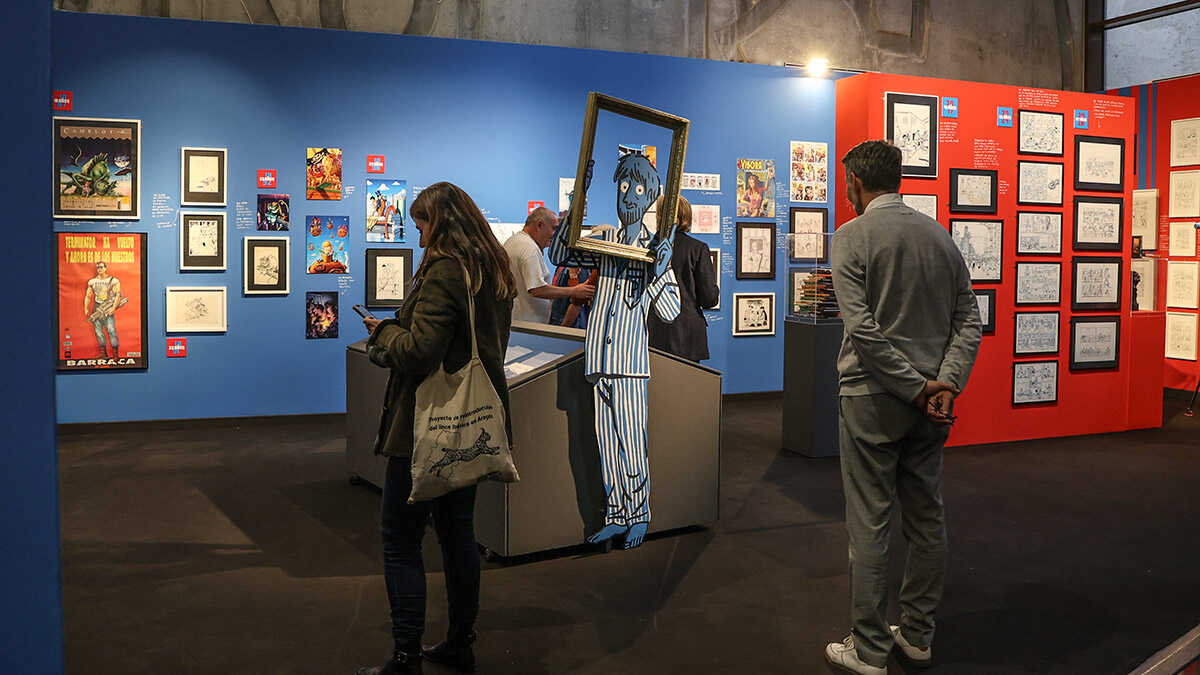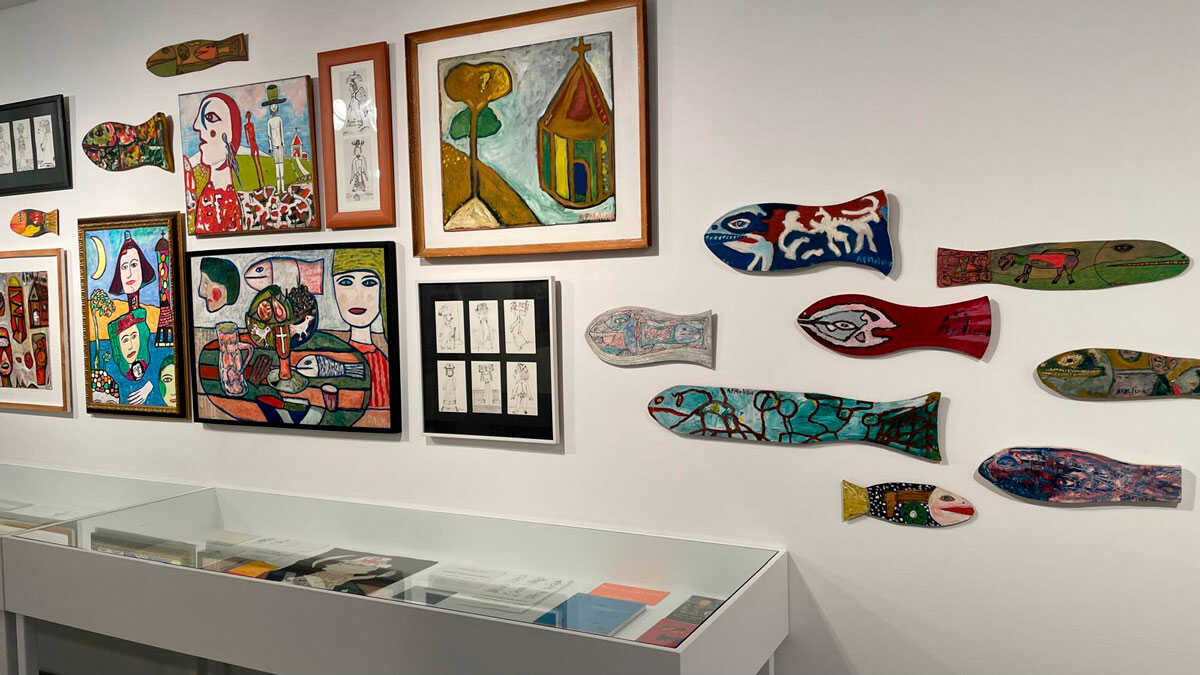
The exhibition brings to light the rich universe of painter Antonio Fernández Molina, who was born in La Mancha and died in Zaragoza in 2005, allowing the public to explore the cultural landscape of the postwar period and subsequent decades through a brief selection of his paintings, letters and a series of documents tracing his intellectual life in connection with Spain’s cultural scene. The exhibition recalls "the work, personality and relationships of a person who was highly relevant to Aragonese and Spanish culture."
Visitors to the exhibition dedicated to the "farmer poet" will discover abundant correspondence, literary magazines, original editions, exhibition catalogs and other publications that testify to the breadth of Fernández Molina’s genres. The materials have been loaned by the Antonio Fernández Molina Archive and the María Moliner Humanities Library of the University of Zaragoza, along with holdings from the Iaacc Pablo Serrano.
AN EXHIBITION DEDICATED TO A PRIVILEGED MIND
"It is a literary and pictorial exhibition," said the artist’s daughter, Elena Fernández Echeverría, noting that her father began in literature. "When he was young, he was always reading and writing in the village fields," his daughter recalled. The exhibition’s curator, Chus Tudelilla, thanked Elena Fernández for taking charge of her father’s legacy and agreed that his artistic career began by "creating poetry and writing far removed from the official scene," before he went on to direct his own magazine, "Doña Endrina."
The exhibition is divided into four sections. The first focuses on the Generation of ’51, the year in which Fernández Molina founded and directed the magazine "Doña Endrina," while also contributing to other literary publications such as "Arcilla y Pájaro" and "Deucalión." The second section, "Miguel Labordeta and A. F. Molina," explores the strong personal and literary bond the two writers shared from the 1950s onward.
The third section is devoted to "Papeles de Son Armadans," for which Camilo José Cela appointed him secretary in 1964. Finally, "A. F. Molina in Zaragoza" covers the intellectual activity he pursued after moving to Zaragoza in 1975 as a writer, critic and visual artist.