Aragon highlighted its millennia-old culture in the capital on Monday with the presentation at the National Archaeological Museum (MAN) of the exhibition "Life on the Frontier. Finds from Monreal de Ariza Castle (Zaragoza)," showcasing one of the most significant discoveries made in Spain in the field of medieval archaeology.
Organized in collaboration with the Institute of Cultural Heritage of Spain (IPCE), the Government of Aragon and the Zaragoza Museum, the exhibition brings together in the MAN’s Archaeological New Acquisitions Gallery a selection of metal objects recovered from the fortification during archaeological excavations carried out between 2017 and 2018. The pieces, dating from the mid-15th century, remained trapped for centuries in a room—interpreted as a storage area—that was sealed off after part of the building collapsed.
A SITE WITH ALMOST A THOUSAND YEARS OF HISTORY
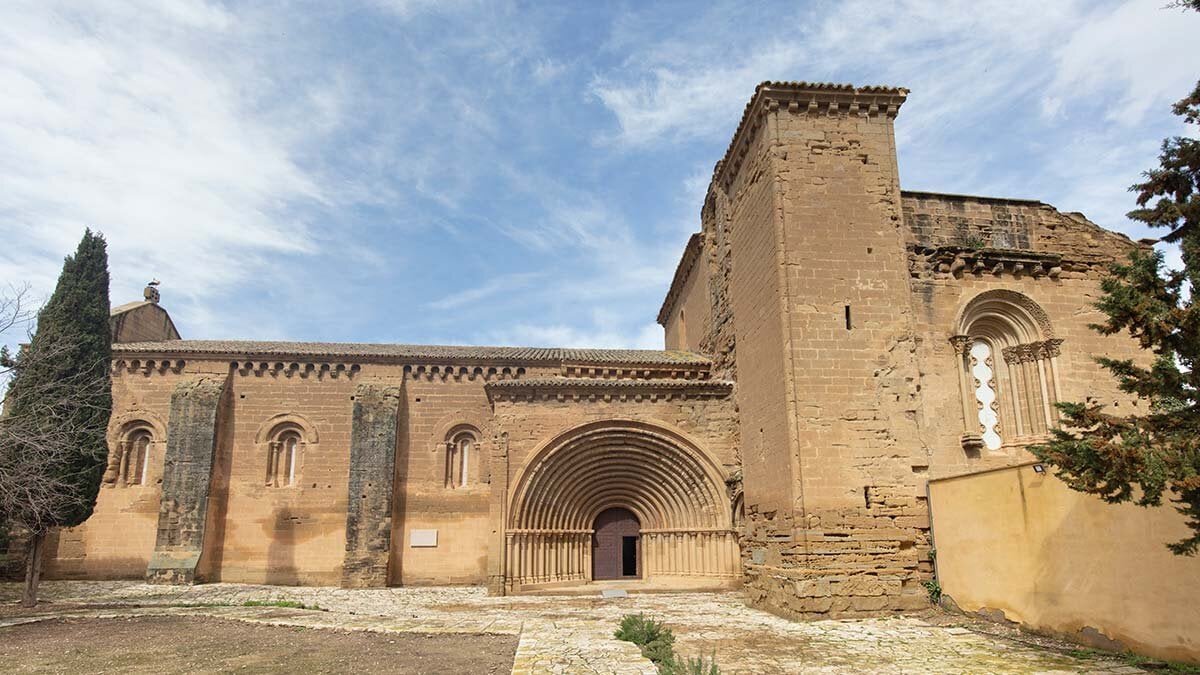
Located at the westernmost end of the Kingdom of Aragon, Monreal de Ariza Castle was built by Alfonso I the Battler in 1128 as a stronghold to defend the kingdom against advances by Castile. Its defensive purpose determined its design and led to the construction of an imposing fortification atop a hill.
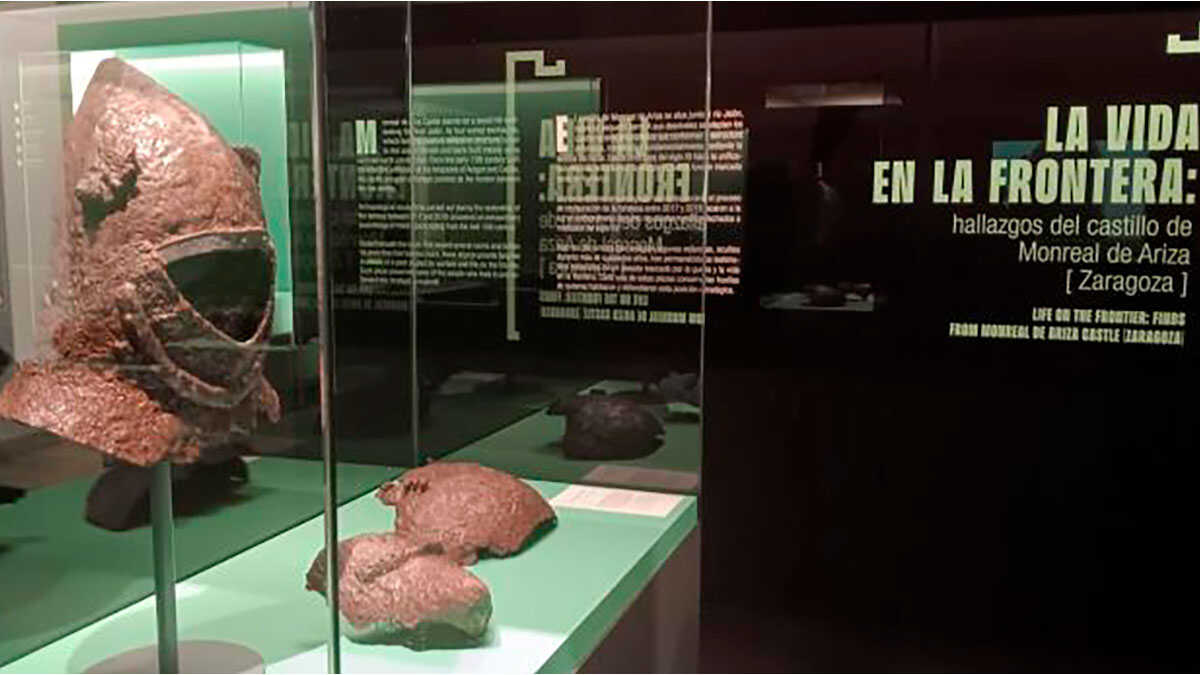
The exhibition will be on display until February 28, 2027. Photo: DGA
Over the centuries, the castle’s structures suffered damage and collapses, which led to restoration and conservation work on the property between 2017 and 2018. The archaeological work associated with the project recovered, among other materials, two iron helmets, a Gothic bell in perfect condition, an inkwell, cannon chambers, crossbow remains, a coin minted under John II of Castile, a breastplate and plates belonging to a brigandine armor, now on display at the National Archaeological Museum.
The collection was found in the aforementioned storage area, a space frozen in time after the collapse of the enormous stone blocks that supported the upper floors. Each piece bears the marks of those who inhabited and defended this strategic position and therefore serves as evidence of a past shaped by war and life on the frontier.
The museum will accompany the exhibition with a program of scientific, cultural and educational activities aimed at reinforcing the subjects addressed in the exhibition and helping the public understand them. In addition, a self-guided route will connect the New Acquisitions Gallery with objects in the MAN’s permanent exhibition. The exhibition can be visited free of charge from Tuesday, October 6, 2026, through February 28, 2027.