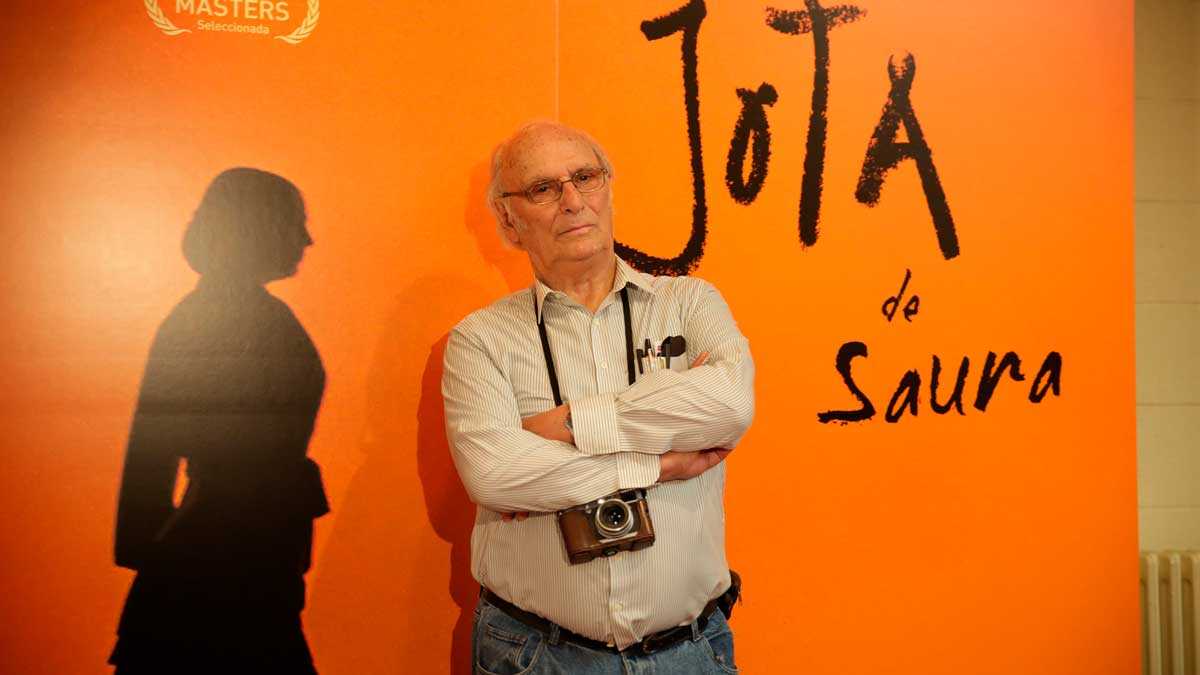
By then, Saura had made twelve musicals during his career. After dedicating films to flamenco, fado and tango, he felt it was “time” to do the same with jota, which he described as having “a glorious past, a present that works very well and a possible future.” In the film, jota was also blended with other rhythms, such as flamenco and the alegrías of Cádiz.
The film was shot over three weeks in a studio in Segovia and featured artists including Miguel Ángel Berna, who was in charge of the choreography, Sara Baras, Ara Malikian, Carlos Núñez, Juan Manuel Cañizares, Giovanni Solima and Alberto Artigas. Saura acknowledged that before filming he knew “very little about jota,” but had discovered that it was “much more open than it seemed.”
That openness was precisely one of the central ideas behind his approach. For Saura, jota could be modernized both in its rhythms and in the way it was danced: “You can dance it in jeans and a shirt; you don’t have to dress like a jotero.”
He also explained the difficulty of making a musical without a conventional storyline. “Removing the plot leaves you exposed,” he said, because it meant carrying the film through the performers, lighting and set design. His aim was for the result to work as a show that could also appeal beyond Spain, something he had already seen after its positive reception in Toronto.
The renewal of jota and its ability to connect with viewers who did not even know the dance were at the heart of Saura’s cinematic project. That is how we reported it in Aragón Digital 10 years ago, in an interview with the Aragonese filmmaker during the presentation of Jota.