That was how Groizard put it before the Congress committee investigating the blackout, where he argued that on April 28, 2025, there were enough elements to prevent the peninsula-wide blackout, which he described as “unprecedented, unforeseen and unforeseeable.” “The system had everything it needed,” he added.
GAS PRICES, KEY TO THE EXTENSION
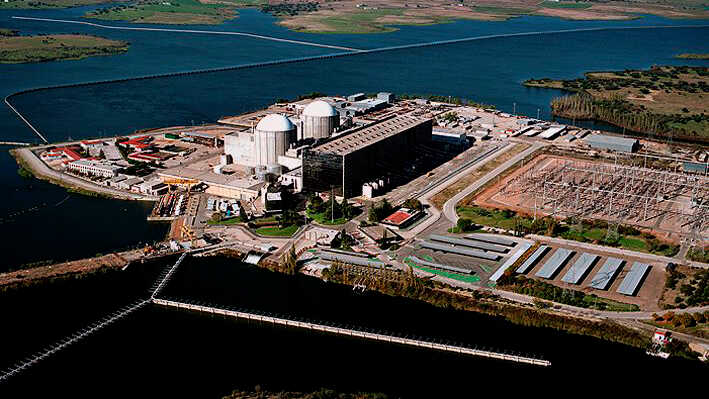
Regarding the uncertainty cited by the government to extend the operation of the Extremadura nuclear plant, he pointed out that since the start of the conflict in Hormuz, gas prices have tripled, rising from €30 to more than €80 per megawatt-hour (MWh), whereas they had previously been expected to continue on a downward trend.
“This will last for months or years once the Strait of Hormuz is reopened,” Groizard warned, explaining that keeping Almaraz in operation “helps cushion consumers from unexpected price spikes while we continue developing and investing in the real shield, which is the deployment of renewable energy.”
ALMARAZ DOES NOT CHANGE THE NUCLEAR TIMETABLE
Consequently, he dissociated the decision on Almaraz from problems involving security of supply related to the blackout and noted that its contribution is limited, that nuclear plants do not cushion frequency fluctuations and that they are not particularly suitable for dynamic voltage control.
He also assured that this was “a one-off extension limited to that plant” and that it did not affect Spain’s nuclear phase-out timetable, established through 2035 in the National Integrated Energy and Climate Plan (PNIEC).
AN EXCEPTIONAL SITUATION COMPARED WITH THE REST
In this regard, he said that Almaraz has “a somewhat exceptional situation compared with the other plants,” since when it received authorization in 2020 to operate until 2027, it had already been assessed by the Nuclear Safety Council (CSN) for operation until 2030, because these types of reports always cover 10 years.
According to Groizard, this means that authorizing a possible extension for another nuclear plant would require the CSN to carry out “a much more exhaustive analysis,” since the Almaraz extension has not required an increase in its waste-storage capacity and has not generally altered electricity-system costs. “It does not have to set a precedent for the rest of the plants,” he concluded.
Along the same lines, he denied that Almaraz’s closure coinciding in 2030 with that of a reactor at Ascó and with Cofrentes could cause “a major impact” on decommissioning processes or supply, ruling out the possibility that this timing could pave the way for changing the closure date of other nuclear facilities.
LIMITED IMPACT ON RENEWABLES
Finally, he played down the impact of the extension in terms of reduced renewable generation, which the government estimates at 1.4% in 2030. According to Groizard, that percentage is lower than the variation depending on whether there is more or less sunshine, which he put at between 3% and 4%. “The downward impact is very limited,” he concluded.


