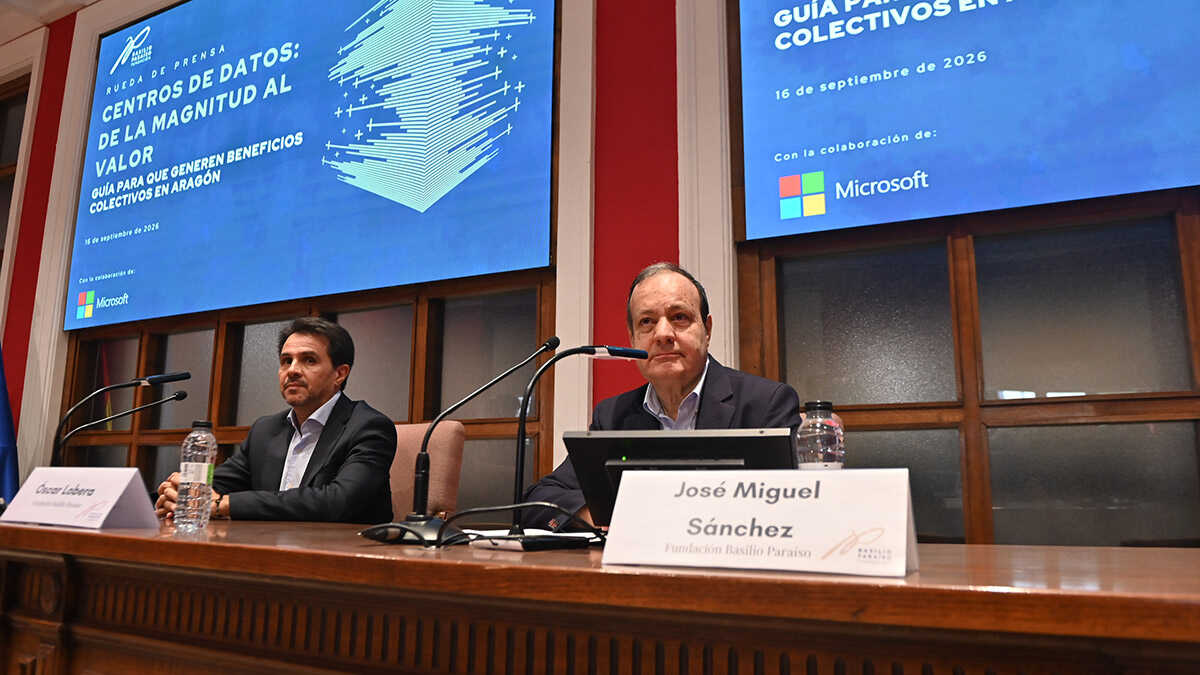
This is the main conclusion of the report ‘Data centers: from scale to value. A guide to generating collective benefits in Aragón’, presented by the Basilio Paraíso Foundation in collaboration with Microsoft. The document puts the value of projects with official approval at more than €33.4 billion and, using the same criteria, estimates total computing capacity at nearly 1,700 megawatts.
CONSTRUCTION WILL GENERATE €8.0659 BILLION
To measure the real impact of these investments on GDP and employment, the study divides their economic impact into two phases with very different dynamics. One measures how infrastructure construction will affect the sector and the Aragonese economy. The other reflects the role data centers will play once they become operational, as part of Aragón's day-to-day economic activity.
The first is the so-called construction "wave" (2024-2033), which will generate €8.0659 billion in direct and indirect wealth and a cumulative total of 143,536 full-time jobs over the decade. This phase will peak in 2028, when construction activity will account for 4.3% of regional GDP and 5.9% of employment.
The second phase will be the so-called annual "base" of continuous operations. Once the data center campuses have been built, their day-to-day operation will contribute €1.1496 billion to Aragonese GDP each year. In addition, this activity will sustain 3,217 stable jobs throughout the 20- or 30-year useful life of these data center campuses.
PREPARING FOR THIS “HISTORIC OPPORTUNITY”
The Basilio Paraíso Foundation describes this as “a historic opportunity” and says the region must be prepared. It therefore proposes several measures to ensure that the benefits remain in Aragón. First, it advocates developing homegrown technology alongside the data centers. It also urges Aragonese companies to prepare to secure major maintenance and technical services contracts.
The institution proposes addressing the labor shortage in key sectors through worker mobility and the accelerated retraining of people currently in employment. It also suggests using proximity to this computing superpower to help Aragonese industry become more competitive by adopting Artificial Intelligence. Finally, it calls on public authorities to ensure that these companies have a positive impact on the places where they are established.


