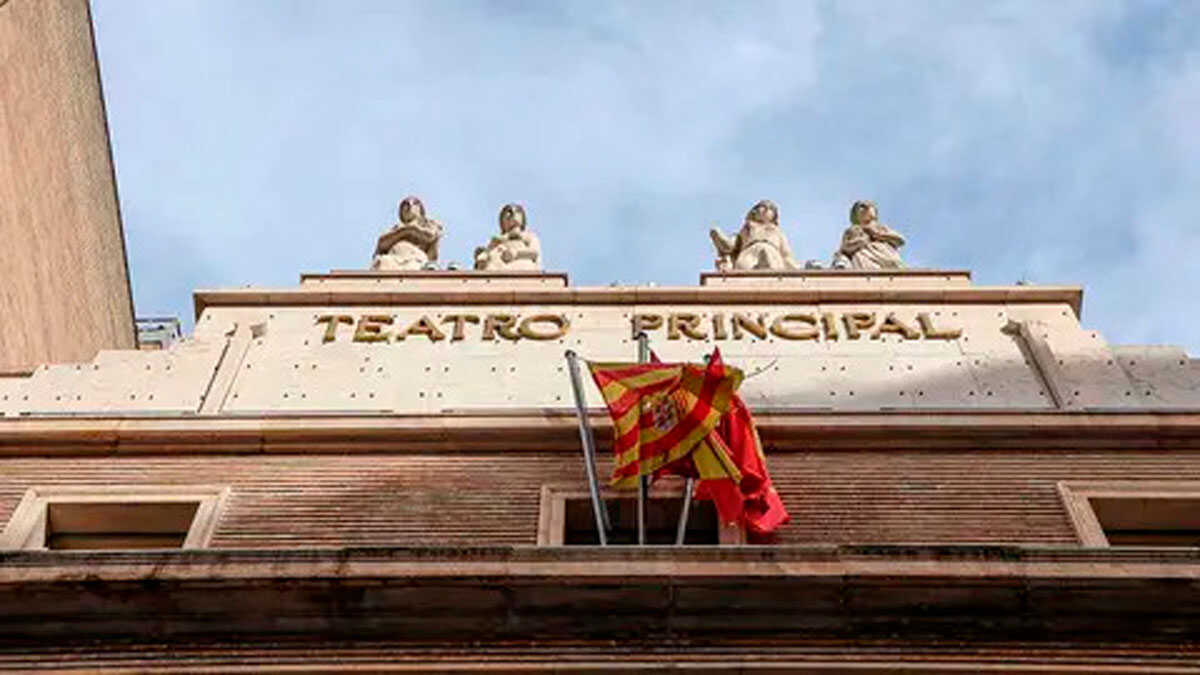
The building designed by Félix Navarro was erected on the site of the former Market Square, the city’s commercial center and judicial stage. Zaragoza had two main gallows: one depended on the king’s justice and stood in that square, while the other belonged to the Casa de Ganaderos and stood in El Cascajo, on the outskirts.
THE GALLOWS OF ZARAGOZA’S MARKET AND PUBLIC PUNISHMENTS
Public acts were held there and sentences carried out, with the bodies displayed so that no one would forget. The fueros of 1461 required sentences to be carried out from sunrise to sunset and punished royal officials with disqualification if they did so anywhere other than the market or the most public square in the locality where the sentence had been handed down. Justice had to be administered in full view of everyone so that the punishment would serve as a warning. Sometimes it went beyond death. In 1473, Guillén Sardes had his ears cut off beneath the gallows and nailed up with a nail.
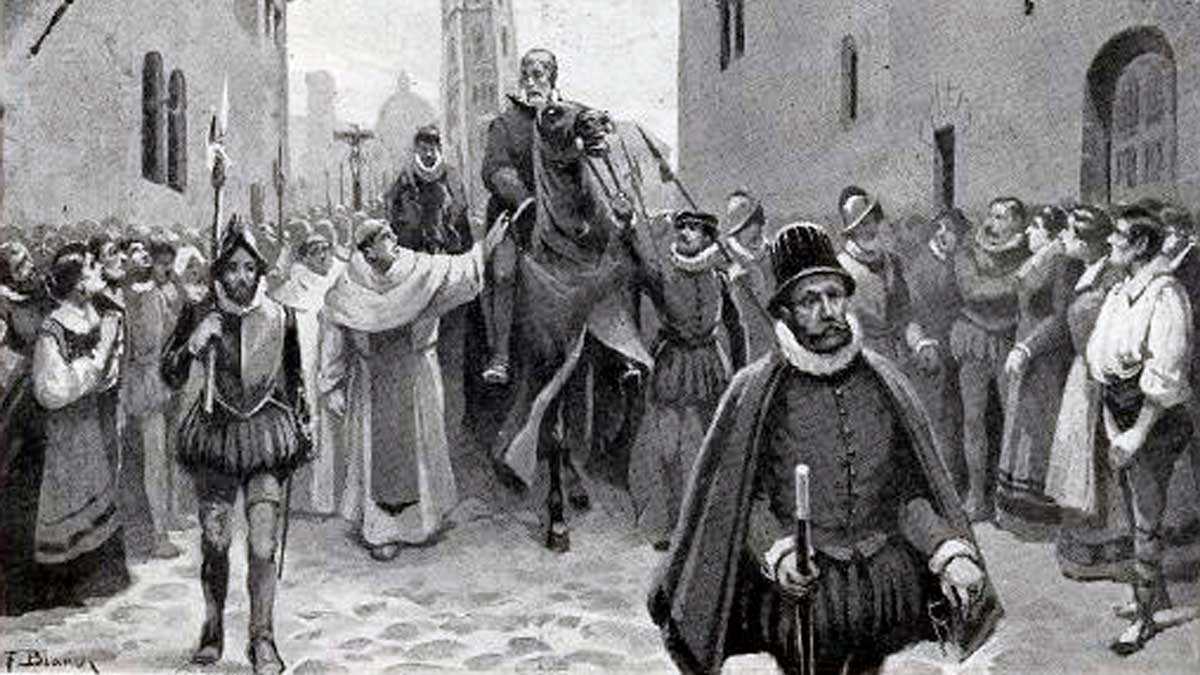
Market Square in 1591, drawn by Ricardo Marín Llovet in the magazine "La Esfera" (Madrid). Photo: Gaza
THE CASA DE GANADEROS GALLOWS STOOD IN EL CASCAJO
The Casa de Ganaderos was the Brotherhood of Saint Simon and Saint Jude, an association of Zaragoza livestock breeders documented since 1229. It had its own judge, chosen from among the brotherhood members, with criminal jurisdiction over matters involving livestock, shepherds and flocks, and it could impose the death penalty. In El Cascajo, those who killed a shepherd or herdsman were almost always executed. Unlike royal officials, its court could carry out executions at night and on public holidays.
Its gallows stood outside the walls, beside a shepherds’ route in what is now the San Gregorio district, so that anyone passing by could see the punishment.
ARNAU DE ALBIERGE, THE MAN HANGED TWICE
Arnau de Albierge was sentenced to death by hanging on April 4, 1493. By order of the Justice and the councillors, he was taken past Santa María la Mayor and along other streets to the Market gallows. His corpse was then taken to the livestock breeders’ gallows, where he was hanged again.
This was standard practice for the most exemplary punishments. The body was left on display for several days at the Market and then carried on the backs of animals to El Cascajo to be hanged once more. It is not known what crime Arnau was accused of. What is clear is that death did not bring the punishment to an end, as it was meant to teach a lesson to those who looked upon the corpse.
JUAN DE LANUZA AND THE EXECUTION ORDERED BY PHILIP II
Almost a century later, the square was the scene of one of the best-known episodes in Aragonese history. Juan de Lanuza the Younger, Justice of Aragon since September 1591, was arrested on December 19 as he left the Diputación to attend Mass, while Philip II’s army was inside the kingdom. That night, he was told that he would die at dawn. He asked who had condemned him and, on hearing that it was the king, replied: “No one can be my judge except king and kingdom together in the Cortes.”
There was no trial; a letter from the king was enough, and that same night the scaffold was erected in the Market Square. At dawn, with cannons aimed at the houses, he was led out in irons and dressed in mourning for his father. A proclamation ordered that he be beheaded, his houses demolished and his property confiscated. That day, the scaffold was not used to make an example of a cattle thief; it made clear who was in charge.
Even more brutal was the execution of Diego de Heredia, another leader of the rebellion, at the same Market in October 1592. The executioner needed more than 20 blows to cut off his head.
Today, the Central Market is a place for shopping and conversation. Anyone who stops at the corner where a plaque commemorates Lanuza will find little trace of what happened there. It is hard to imagine that corpses were once displayed on this same ground to terrorize the living. The square is still there, although almost no one remembers what it was used for.