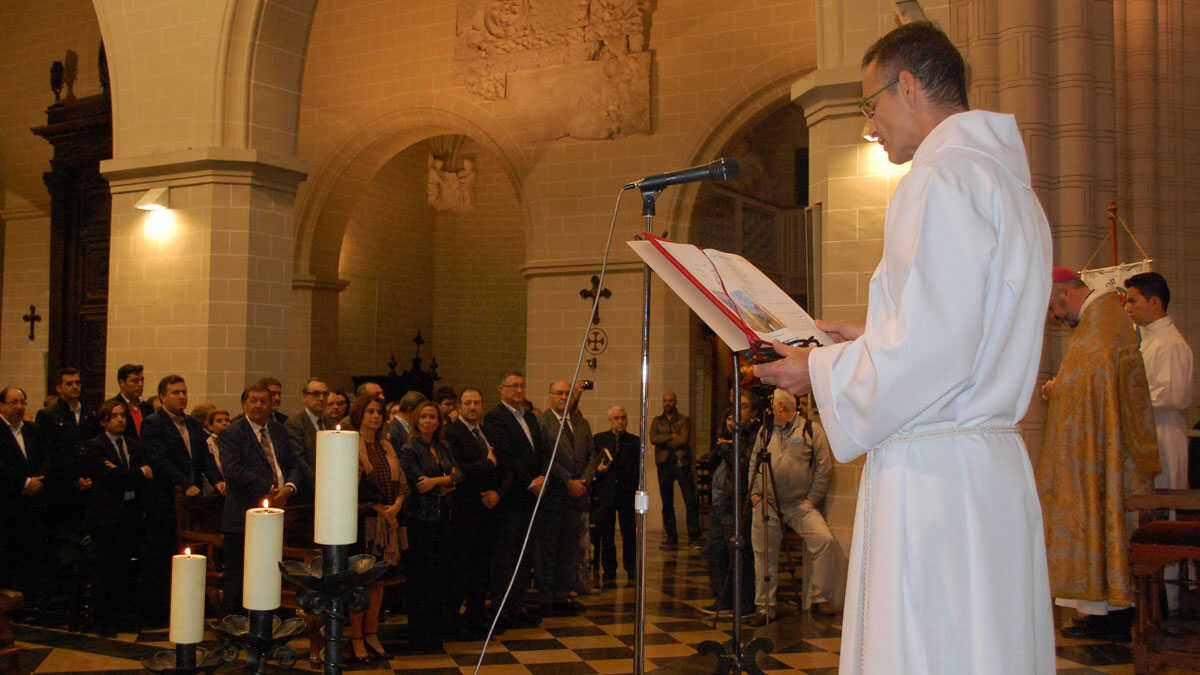
The inauguration was attended by the then regional minister for Education, Culture and Sport of the Government of Aragon, Mayte Pérez, who highlighted the cathedral's significance for the people of Teruel. "It is a symbol of unity and coexistence, a melting pot of languages and cultures," she said, while defending heritage conservation as an opportunity to attract visitors.
The mayor of Teruel, Emma Buj, also attended and recalled the importance of looking after historic monuments in a city where tourism was experiencing significant growth.
The work focused on the lower roofs, domes, small domes, facades and entrances, as well as improving the carpentry and metalwork on doors and windows. The intervention formed part of the Master Plan for Teruel Cathedral, launched in 1999, and was funded with FITE funds allocated for 2015.
One of the most interesting aspects of that restoration was the discovery of archaeological remains during the work. Remains were found on Santa Emerenciana Street, documented and protected, while the remains of an old entrance to the building were discovered beneath the tower. To preserve them, plans were made to install a replica wooden door that would make it possible to recognize their original function.
In addition, the then diocesan administrator of Teruel and Albarracín, Alfonso Belenguer, announced that the first phase of the tower's restoration was scheduled to begin in early 2017, with a budget allocation already in place.
The restoration of the facades and roofs, together with the archaeological discoveries, marked that intervention aimed at preserving Teruel's heritage. This is how Aragón Digital reported it ten years ago, in the original story about the restoration of Teruel Cathedral.