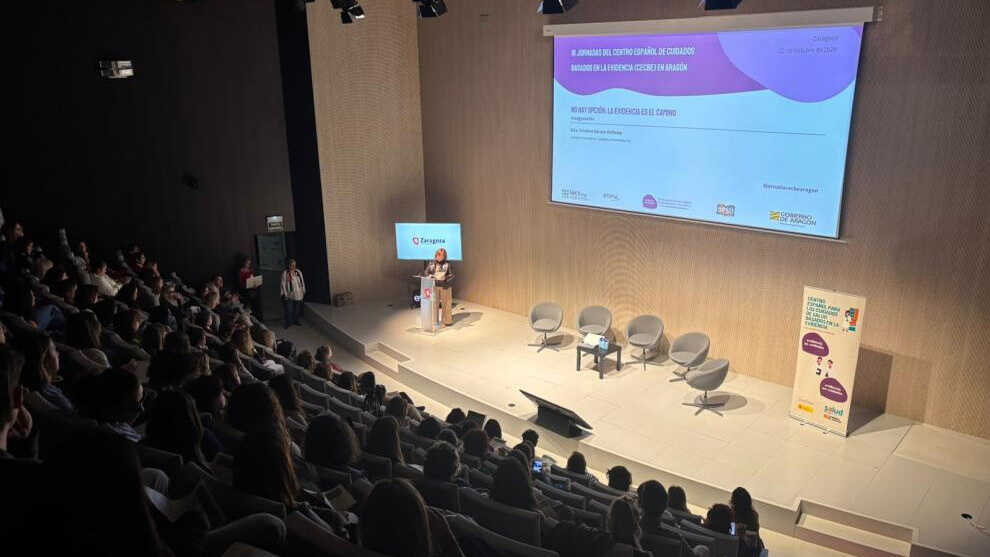
The event continues the work carried out during the previous two editions and aims to consolidate a culture of evidence-based practice within Aragón’s healthcare system. The goal is for decisions related to care to be based on the best available scientific knowledge and for that knowledge to be effectively applied to day-to-day healthcare.
FROM RESEARCH TO DAILY CARE
Applying scientific evidence to healthcare makes it possible to better support clinical decisions, reduce unjustified differences in professional practice and promote continuous improvements in health outcomes. In this way, initiatives such as CECBE seek to narrow the gap between research and everyday practice.
The conference programme includes various experiences related to the implementation of good practices in healthcare, as well as initiatives developed by centres committed to excellence in care. The aim is to share working models that are already being applied and that can serve as a reference for other professionals.
The topics addressed include pain assessment and management, tobacco control interventions and the prevention of pressure injuries. These are areas in which the incorporation of protocols and measures supported by scientific evidence can have a direct impact on patient care and safety.
EXCHANGING EXPERIENCES AMONG HEALTHCARE PROFESSIONALS
The conference also focuses on the exchange of experiences between healthcare professionals and centres. This contact makes it possible to learn about initiatives that are already working in healthcare settings and to promote the dissemination of practices based on the available scientific knowledge.
The opening was attended by Cristina Sarasa, director general of Care and Humanisation, while the closing ceremony will be led by Mayte Clares Puncel, director of the Nursing Department.
Holding the conference in Zaragoza forms part of a commitment to high-quality, safe and people-centred healthcare, in which research and scientific knowledge help guide professional practice and improve the care received by the public.