SEPTEMBER AND OCTOBER, KEY MONTHS
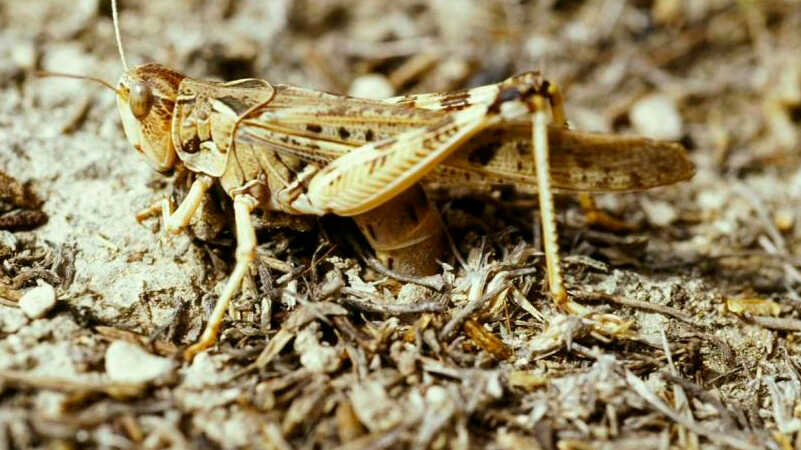
Females lay their eggs underground during June and July, grouped in structures known as "oothecae." These remain in the soil throughout the winter and usually hatch in May, when temperatures rise. Plowing brings these structures to the surface and exposes the eggs to environmental conditions that favor their destruction.
The CSCV recommends carrying out this work during September and October, as delaying it until November or December reduces its effectiveness. Any implement that works to a depth of around ten centimeters and breaks up the soil as much as possible can be used. Farms enrolled in certain eco-schemes must use vertical tillage equipment.
MUNICIPALITIES AFFECTED IN HUESCA AND ZARAGOZA
The measure particularly affects municipalities included in the official declaration of the 2026 infestation. In Huesca, these are Ballobar, Candasnos, Fraga, Peñalba and Valfarta, while in Zaragoza they include Alfajarín, Bujaraloz, Farlete, La Almolda, Leciñena, Monegrillo, Perdiguera, Pina de Ebro, San Mateo de Gállego, Villafranca de Ebro, Villamayor de Gállego, Villanueva de Gállego, Zaragoza and Zuera.
The agency stresses that plowing is particularly important in municipalities where incidence has been higher this year. It warns that failing to carry out this work could undermine the effectiveness of subsequent control measures, including any chemical treatments that may be applied in spring.


