This change did not happen overnight. Martínez began working when many differences between boys and girls were accepted as normal in schools. Today, she sees a school system that is much more attentive to equality, although she insists that “we need to focus much more on aspects of coeducation,” especially participation, behavior and the sharing of spaces.
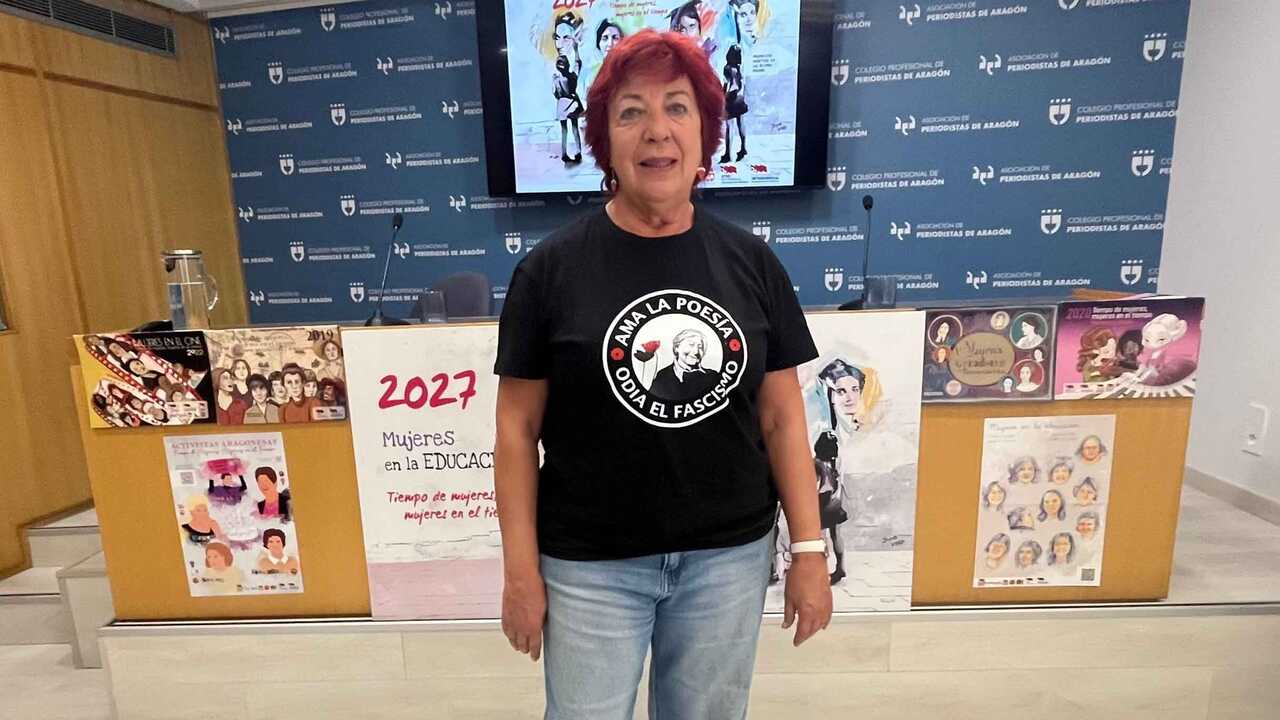
Her experience has now been recognized with her inclusion in the 2027 Women’s Calendar, which this year is dedicated to education and highlighting female role models. For Martínez, sharing space with figures such as Maria Montessori came as a surprise, an honor she receives “absolutely delighted” after decades of defending a school free from discrimination.
FROM THE PLAYGROUND TO CLASSROOM PARTICIPATION
For Peña, one of the clearest examples of inequality in schools was found precisely outside the classroom, during recess. When she began teaching, she recalls, much of the playground was practically claimed by one group. “The boys occupied 90%. They had the huge soccer field, and the girls were in one corner,” she says. In contrast, she now sees more diverse and shared playgrounds.
Something similar happened inside the classroom. Martínez recalls classes in which there were female students achieving very good results who barely raised their hands, while many boys participated even when they did not know the answer. Her way of correcting this was direct: she tried to find a balance and encourage students to take part. “If six have to participate, you say three boys and three girls,” she explains.
In Special Education, she also found that equality is not always taught through grand speeches, but that everyday examples are often enough. If a student sees a teacher cooking, sewing, ironing or doing the shopping, they learn that these tasks do not belong to any particular gender. “People learn through modeling,” Martínez recalls, especially in cases where addressing abstract ideas is difficult.
LANGUAGE ALSO TEACHES EQUALITY
This work also extends to language, which Martínez considers another tool for making equality visible. The teacher recalls that she has always taken care over how she addresses students and is pleased to see that former pupils now use more inclusive expressions. For her, naming girls and boys and avoiding formulas that make part of society invisible is also part of learning.
After 34 years at Gloria Fuertes, Martínez says that her advocacy for equality ultimately became one of the defining features of her time at the school. “If a survey were conducted among all the professionals who have worked at the school, I don’t think there would be anyone who didn’t remember me for that,” she acknowledges. That consistency has left a mark that she now recognizes in the small gestures, ways of expressing themselves and behaviors of those who passed through her classrooms.
Her goal was never to impose a particular way of thinking, but to help students reflect on what they saw around them. “The best approach is to convince, not defeat,” she sums up. For Martínez, changing mindsets requires explaining, reasoning and offering alternatives, and, as she concludes, “until gender discrimination is eradicated, there will be no social justice.”