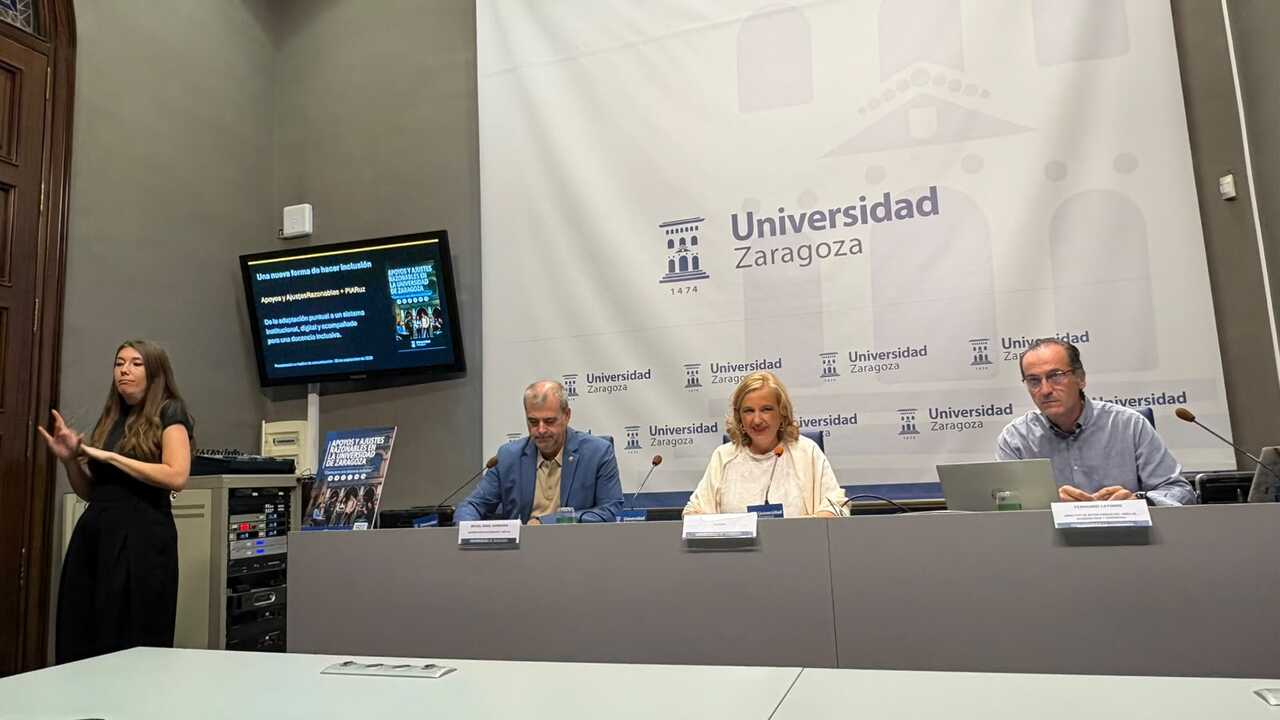
The document, titled Support and Reasonable Adjustments at the University of Zaragoza: Keys to Inclusive Teaching, establishes a common framework for faculty, schools and university services. Vice Rector Miguel Ángel Barberán explained that “students’ needs have changed” and that the goal is to move from one-off adjustments toward a model capable of identifying the barriers that hinder learning and addressing them without lowering academic standards.
MORE THAN 500 STUDENTS WITH SPECIFIC NEEDS
The guide covers situations including physical, visual or hearing disabilities, deafblindness, neurodiversity, learning difficulties, ASD, ADHD, mental health issues, illnesses or temporary circumstances. The University Office for Attention to Diversity currently supports more than 500 students with specific needs, although only around one-third have a recognized disability, and the forecast is that the figure will exceed 600 this academic year.
Fernando Latorre, director of the Secretariat for Accessibility and Diversity, described the initiative as the “beginning of a change in the university inclusion system.” To date, the office has generated around 6,000 documents for faculty members outlining students’ needs. The new system will allow that information to be linked to the student through SIGMA and will prevent students from having to explain their situation to each professor individually.
AI TOOL TO GUIDE FACULTY
Another new feature is an artificial intelligence tool trained using the guide itself to advise faculty members in specific situations. A professor could ask, for example, how to prepare a course for a student with a visual disability or check whether the course syllabus has been adapted. Latorre stressed that it will be “another tool” and will not replace either the reports or the work of the University Office for Attention to Diversity.
Rosa Bolea, rector of the University of Zaragoza, said that implementing this model would bring about a “change in perspective” and require time, learning and the involvement of the entire university community. The intention, she said, is to build a university that “does not wait for a barrier to appear before trying to solve it, but learns and anticipates,” moving toward a more consistent, accessible and inclusive system.