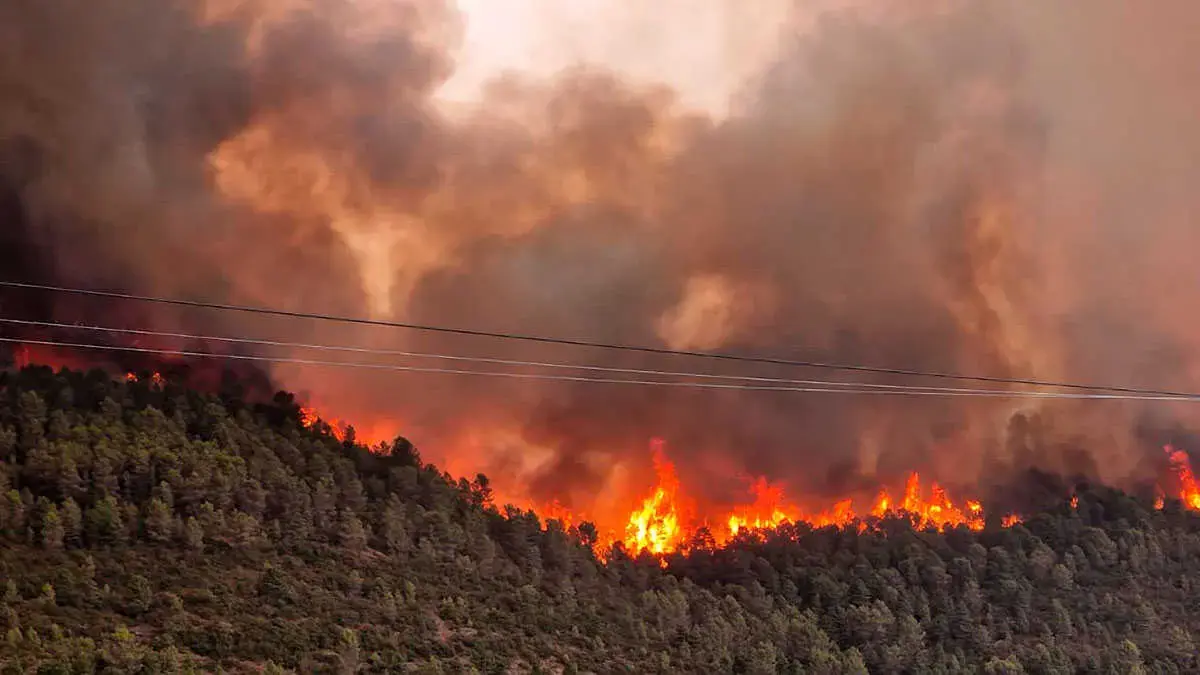
The fire was declared under control on August 21 and, although it was initially expected to be fully extinguished a week later, the news did not come until September 12, 22 days afterward. During this entire period, several hot spots were detected in the area, the latest on Friday, although, according to Infoar, it “remained cold” on Saturday.
The government has also said that monitoring work will continue in the area over the coming days. Although the announcement marks the end of this difficult chapter, the regional executive has announced the opening of a new front: assessing what work should be carried out to help the affected area regenerate “as soon as possible.”
THE SUMMER’S MOST SEVERE WILDFIRE
The fire, the largest of the summer and now one of the most devastating in the history of Aragón, affected more than 18,000 hectares of land, approximately 14,500 of which were completely burned. Extreme temperatures and erratic winds hindered firefighting crews during their operations.
The fire forced the evacuation of 19 population centers, two campsites and one camp. They were Villalangua, Salinas de Jaca, Ena, Centenero, Bailo, Larués, Arbués, Alastuey, Botaya, Binacua, Santa Cruz de la Serós, Osia, Santa María de la Peña, Triste, La Peña Estación, Yeste, Anzánigo, Atarés and Bernués.
A total of 1,046 residents were forced to leave their homes, almost 80 of whom needed to be rehoused in facilities provided by the authorities. Jaca and Ayerbe provided accommodation for those who were unable to find alternative arrangements themselves.
A HISTORIC RESPONSE OPERATION
The fire will not only be remembered for the ferocity with which it ravaged villages, but also because it claimed the life of a UME serviceman during firefighting operations. The truck carrying Corporal Javier García Sancho overturned in Atarés on August 16, killing him and injuring three other people. They were among the more than 500 military personnel who worked in the area during those days.
They were just part of the more than 1,000 personnel involved in fighting the fire, which brought together unprecedented numbers of aerial and ground resources thanks to cooperation between different institutions. More than 30 aircraft operated on the ground, belonging to both the Government of Aragón and the Government of Spain, alongside numerous units deployed from Catalonia, Navarre, La Rioja, the Valencian Community, Castile and León, Madrid, Castile-La Mancha and Asturias.
Tractor drivers and volunteers provided by the area’s counties and town councils also joined the operation, performing essential work to extinguish the fire. In addition, through the European Civil Protection Mechanism, France deployed a Puma helicopter, 61 firefighters and 22 vehicles.


