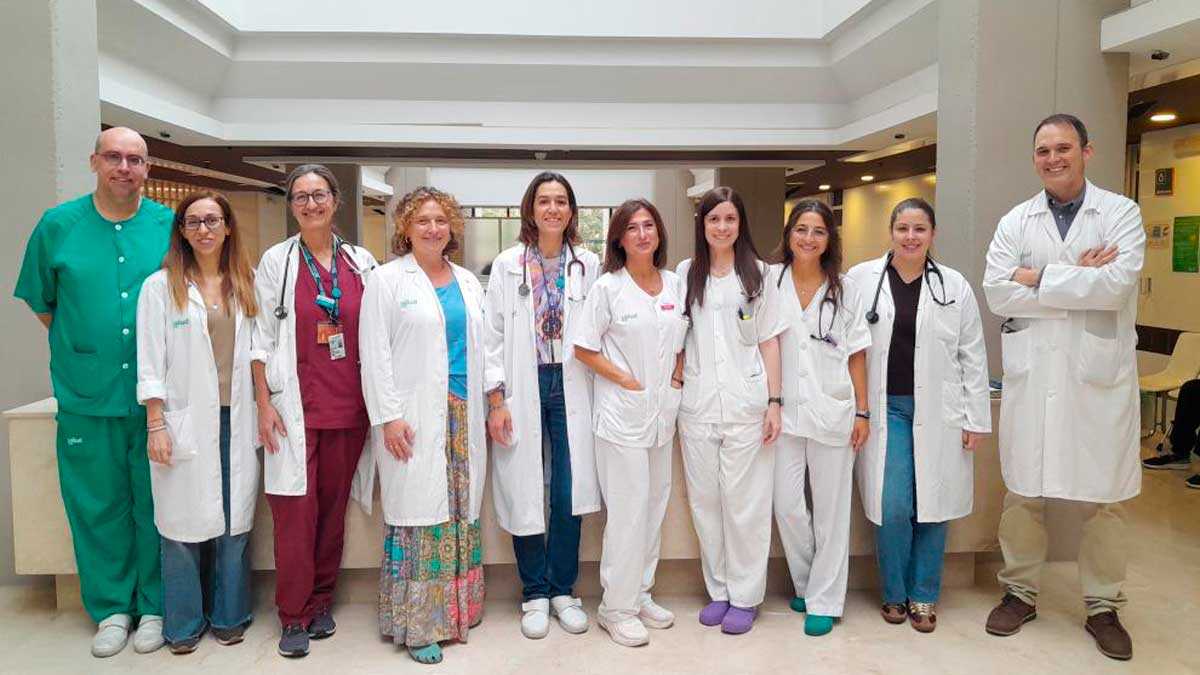
The outlook does not point to an improvement either. The latest epidemiological studies indicate that cases of heart failure will increase in the coming years, mainly due to population ageing and the rise in cardiovascular diseases in developed countries. This was explained by Marta Sánchez Marteles, coordinator of the Heart Failure Unit at Hospital Clínico Universitario Lozano Blesa in Zaragoza, during the III Update Conference on the disease, held on October 21 and 22 in the hospital’s auditorium. The event was aimed at healthcare professionals and was endorsed by the Instituto de Investigación Sanitaria Aragón.
Heart failure is a complex syndrome whose treatment has made significant advances in recent years. In the therapeutic field, professionals have new tools to address the disease, while, in terms of care, multidisciplinary treatment has been shown to improve patients’ quality of life.
More than nine years ago, the Internal Medicine Department at Zaragoza’s Clínico Hospital set up a dedicated consultation service for patients with heart failure, run by physicians with specialised training in the disease.
“The result was very positive, demonstrating its usefulness in reducing hospital admissions, but the project grew, and with it the need to move towards improving the quality of care,” Sánchez Marteles said.
ZARAGOZA’S CLÍNICO UNIT TREATS CLOSE TO 1,000 PATIENTS A YEAR
Hospital Clínico Universitario Lozano Blesa in Zaragoza has strengthened care for these patients through its Multidisciplinary Heart Failure Unit, created in 2023. Its launch made it possible to develop a care pathway coordinating all the services involved in treating the disease. The unit treats close to 1,000 patients each year, who attend at least two follow-up appointments, and its activity increased by around 20% between 2024 and 2025.
Sánchez Marteles stressed that this type of unit has proved effective in reducing hospital admissions and visits to emergency departments, as well as improving patients’ quality of life. "Ultimately, the aim is to provide care that is more innovative, integrated and coordinated, and that always revolves around the patient."
Zaragoza’s Clínico Multidisciplinary Heart Failure Unit belongs to the National Network of Heart Failure Units of the Spanish Society of Internal Medicine (Red UMIPIC). Each year, this network assesses patients’ experience through the standardised IEXPAC survey (Instrument for Evaluating the Experience of Chronic Patients). The Zaragoza hospital obtained a score of 7.85 out of 10, above the national average of 7.38. The questionnaire analyses aspects such as care and coordination among professionals, the information received, ease of contact and support in understanding and learning to manage the disease.
RESEARCH AND TRAINING TO IMPROVE PATIENT CARE
Research also plays an important role in addressing heart failure at Zaragoza’s Clínico. Internist Jorge Rubio Gracia is the principal investigator of the Heart Failure Research Group at the Instituto de Investigación Sanitaria Aragón (GIIS-43), established with the belief that research is a fundamental pillar for improving healthcare.
All the unit’s internists at the Clínico are members of this group because “we see research as a means of offering the best to our patients,” Jorge Rubio said. The specialist explained that their work has made it possible to incorporate innovation, technology, pharmacological advances and excellence into patient care.
The group conducts extensive scientific activity, supported by numerous high-impact publications and by the training of residents and physicians. Its work is primarily clinical and in recent years has focused on studying pulmonary and systemic congestion associated with heart failure, while also covering biomarkers, basic science and imaging.
It currently participates in several investigator-led and multicentre clinical trials. Its projects include the ABDOPOCUS-HF trial, funded by the Instituto de Salud Carlos III, which recently received recognition as one of the heart failure studies with the greatest scientific impact.
The group also collaborates on other projects run by the Spanish Society of Internal Medicine (SEMI) and the CARDIOREN group of the Spanish Society of Cardiology.
The Clínico de Zaragoza’s involvement in patient care and research has also promoted the training of healthcare professionals. The Heart Failure Update Conference was created for this purpose, with its third edition held this week in the auditorium of Hospital Clínico Universitario Lozano Blesa.
The meeting, organised by the GIIS-43 research group of the Instituto de Investigación Sanitaria Aragón, aimed to update the knowledge of professionals involved in heart failure care. The conference was aimed at resident physicians and specialists in Internal Medicine, Cardiology, Emergency Medicine, Nephrology, Primary Care and Nursing, among others. Its approach was to provide solid, up-to-date, comprehensive and highly practical training, with the aim of ensuring that the knowledge acquired translates into benefits for patients.