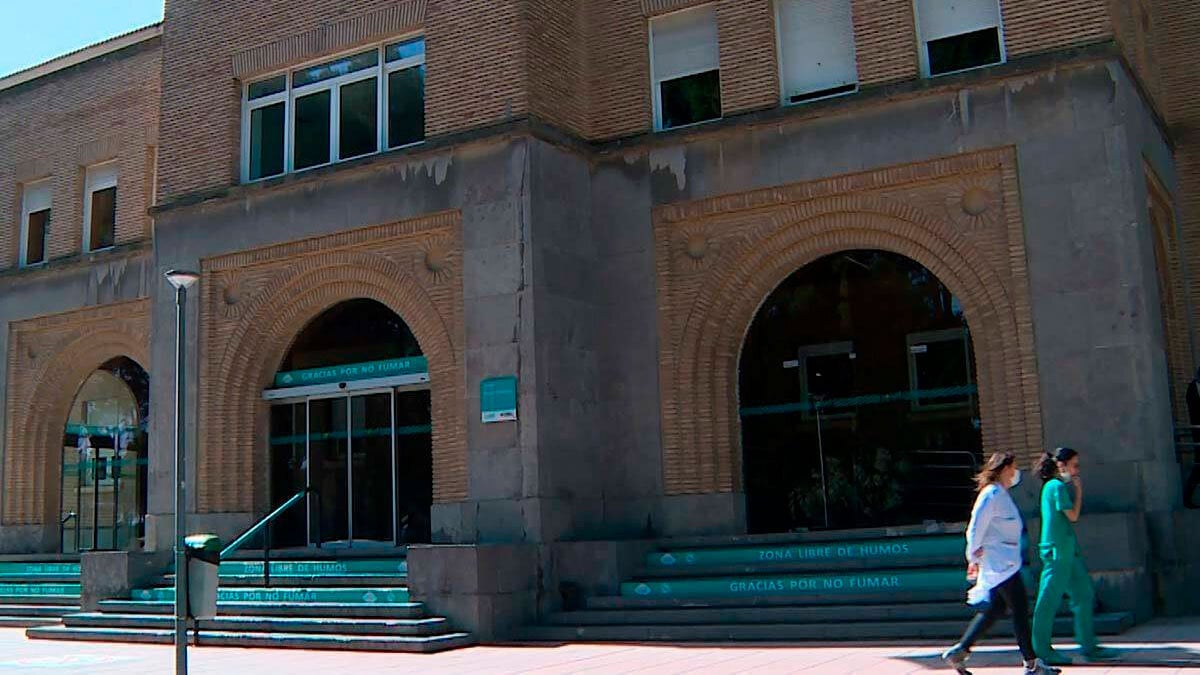
The new hospital is expected to be built on Zaragoza's Left Bank, probably before 2030. The aim is for the new Royo Villanova to have more space, doubling the current facility, a more functional design and state-of-the-art technology, while also strengthening its teaching and research role.
FOUR POSSIBLE LOCATIONS
One possibility is to place the new hospital opposite the General Military Academy, next to the Huesca highway and close to the current Royo Villanova. Among other issues, this site is being assessed in terms of transport connections, the characteristics and ownership of the land, its urban planning configuration and the need to relocate a high-voltage power line.
The second alternative is in San Gregorio, also close to the current hospital and connected to the N-330. In this case, technical analyses are examining issues such as accessibility, mobility, existing infrastructure and the availability of land for developing the future healthcare complex.
The third option is Ronda de Boltaña, in the Parque Goya area and between Avenida de Ranillas and Avenida de las Majas de Goya. Its location places it close to the School of Engineering and Architecture of the University of Zaragoza, the Aragon Institute of Technology and DAT Alierta. Key elements under study include access from the A-2 and N-330 and connections by urban bus and tram.
The alternatives are completed by Cogullada highway, in the area between Mercazaragoza and the Gállego River. The assessment of this area focuses particularly on road and bus connections, the proximity of industrial zones, the available surface area and land ownership.
WHO MAKES UP THE HEALTH COUNCIL?
The Aragon Health Council, which will decide the location, is the body responsible for formulating health policy and overseeing its implementation, as well as advising and providing information to the department responsible for health within the Government of Aragon.
It consists of 56 representatives: 18 from the regional administration, five from local government, one from each provincial council and two from the Aragonese Federation of Municipalities, Counties and Provinces, five from the parliamentary groups of the Cortes of Aragon, and representatives from CCOO, UGT, CEMSATSE, CSIF, CEOE and Cepyme.
It also includes one representative from the Aragonese Council of Chambers of Commerce, two from Aragon's universities, six from professional associations, one representing scientific organizations, four from citizens' and consumer associations, three from organizations representing patients and four from local health councils.