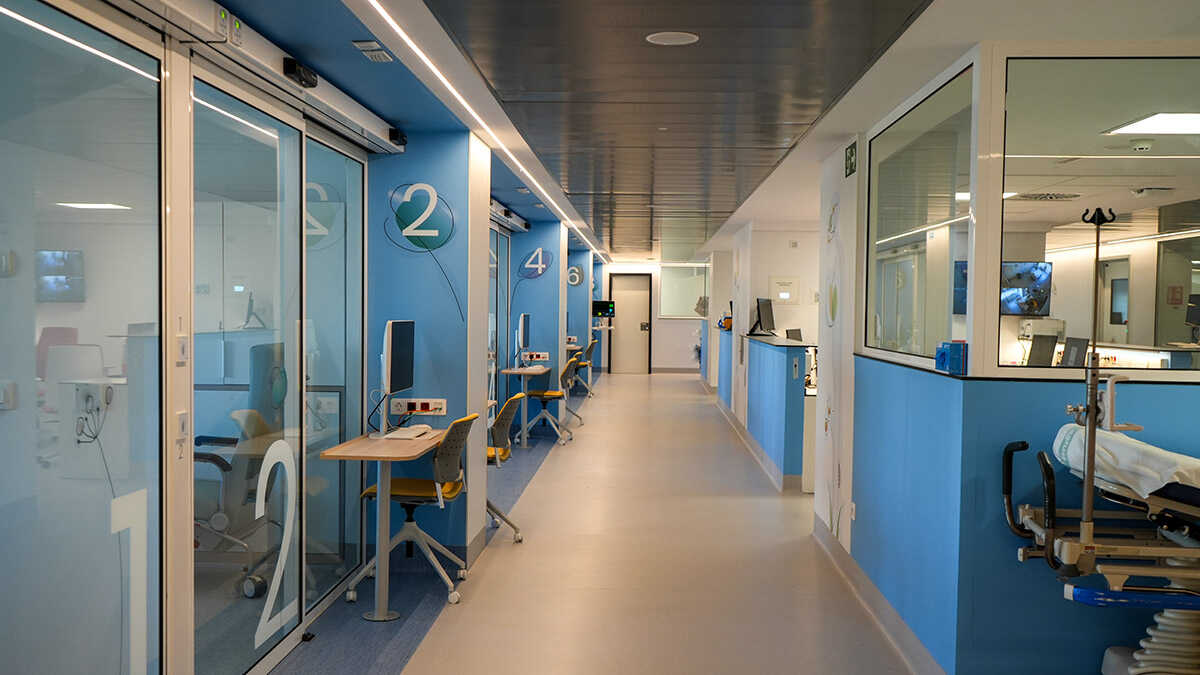
The unit has ten individual bays, two of them equipped for reverse isolation, compared with the single space of this kind available previously. In addition, three are equipped for hemodialysis treatments. The ICU has also added a new monitoring station, portable monitors and intelligent warning and alarm systems. For example, staff can monitor patients’ vital signs from anywhere in the unit without having to enter the bay.
Each bay has been fitted with a folding bed so that children’s relatives can accompany them “24 hours a day,” Aragón President Jorge Azcón stressed during a visit to the new unit on Tuesday.
Alongside technology and safety, humanity is one of the most important pillars when caring for minors. “When a child enters the ICU, it is not only a patient who enters, but a child and, with them, their companions, with their fears, questions and uncertainty. For this reason, we wanted to place the child and their companion at the center of the unit. Every space and element has been designed to provide better care, seek greater privacy, reduce unnecessary stimuli, facilitate rest and allow companions to remain close,” said Juan Pablo García, Head of the Intensive Care Section.
With this goal in mind, one of the most notable spaces created is a room for speaking with families, designed for delicate conversations in a more private, quiet and welcoming setting.
The renovation has also improved the areas intended for staff, with a much larger doctors’ workroom and a new nursing staff lounge.
"Treating a sick child requires the best technology and spaces that guarantee closeness, quality and privacy," said Patricia Palazón, manager of Zaragoza II sector.
A TOTAL OF 450 ADMISSIONS A YEAR
The Pediatric Intensive Care Unit at Zaragoza’s Miguel Servet Children’s Hospital is the referral unit for critically ill pediatric patients from Aragón, La Rioja and Soria and records around 450 admissions a year. It treats children with complex conditions from different specialties, as well as highly complex postoperative cases.
In addition, the reorganization of the space makes it possible to carry out certain procedures without transferring patients outside the unit, as is the case with patients suffering from severe burns.


