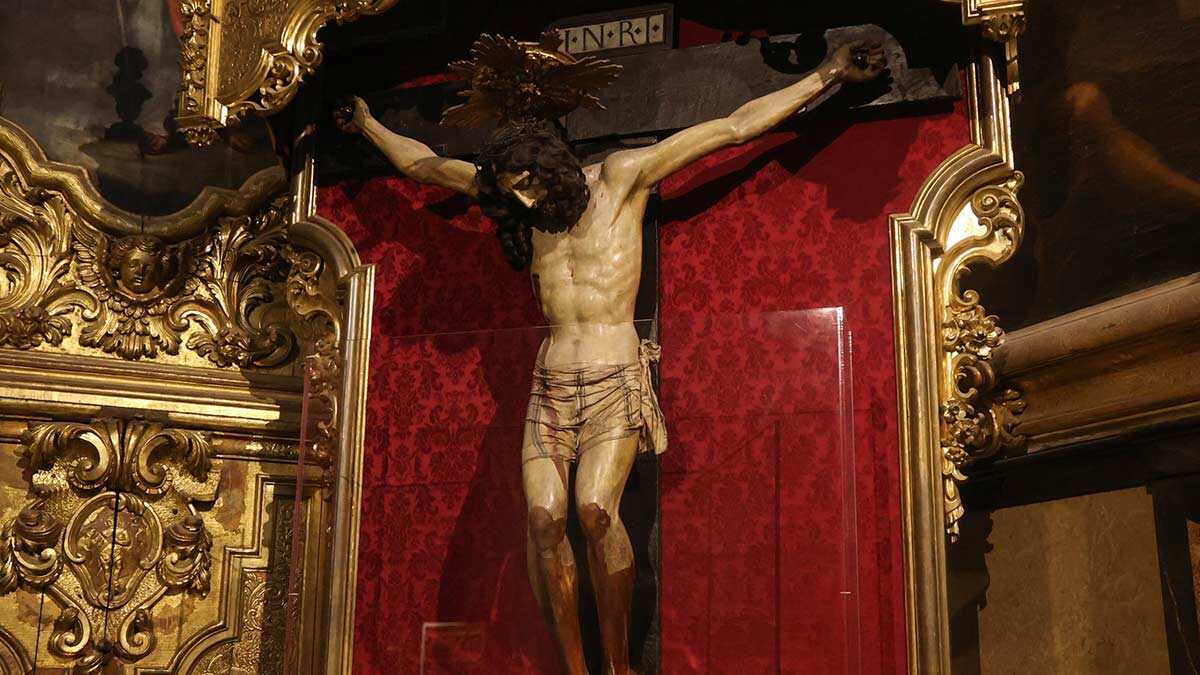
The celebration of the saints' calendar also makes it possible to remember men and women who devoted their lives to God and whose legacy remains present in the Catholic tradition. These commemorations keep alive the teachings and values of figures who played an important role in the history of the Church.
SAINT RUSTICUS OF NARBONNE
Saint Rusticus of Narbonne lived during the fifth century in Gaul and served as bishop of Narbonne between 427 and 461. He came from a family linked to the Church, as his father, Bonosus, and his uncle, Arator, were also bishops. After receiving a solid religious education, he decided to enter Lérins Abbey, where he devoted himself to prayer, study and monastic life.
Although he initially wished to lead a life of retreat and contemplation, he was chosen as bishop of Narbonne, a responsibility he accepted with humility. During his episcopate, he worked to strengthen the spiritual life of the faithful, defend Christian doctrine and support his community in a period marked by significant religious and social difficulties.
Saint Rusticus of Narbonne stood out for his prudence, charity and pastoral commitment. Although he did not die as a martyr, his faithfulness to the Church led him to be recognized as a confessor of the faith. His legacy remains an example of the balance between prayer and service to others, and his feast is celebrated every October 26.
WHY ARE THE SAINTS CELEBRATED?
The celebration of the saints has profound significance in the Catholic tradition. Every day of the year, figures who devoted their lives to God through martyrdom, preaching, charity or the testimony of their faith are commemorated. These festivities make it possible to remember their teachings and pass on the values they represented to new generations.
In addition, these celebrations have an important community and cultural component, as they bring the faithful together around examples of Christian life and help preserve religious traditions. For this reason, beyond their liturgical significance, the feasts of the saints continue to form part of the spiritual and cultural identity of numerous towns and cities.