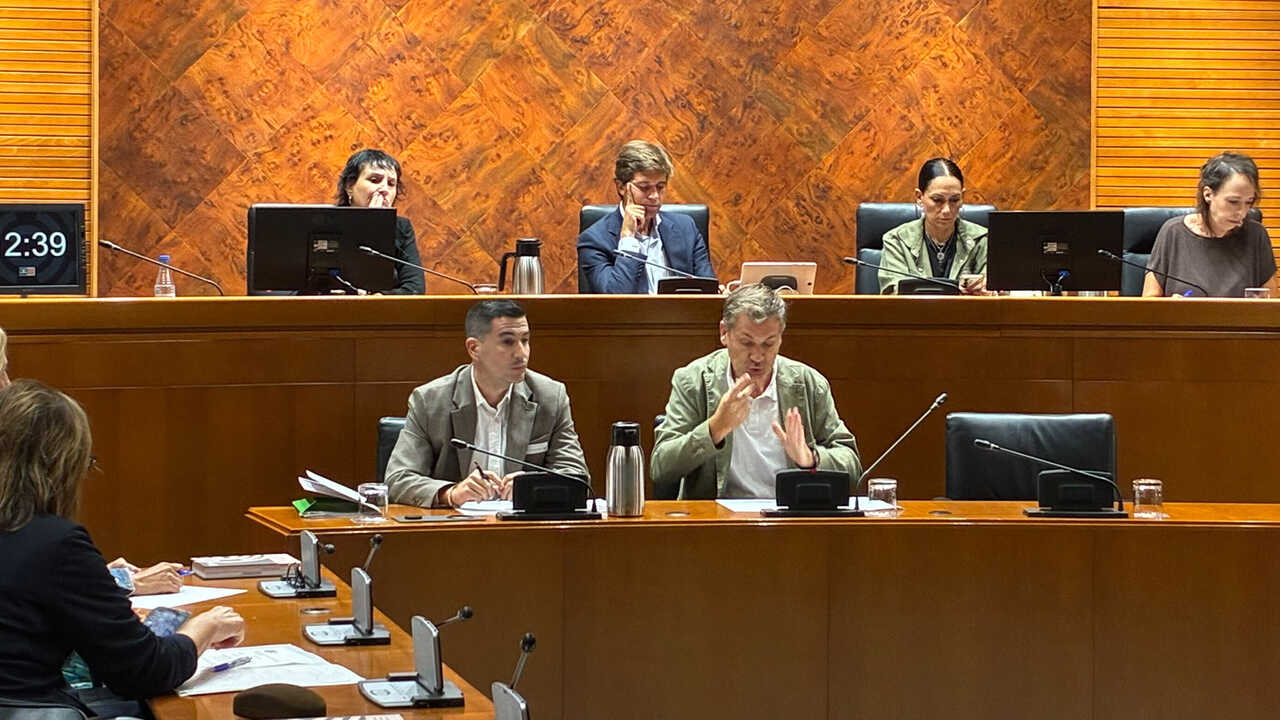
The president of CERMI Aragón, Jesús Carlos Laiglesia, appeared today before the Housing, Public Works, Logistics and Territorial Cohesion Committee during the legislative process for the Aragon Housing Bill to present the disability movement’s main proposals for the legislation. He was accompanied by Pablo Escanero, vice president of Social Services at CERMI Aragón.
During his address, Laiglesia acknowledged the progress included in the bill, including the designation of people with disabilities and those requiring support as priority beneficiaries, the recognition of accessibility as a condition of adequate housing, and their inclusion in allocation procedures.
LEGAL SAFEGUARDS AND SUFFICIENT RESOURCES
However, CERMI Aragón believes these advances must be translated into legal safeguards and sufficient resources so that the right to accessible housing can be exercised on equal terms. The organization is calling for a shift away from what it describes as an overly welfare-based approach toward a model based on human rights, social inclusion, personal autonomy and independent living. “Universal accessibility cannot be a supplementary or merely declarative element,” it stressed.
For this reason, CERMI Aragón is calling for the future law to expressly incorporate the principles of universal accessibility, universal design, reasonable adjustments and non-discrimination on the grounds of disability into the guiding principles of housing policy. The organization is also asking for the new law to maintain and expressly include the minimum quota of 4% of adapted homes in all protected, public or subsidized developments, a safeguard already provided for in Aragonese disability legislation.
CERMI Aragón is also calling for the authorities, when homes from this quota initially remain unallocated, to carry out direct and adequate outreach in collaboration with Third Sector organizations before they can be returned to the general allocation system.
AN EFFECTIVE RIGHT TO ADAPT EXISTING HOMES
CERMI Aragón points out that many people with disabilities live in buildings constructed before current accessibility requirements were introduced and is asking the law to establish guaranteed aid, specific subsidies, priority procedures and stable funding streams for accessible adaptation and renovation work.
The organization is also calling for housing to be addressed from an independent-living perspective, expressly incorporating models such as supported housing, supervised housing, inclusive cohousing and collaborative housing, as well as linking personal assistance to the residential environment. The aim is to broaden the available options and prevent a lack of support from forcing people into unwanted institutionalization models.
GENUINE PRIORITY IN ALLOCATION
The organization is also proposing changes to procedures so that the degree of dependency and verified accessibility needs are genuinely given priority in scoring and allocation. It is additionally calling for exceptions to the requirement of not owning another home when a person owns a property that has become inaccessible and cannot be renovated to meet their functional needs.
Laiglesia also called for the future regulations to expressly take young people with disabilities into account in emancipation processes, incorporating incentives and specific measures into housing programs.
PHYSICAL, COGNITIVE, DIGITAL AND COMMUNICATION ACCESSIBILITY
CERMI Aragón is proposing the inclusion of obligations regarding cognitive accessibility, communication, easy-read materials, sign language and alternative communication systems, as well as guarantees for the accessibility of digital portals, procedures and contracts.
The organization also considers it essential for the new law to require universal accessibility training for all the agents involved, from public administration professionals to developers, architects and builders, in order to prevent barriers from continuing to be created and subsequently having to be removed.
Finally, CERMI Aragón called for the representative organizations of people with disabilities to be permanently involved in the development of public housing policies and for their presence to be expressly guaranteed on the future Aragon Housing Forum envisaged in the draft legislation.