Early detection of breast cancer is essential to increase the chances of recovery. That is why, alongside gynecological checkups and mammograms, specialists recommend paying attention to any changes in the breasts. Self-examination helps you become familiar with their usual appearance and recognize possible abnormalities more easily.
This practice does not replace medical tests or screening programs, but it can help identify changes that require professional assessment. Lumps, skin changes, nipple discharge, indentations or noticeable differences between the two breasts are some of the signs that should prompt a visit to a specialist.
HOW TO PERFORM A BREAST SELF-EXAM
The first step is to stand in front of a mirror with your arms relaxed at your sides. Observe the contour of the breasts, the appearance of the skin and the position of the nipples, checking for redness, peau d'orange, indentations or abnormal discharge. Then repeat the observation with your arms raised.
Next, lean slightly forward with your hands resting on your hips to check for irregularities in the contour or movement of the skin. This observation can reveal changes that may not be visible at rest and allows you to compare the appearance of both breasts with previous examinations.
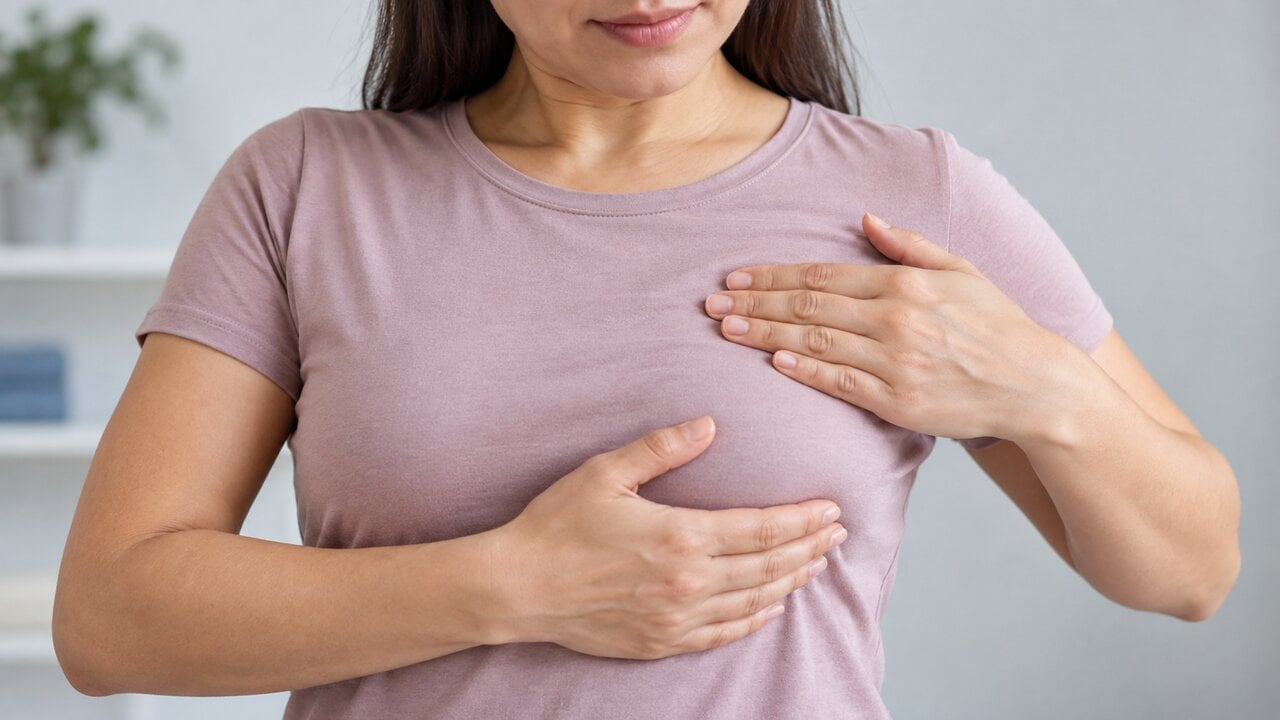
The second part is performed lying down, placing a pillow under one shoulder and that same arm behind your head. With the fingers of the opposite hand together and extended, feel the entire breast using circular, vertical or radial movements, moving from the nipple outward and not forgetting the armpits, collarbones and the base of the neck.
WHEN TO PERFORM A BREAST SELF-EXAM
A breast self-exam can be performed once a month to become familiar with the usual appearance and consistency of the breasts. For women of childbearing age, it is advisable to do it approximately one week after menstruation, when the breasts are usually less sensitive. Postmenopausal women can choose a fixed day each month to make it easier to establish a routine.
Breast self-examination should be understood as a complement to healthcare checkups and never as a substitute for the examinations or mammograms that are appropriate. The frequency of these tests depends on factors such as age, personal and family history, and medical assessment, so it is advisable to follow healthcare professionals' recommendations.
Finding a lump does not necessarily mean that breast cancer is present, but it is a reason to seek medical assessment. Nipple retraction, unexpected discharge, persistent skin changes, swelling or changes in the shape or size of one breast should also be discussed with a doctor. Self-examination helps you know your body, but it does not replace medical checkups.