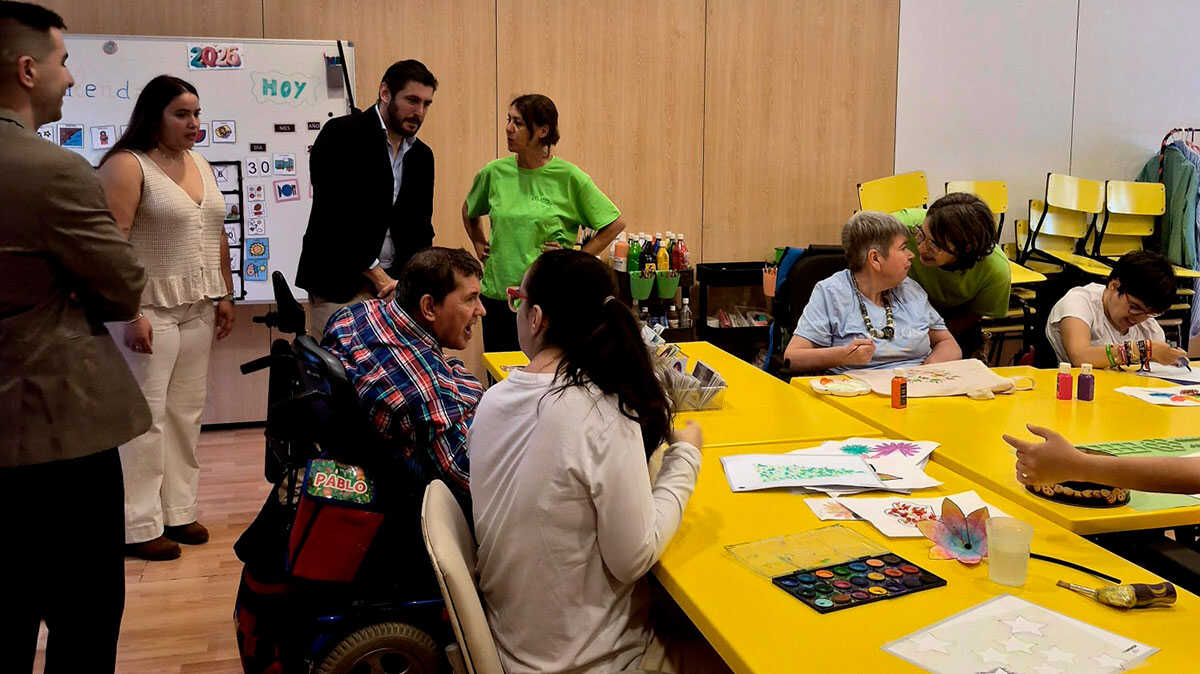
The visit, requested by Aspace Zaragoza following the appointment of the new regional head of Social Welfare, provided an opportunity to show them directly the reality faced by people with cerebral palsy and high support needs and their families, as well as the services, projects and care models developed by the organisation. It also marks the first event in Aspace Zaragoza’s special agenda for World Cerebral Palsy Day, which is observed next October 6.
During the tour, representatives of the Government of Aragon visited the residential units, the Consuelo Ciria Residence, the Day Centre and the San Germán Special Education School, as well as some of the specialised support services and technological resources used by the foundation. Aspace Zaragoza currently supports 93 people at different stages of their lives and has nearly 100 specialised professionals.
AN AGENDA FOCUSED ON FAMILIES AND CARE
The commemoration will continue on October 6 itself, World Cerebral Palsy Day, with an event especially aimed at Aspace Zaragoza families, to be held at the foundation’s facilities.
Families have been an essential part of Aspace Zaragoza since its foundation and remain one of the main focuses of its work. Throughout the year, the foundation provides various resources aimed at support, work-life balance and respite care, including summer school camps and the “Caring Without Neglecting Yourself” programme.
This commitment is directly linked to the campaign chosen this year by the Aspace Movement to mark World Cerebral Palsy Day: #CuidarSinRenunciar, under the slogan “The best gift is caring without giving things up”.
The initiative symbolically brings Christmas forward to October 6 to highlight a reality that is a constant for many families: the need to anticipate and organise treatments, resources, time and care in order to guarantee the support required by their relatives with cerebral palsy. The campaign calls for care not to depend exclusively on families’ efforts, but to be a shared responsibility among families, public authorities and society.
CARING DOES NOT MEAN GIVING THINGS UP
Around 120,000 people with cerebral palsy live in Spain and, according to data from the Aspace Movement, 80% have high support needs, which may require ongoing assistance with essential activities of daily life, communication or social participation.
The campaign also focuses on the impact of care on families, particularly women: 71.5% of family caregivers are women, many of whom reduce their working hours or leave the labour market to meet support needs. In addition, the extra costs associated with high support needs can range from €250 to €890 per week.
In Aragon, an estimated 2,500 people with cerebral palsy live with varying needs and levels of support. The overall prevalence of cerebral palsy is approximately one in every 500 people.
On the occasion of World Cerebral Palsy Day, Aspace Zaragoza is reiterating the demands of the associative movement, which are directly linked to the need to guarantee personalised and continuous support throughout the life cycle, move towards models that promote greater autonomy and decision-making capacity, and ensure the stability and sustainability of specialised services that can improve the quality of life of both people with cerebral palsy and their families.